

This complete Havanese care guide covers temperament, daily routines, training, grooming, nutrition, exercise, and health so your cheerful “Velcro dog” stays happy and healthy. Learn evidence-based tips, step-by-step schedules, and pro grooming tricks tailored to the Havanese coat and personality.

Meet the Havanese: Personality & Why They’re Called “Velcro Dogs”
The Havanese is a small, lively companion bred to be with people—full stop. Their trademark trait is “people-oriented” attachment, which is why many owners call them Velcro dogs. In this Havanese care guide we’ll show how to channel that devotion into good manners, minimize separation stress, and build a rock-solid routine.
Key Temperament Traits
- Affectionate, playful, and highly social with family and polite guests
- Smart and eager to please, which makes positive-reinforcement training effective
- Moderately energetic indoors; loves short play bursts and daily walks
- Alert without being yappy when properly trained
Ideal Homes for a Havanese
- Apartment or suburban living with daily walks and play
- Families (including gentle kids), retirees, or work-from-home households
- Owners who enjoy brushing and light coat care between professional grooms
Daily Routine That Works (Sample Schedule)
Structure reduces anxiety and prevents common behavior issues. Use this Havanese care guide schedule as a template and adjust by age/activity:
- 7:00 — Potty break, fresh water, and breakfast (measure portions)
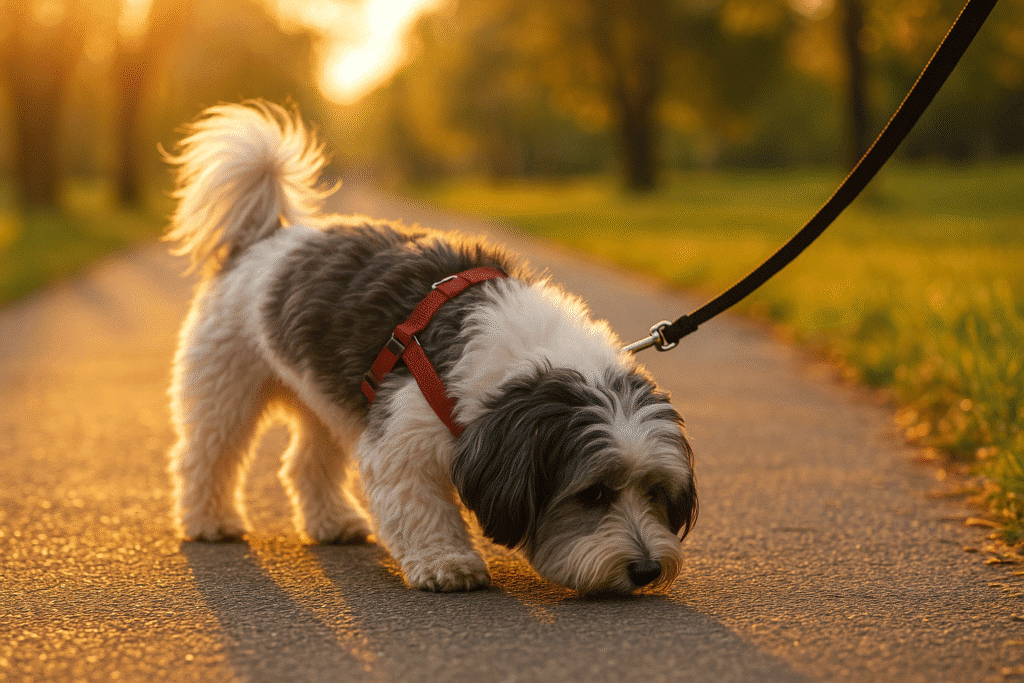
- 7:30 — 15–20 minutes sniff walk or play (fetch, tug, soft puzzle)
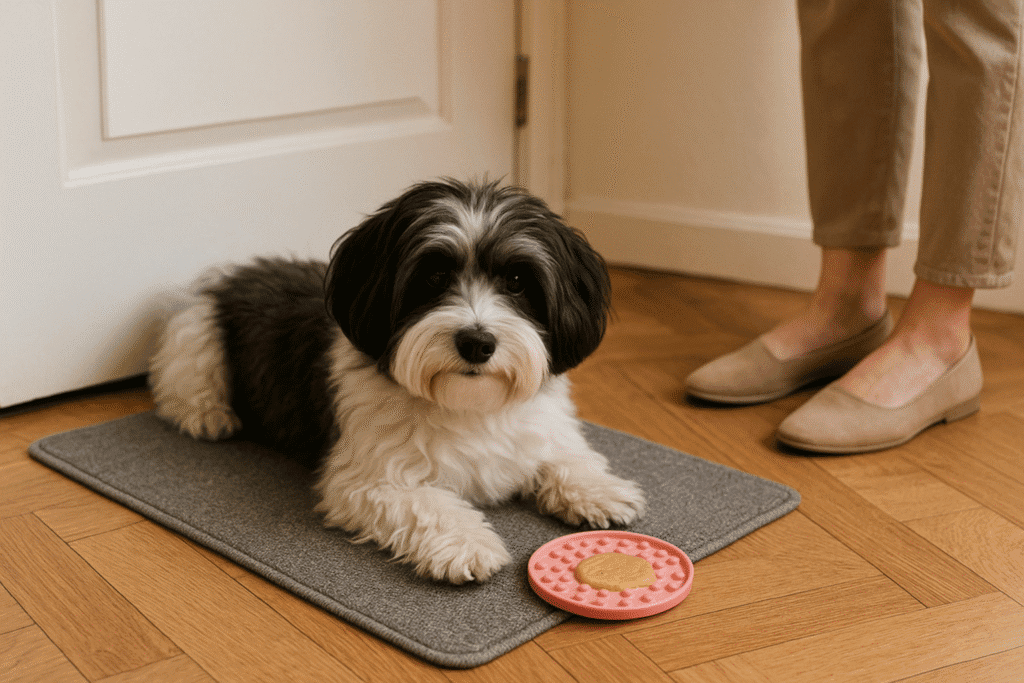
- 9:00–12:00 — Rest with enrichment (lick mat, stuffed Kong)
- 12:00 — Short potty break + 5 minutes training (sit, stay, come)
- 16:00 — Walk 20–30 minutes; reinforce loose-leash manners
- 18:00 — Dinner (use a slow feeder or scatter feed)
- 20:00 — Calm play, brushing, ear/eye check, bedtime potty
Training the Havanese: Fast Wins with Positive Reinforcement
Because they’re people-focused, Havanese respond brilliantly to short, upbeat sessions. Keep treats tiny and your timing precise.
Foundation Skills to Prioritize
- Name Response & Recall: Reward head-turns to name, then add short recalls indoors. Gradually add distance and mild distractions.
- Settle on a Mat: Teach a parking spot for calm behavior while you work or host guests. (See Stop Dog Whining / Settle Training for methods.)
- Alone-Time Conditioning: Start with 30–60 seconds out of sight, return before stress escalates, and reward calm. Slowly increase duration.
- House Training Routines: Consistent timing + praise for outdoor success. If you’re adopting, review our House Training Guide.
- Leash Manners: Pair heel position with rewards. For pulling, see Loose Leash Walking.
Problem Prevention
- Barking: Reinforce quiet, not silence. Reward calm when triggers occur. See Night Barking Calming Tricks.
- Chewing: Rotate safe chews. Redirect and reward alternatives. Reference: Stop Puppy Chewing.
- Separation Stress: Build independence through short absences, food puzzles, and settle games. Play soft instrumental music at low volume at first.
Grooming the Havanese: Silk Coat, Big Payoff
That luxurious, silky coat doesn’t shed much, but it does mat if neglected. A consistent routine keeps your Havanese comfortable and picture-ready.
At-Home Grooming Checklist
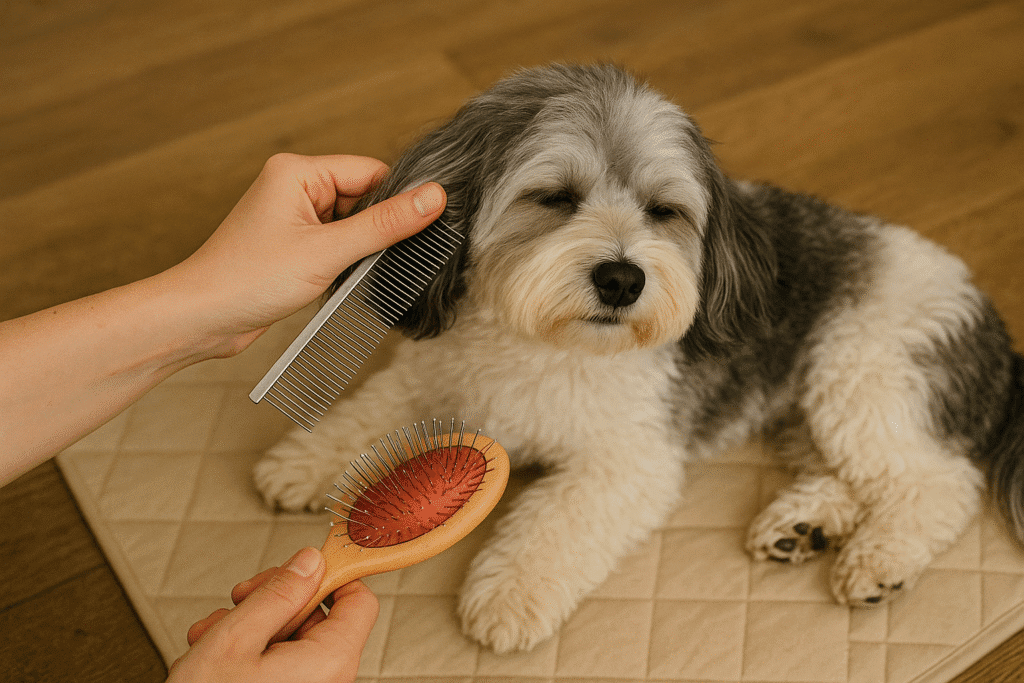
- Daily: 5–10 minute brush-through (pin brush or soft slicker); check armpits, behind ears, inner thighs—mat hotspots
- 2–3× per week: Comb line-by-line from skin outward; spritz with light detangler as needed
- Every 3–4 weeks: Bath with mild dog shampoo; fully dry while brushing to prevent post-bath tangles
- Every 4–6 weeks: Trim feet/eye area if needed; many owners schedule a pro groom every 6–8 weeks
- Teeth: Brush 3–5× weekly; add dental chews or water additives
- Ears/Eyes: Wipe tear staining gently; keep ears clean and dry
- Nails: Trim every 2–4 weeks; aim for quiet, frequent micro-trims
Pro tip: Teach a “grooming stand” behavior—reward your dog for standing still on a mat or table. Pair each tool with treats to create positive associations.
Nutrition & Feeding: Small Dog, Smart Portions
Havanese thrive on a complete, AAFCO-balanced diet. Choose a high-quality small-breed formula with appropriate kibble size, or consult your veterinarian for fresh/frozen options.
Portion & Meal Frequency
- Puppies (8–12 weeks): 3–4 meals/day
- 3–6 months: 3 meals/day
- Adults: 2 meals/day (use measuring cup or kitchen scale)
Track a weekly body-condition score (waist tuck, rib feel). Use a slow feeder if your Havanese eats too quickly.
Healthy Add-Ins (Optional)
- 1–2 tsp plain pumpkin for stool quality
- Omega-3 (fish oil) for skin/coat—dose with vet guidance; also see Best Omega-3 Supplements for Dogs
- Dental chews approved by your vet
Foods to avoid: grapes/raisins, onions/garlic, xylitol sweeteners, chocolate, high-fat leftovers. For a refresher see Top Toxic Foods for Dogs & Cats.
Exercise & Enrichment: Happy Brain, Happy Havanese
Most Havanese don’t need marathon runs, but they do need consistent mental and physical outlets.
Daily Targets
- Walks: 30–60 minutes total (split into 2–3 outings)
- Indoor play: Fetch, tug, tiny agility (cushion jumps, tunnels)
- Brain work: Scent games, 5-minute training bursts, puzzle toys
If your dog is recovering or has mobility limits, replace high-impact play with nosework and trick training to satisfy their mind without overexertion.
Health & Lifespan: What to Watch For
Havanese are generally healthy and live 13–15 years. Responsible breeders screen for hereditary conditions; adopters should schedule thorough intake exams.
Commonly Discussed Concerns
- Dental disease: Small breeds are prone—brush often and schedule professional cleanings as advised by your vet.
- Luxating patella: Keep weight ideal; ask your vet about strengthening exercises.
- Ear infections/tear staining: Dry ears after baths; use vet-approved eye wipes for staining.
- Allergies/itchy skin: Workup may include diet trials and medicated shampoos. See Dog Allergies Explained.
Preventive Care Checklist
- Annual exam (+ senior labs from ~7–8 years)
- Core vaccines; lifestyle-based non-core as recommended
- Year-round parasite prevention (fleas, ticks, heartworm where endemic)
- Weight checks monthly; adjust calories promptly
Evidence-based references (outbound): For general canine wellness schedules and care basics, see the AVMA pet owner resources and breed overview at the AKC Havanese profile.
Havanese Puppy Care Guide (0–12 Months)
Weeks 8–16: Socialization Gold Window
- Vet-guided vaccine schedule; safe exposure to sounds, surfaces, and handling
- Introduce crate positively; feed meals in the crate
- Reward calm meet-and-greets with friendly people and vaccinated dogs
4–9 Months: Adolescence & Boundaries
- Reinforce recall and “Leave It” daily
- Redirect mouthing to chew toys (see Stop Puppy Biting)
- Keep grooming sessions short and sweet; build tolerance steadily
10–12 Months: Consistency Wins
- Proof behaviors with mild distractions
- Shift to adult portions; evaluate body condition monthly
Senior Havanese Care (8+ Years)
Older Havanese still enjoy engagement—but with modified intensity.
- Twice-yearly vet checks; screen for dental and joint issues
- Shorter, more frequent walks; warm-up and cool-down
- Joint-friendly surfaces; consider ramps for furniture/steps
- Enrichment: nosework, snuffle mats, easy puzzle feeders
Grooming Toolkit & Setup (Owner-Tested)
- Pin brush + stainless steel comb (fine/coarse)
- Soft slicker for light detangling
- Mild hypoallergenic shampoo & light conditioner
- Styptic powder, small nail grinder or guillotine trimmer
- Ear cleaning solution (vet-approved), eye wipes
ALT-text tips for your blog images: “Havanese care guide: daily brushing with pin brush,” “Havanese grooming—gentle combing behind ears,” “Havanese puppy socialization in a calm park.”
Behavior FAQs (Quick Answers)
How do I prevent separation anxiety in a Velcro-prone Havanese?
Start micro-absences from day one, pair with stuffed Kongs/lick mats, and return before distress. Gradually extend time. Practice “mat settle” daily and avoid big goodbyes.
How often should I brush my Havanese?
Briefly every day, plus a thorough comb-out 2–3× weekly. Schedule professional grooms every 6–8 weeks to keep the coat manageable.
What’s the best exercise for a small companion dog?
Two to three short walks, indoor fetch/tug, and 5-minute training games. Avoid high-impact jumping off furniture; use ramps.
What size crate and bed should I choose?
Choose a crate that allows standing and turning comfortably (~24″ for many Havanese). Pick orthopedic beds with washable covers.
Which health screens are most important?
Dental checks, patella evaluation, and skin/ear monitoring are common. Seniors benefit from annual labs. Ask your vet for personalized schedules.
Printable Havanese Care Checklist
- Daily brush & 2–3 short walks
- Two meals; measured portions; fresh water
- 5–10 minutes training + puzzle feeder
- Ear/eye wipe and nail check weekly
- Vet, vaccines, parasite prevention up to date
Call to Action: Keep Exploring Calm, Clever Companions
Love cheerful companion breeds like the Havanese? Compare and plan with these guides: