

Need dog hot spots relief fast? This expert guide shows you exactly how to calm the itch, clean and protect the skin, when to see a vet, and how to prevent future flare-ups with grooming, allergy control, diet upgrades, and daily routines that actually work.
Hot spots (acute moist dermatitis) can erupt overnight—red, oozing, and painfully itchy. Getting dog hot spots relief quickly means doing two things at once: soothing the lesion and removing the cause (allergies, fleas, moisture, stress, pain). Below you’ll find a practical, vet-aligned plan you can start today, plus long-term prevention so you don’t see another hot spot next month.
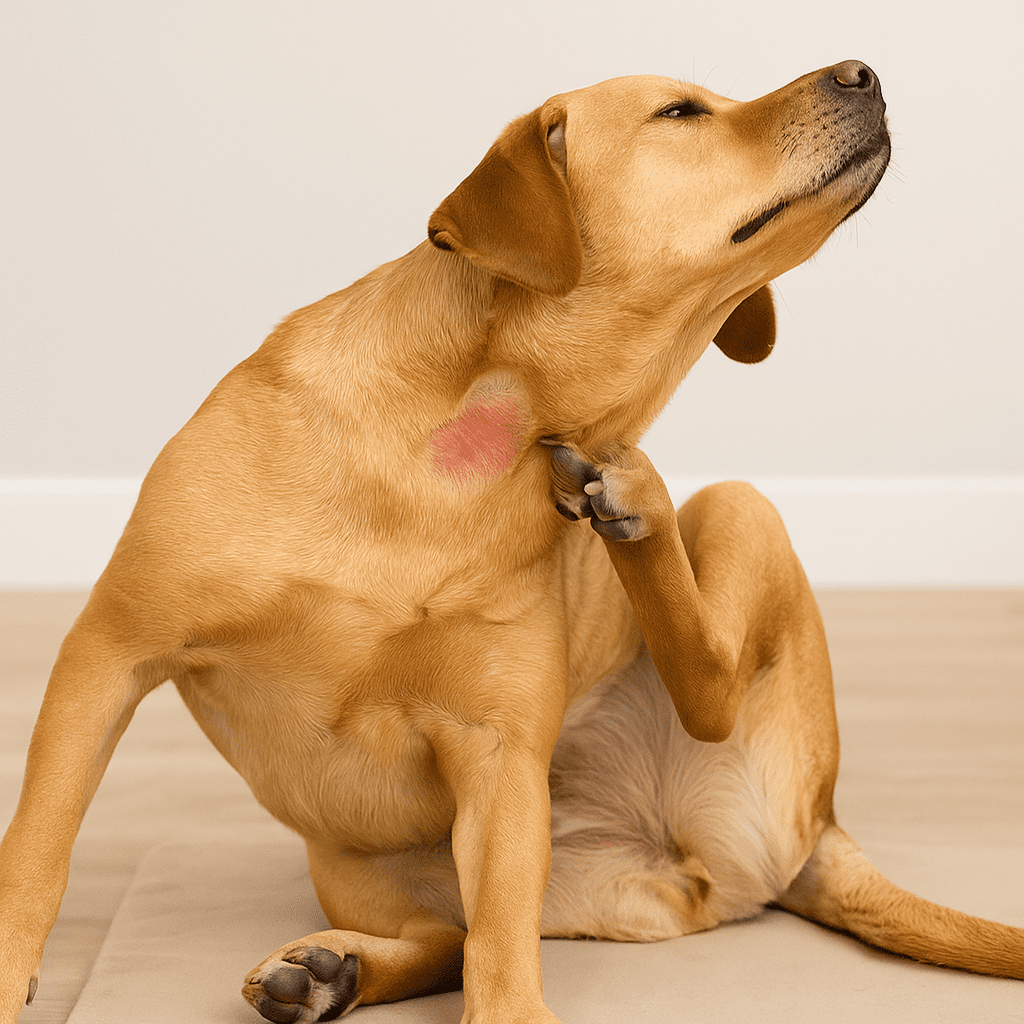
What Are Dog Hot Spots?
Hot spots are localized areas of inflamed, infected skin caused by self-trauma (chewing, licking, scratching). Bacteria thrive in the warm, wet environment, turning a small itch into a fast-spreading lesion. Common sites include the cheeks, neck, rump, tail base, and thighs—places dogs can easily reach with their teeth or claws.
- Also called: acute moist dermatitis, pyotraumatic dermatitis.
- Looks like: angry red patch, moist/oozing surface, hair loss, foul odor, crusting.
- Feels like: extremely itchy and often painful; dogs won’t leave it alone.
Dog Hot Spots Relief Fast: A Safe First-Aid Routine
These steps provide immediate comfort while you arrange veterinary care if needed.
1) Clip the fur (or part the hair) to expose the skin
Gently remove or part hair around the lesion to let air in and stop matting. If you’re not comfortable clipping, part the hair carefully and see your vet for a proper shave—trapped moisture slows healing.
2) Clean with a gentle antiseptic
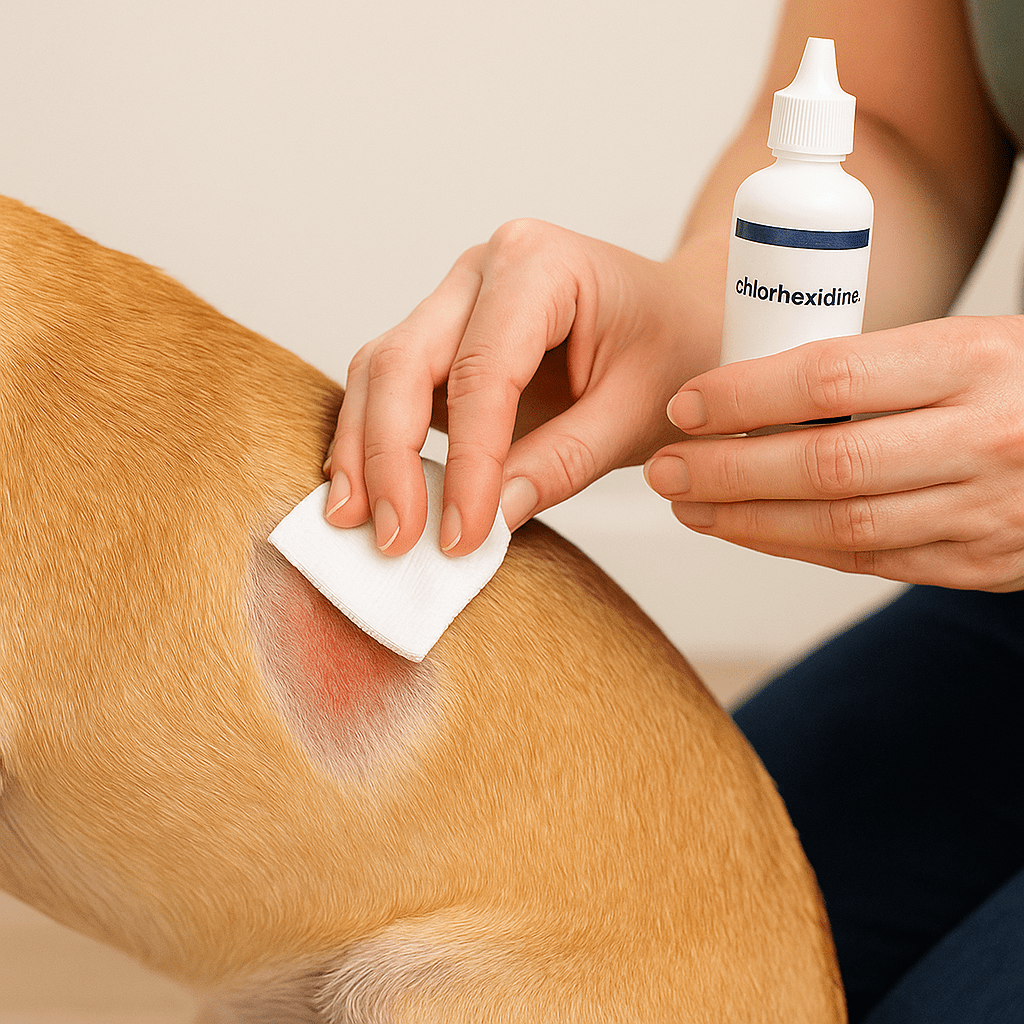
Flush the area with lukewarm water first. Then dab (don’t scrub) with a diluted chlorhexidine or povidone-iodine skin cleanser (made for pets). Rinse off residue and pat dry with clean gauze. Repeat 1–2× daily unless your vet prescribes differently.
3) Dry thoroughly and keep it dry
Air is medicine for hot spots. After cleaning, use a fan on a cool setting at a distance or simply air-dry. Avoid blow-dryers on heat.
4) Stop the licking and scratching
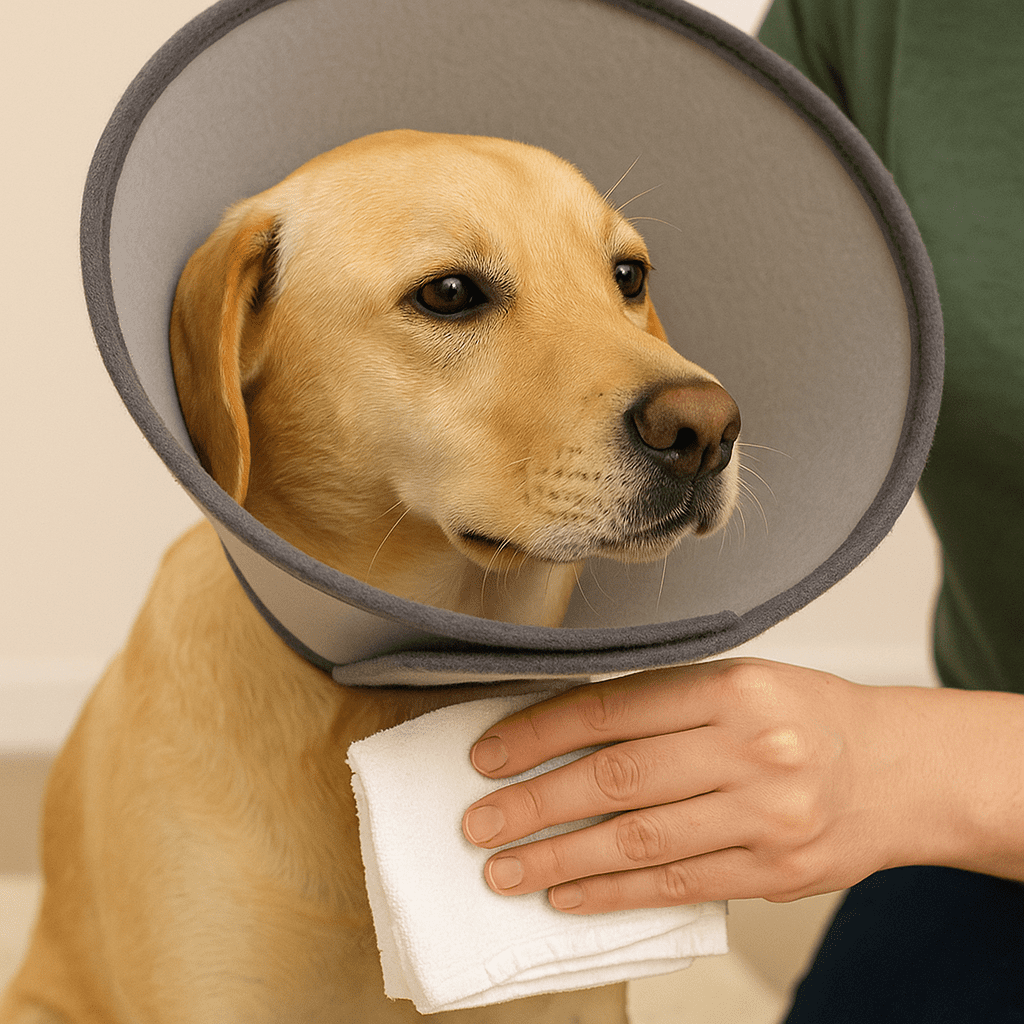
Use an E-collar (cone) or soft recovery collar. For paws, add breathable booties. Licking restarts the damage cycle and seeds more bacteria.
5) Cool the itch
Apply a cool compress (clean cloth in cool water) for 5 minutes, 2–3× a day. This reduces heat and discomfort without irritating chemicals.
Important: Avoid human triple-antibiotic ointments with strong fragrances, hydrocortisone creams not labeled for pets, essential oils, alcohol, hydrogen peroxide, or apple cider vinegar—these can sting, delay healing, or be toxic if licked.
When to See the Vet (Don’t Wait on These Signs)
- Lesion spreads fast, is larger than a coin, or very painful.
- Thick yellow discharge, fever, lethargy, or your dog seems unwell.
- Recurring hot spots (more than once or twice a year) or you suspect allergies/fleas.
- Lesion near eyes/ears or your dog has a history of ear disease.
Vet-Approved Treatments You May Be Offered
Your veterinarian will tailor therapy to the size, depth, and cause:
- Clipping and medical cleansing in-clinic to fully expose and dry the lesion.
- Topical therapy: prescription antibacterial/antimicrobial sprays or gels; some include short-course steroids to reduce inflammation and itch.
- Oral medications: pain/itch relief, antibiotics if deeper infection is suspected, or short tapering anti-inflammatories when the itch is severe.
- Underlying cause control: flea/tick preventives, otitis treatment if the hot spot stems from ear disease, or a personalized allergy plan.
Note: Many dogs with recurrent hot spots have allergies (environmental or food) or chronic itch conditions. Treating that upstream itch is how you break the cycle for good.
Root Causes of Hot Spots (and How to Remove Them)
- Fleas and mites: even one bite can trigger a massive allergic reaction. Keep year-round, vet-recommended parasite prevention on board.
- Allergies: environmental (pollens, dust mites, molds), food sensitivities, or contact allergens. Itch leads to self-trauma. See our allergy explainer here: Dog Allergies Explained.
- Moisture and heat: wet undercoats after swimming/bathing; dense coats in humid climates; saliva tracked into fur by licking.
- Skin injuries: burrs, matting, grooming clipper burn, or insect stings that start an itch-scratch spiral.
- Pain elsewhere: arthritis or anal-gland discomfort can cause focused licking over hips or tail base.
- Stress/boredom: anxious dogs self-soothe by licking one spot, turning a small irritation into infection.
One-Week Healing Plan (24-Hour, 48-Hour, and Day-7 Milestones)
First 24 hours
- Clip/part hair, cleanse, cool, and dry as above.
- Fit an E-collar immediately to halt licking.
- Start parasite prevention if due (ask your vet).
- Switch to a drying routine: keep your dog out of water and dry quickly after rain.
By 48 hours
- Lesion should be less moist and less smelly; scabbing may start.
- Reassess: if it’s bigger, more painful, or your dog is distressed, see the vet for prescription therapy.
- Begin itch reduction: enrichment walks, puzzle feeders, short training sessions to redirect attention.
By 7 days
- Healthy scab and new hair growth along edges are good signs.
- Keep the cone until your vet okays removal—many dogs reopen lesions on day 3–4 if you stop too early.
- Implement long-term prevention (below) to avoid the next flare.
Long-Term Prevention: Your Anti-Hot-Spot Toolkit
1) Parasite control on autopilot
Use a vet-approved, year-round flea/tick preventive and set monthly reminders. Flea allergies are among the most common hot-spot triggers.
2) Grooming & drying rituals
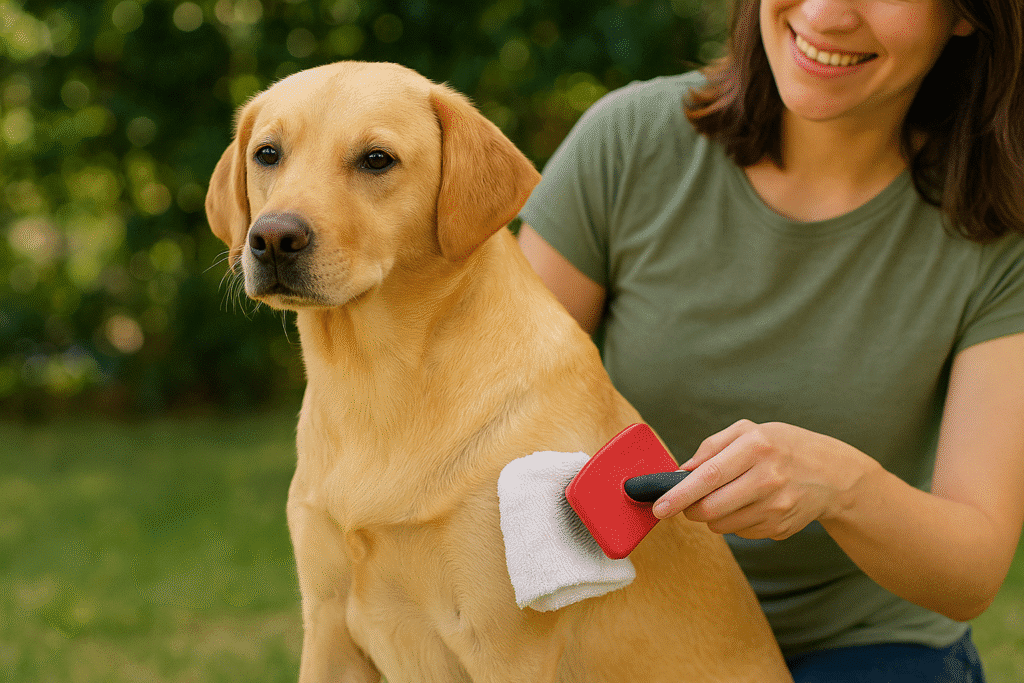
- Brush to remove loose undercoat and mats; schedule professional grooming for dense or double coats.
- After bathing or swimming, rinse thoroughly, towel dry, and use a cool fan. Moisture trapped against the skin fuels bacteria.
- Trim hair around ears, groin, and tail base if your groomer/vet recommends it.
3) Allergy strategy
Work with your vet on a plan: anti-itch medications when appropriate, topical barrier products, and—if food is suspected—a guided elimination diet trial. For natural support, see our guide on supportive options: Natural Remedies for Dog Allergies (fits best as an adjunct to your vet’s plan).
4) Anti-lick life
- Daily exercise that matches your dog’s breed and age.
- Enrichment: sniff walks, training games, chew toys, food puzzles.
- Address pain sources (hips, spine, anal glands) with your vet so your dog isn’t driven to lick those areas.
5) Skin-healthy nutrition
Dietary omega-3s (EPA/DHA) support the skin barrier and dampen inflammation. Ask your vet about a fish-oil product formulated for dogs; many target 50–100 mg combined EPA+DHA per kg body weight daily as a general skin-support range. If your dog has GI disease or pancreatitis risk, discuss dosing and calories first.
At-Home Products: What’s Helpful vs. What to Avoid
Often Helpful (when your vet agrees)
- Pet-labeled chlorhexidine 2–4% sprays or wipes for cleansing.
- Pet-formulated hypoallergenic moisturizers or barrier sprays once the lesion is dry.
- E-collar or recovery suit to block access.
- High-quality flea/tick preventives on schedule.
Avoid These
- Essential oils, tea tree oil, alcohol, hydrogen peroxide, vinegar.
- Human creams not labeled for pets; many are irritating or unsafe if licked.
- Covering the lesion with non-breathable bandages unless your vet instructs it.
Hot Spots vs. Other Skin Problems
Not every red patch is a hot spot. Ringworm, mange, deep pyoderma, acral lick dermatitis, and ear infections can look similar—especially around the face/neck. If the lesion is circular with hair-breakage at the edge, very flaky, or multiple lesions appear, get a veterinary exam and skin tests (scrapings, cytology, fungal culture).
Proof-Backed Sources to Learn More
For additional veterinarian-reviewed overviews, see: ASPCA — Cat Care (General Care, Grooming, Nutrition, Behavior). These reinforce the cleaning, drying, and underlying-cause control emphasized here.
Image Tips
- Use descriptive ALT text containing your focus keyword, e.g.,
alt="dog hot spots relief fast cleaning chlorhexidine cone". - Avoid graphic close-ups above the fold—lead with a calm dog photo to reduce bounce.
Common Mistakes That Delay Healing
- Letting your dog lick “just a little”—every lick re-seeds bacteria.
- Skipping the clip/part step—moist, matted hair traps infection.
- Over-treating with random creams—stick to pet-safe cleansers and your vet’s prescriptions.
- Ignoring fleas “because I never see them”—flea saliva can trigger massive reactions from a single bite.
FAQ: Dog Hot Spots Relief Fast
How long do hot spots take to heal?
With proper clipping, cleansing, and vet-directed therapy, many lesions improve noticeably within 48–72 hours and heal over 7–10 days. Recurring hot spots need allergy or parasite control to prevent new ones.
Can I use hydrocortisone cream?
Only use products labeled for pets and only as directed by your veterinarian. Human creams may contain unsafe ingredients for dogs that will lick the area.
Do I always need antibiotics?
Not always. Many hot spots respond to topical therapy plus an e-collar and cause control. Deep or rapidly spreading lesions may require oral medications—your vet will decide after an exam.
What should I do after swimming or a bath?
Rinse thoroughly, towel off, and dry down to the skin with a cool fan. Brush out the undercoat. Keeping the skin dry is one of the most effective ways to prevent hot spots.
Internal Resources to Continue Your Plan
- Overall skin troubleshooting: Common Dog Skin Problems & Solutions
- Allergy drivers & relief options: Dog Allergies Explained
- Natural support add-ons: Natural Remedies for Dog Allergies
- Itch relief at home: Dog Itchy Skin Remedies
Call to Action
If your dog struggles with recurring skin flare-ups, bookmark this page and build your prevention routine today. For breed-specific care that can reduce skin issues, explore our guides starting with Labrador Retriever Care or browse our full list of dog breeds.