

This calm, step-by-step crate training at night plan shows you how to prevent crying, teach quiet settles, and handle bathroom breaks without setbacks. Follow the 3 phases, copy the bedtime routine, and use our simple scripts and timelines to get sleep—starting tonight.
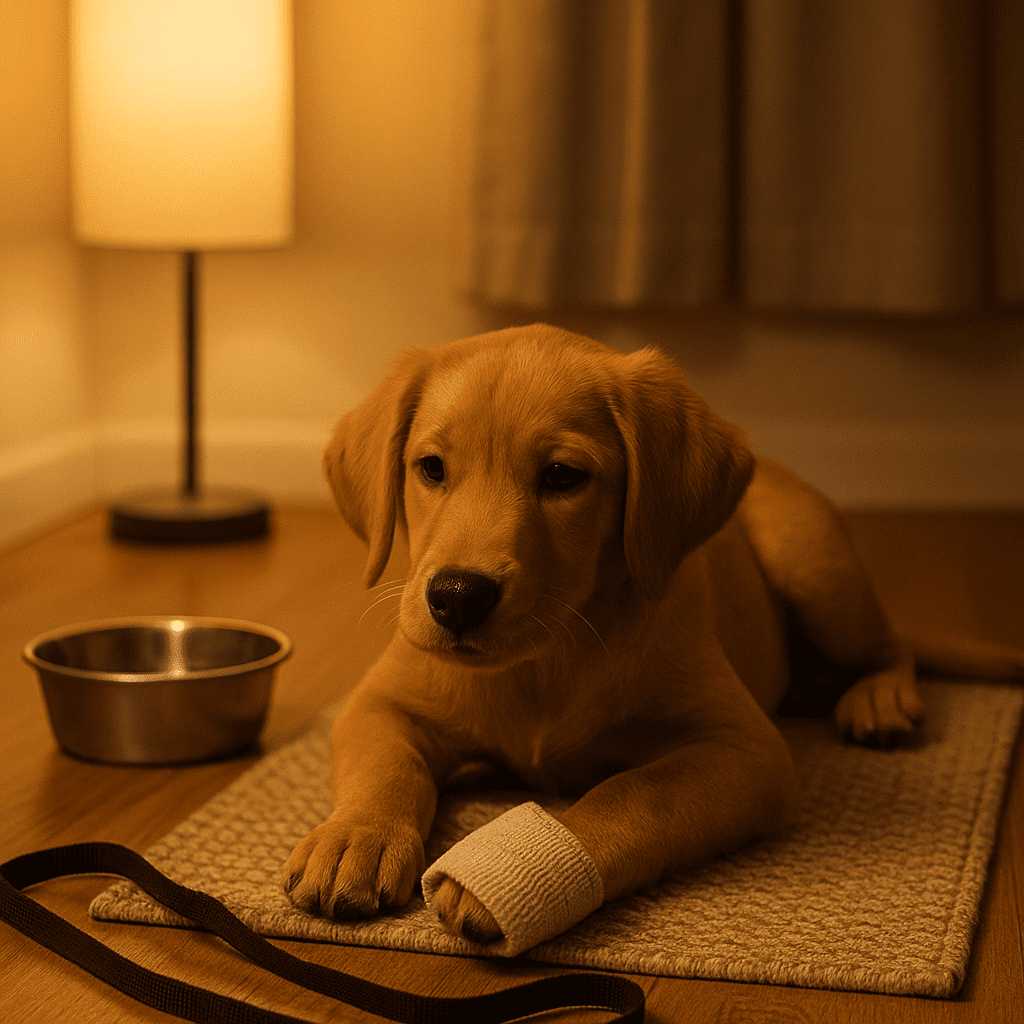
Crate training at night works best when you pair predictable routines with kind, bite-sized steps. This guide gives you a three-phase system (Evening Wind-Down → First Nights → Solid Sleep), plus bathroom-break rules, soothing setups, and troubleshooting for both puppies and adult rescues. You’ll build a positive crate association, not “cry-it-out.”
Why Night Crate Training Works (and When It Doesn’t)
- Predictability calms: Fixed cues (lights, scent, white noise) help the brain downshift.
- Safety habits: Crates prevent midnight chewing, potty accidents, and frantic door dashing.
- Sleep hygiene: Short evening exercise + snack + potty = fuller bladder control and deeper sleep.
When to pause: Separation panic, injury, or illness. If your dog panic-screams, pants, or tries to escape, work with a qualified trainer or your veterinarian.
Phase 1 — Evening Wind-Down (30–60 Minutes Before Bed)
1) Timing & Fuel
- Dinner: 3–4 hours pre-bed. Last mini-snack 60–90 minutes pre-bed (not salty/sugary).
- Water: Normal access, then lift the bowl 60–90 minutes pre-bed (unless medically contraindicated).
2) De-Arouse With “Brain First” Play
- Sniff walk or scatter-feed 10 minutes.
- Two minutes of easy training: hand target → sit → down on mat.
- Short tug or fetch, then clear end (toy away) and a chew to land the plane.
3) Potty → Crate Preview → Settle Cue
- Potty #1 (outside): Quiet route, praise for going—no zoomies after.
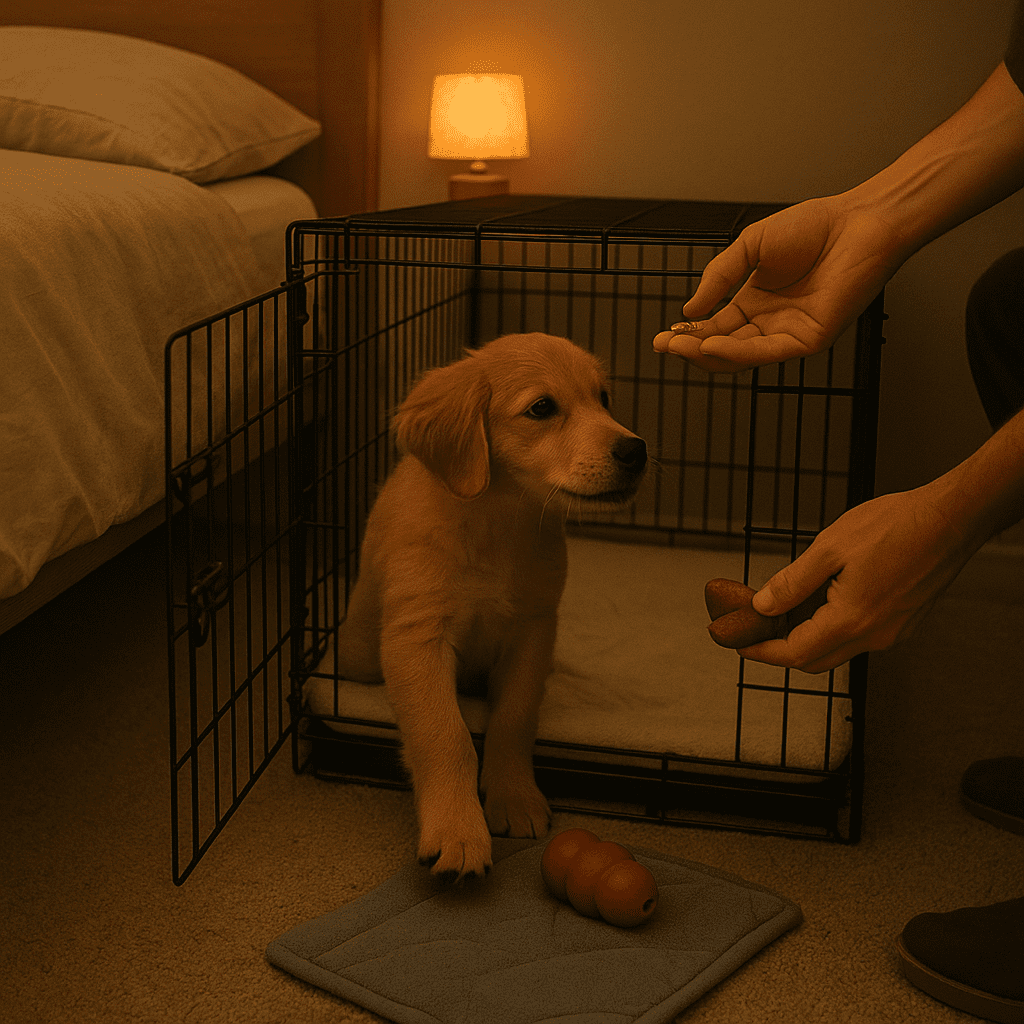
- Crate preview: Door open; toss 3–5 treats inside; release back out once or twice.
- Settle cue: Say “In your crate,” wait for entry, feed a stuffed Kong/lick mat placed inside.
Phase 2 — First Nights Plan (Days 1–3)
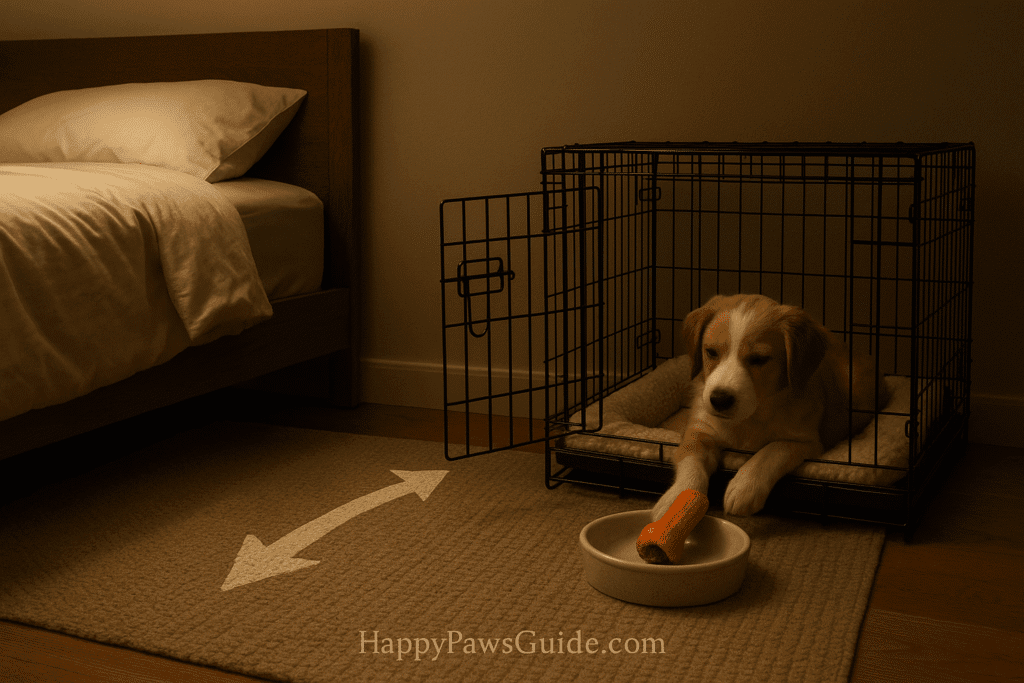
Goal: zero drama, fast learning. Keep the crate near your bed to reduce anxiety and crying. Fade distance later.
Set-Up Checklist
- Location: Crate within arm’s reach of your bed (puppies) or at least same room (adults).
- Comfort: Flat bed or crate mat; safe chew; your worn T-shirt for familiar scent.
- Noise & light: White noise (fan/app), darkened room, night light if you’ll do potty runs.
- Temperature: Slightly cool room helps sleep; avoid direct heater/AC blasts.
Bedtime Sequence (Copy-Ready Script)
- “Potty time” (quiet, no play) → praise.
- Back inside, lights dim, white noise on.
- “In your crate” → deliver stuffed Kong; close door while the dog is busy.
- Lie down; if they stir, calm voice once: “Shh, bedtime.” No eye contact, no hovering.
Night Potty Rules (Puppies/Small Bladders)
- Set one alarm (e.g., 3–4 hours after lights-out for 8–10-week pups).
- When they fuss, check the clock. If close to alarm, take them out. If not, wait 1–2 minutes of quiet before opening.
- Outside = on leash, quiet “go potty,” praise, back to bed. No play.
Responding to Whines (Without Unraveling Training)
- Single whimper: Wait 5–10 seconds of quiet → soft “good quiet.”
- Building fuss: Place two fingers on the crate briefly (no petting), whisper “bedtime,” remove hand.
- Urgent cry + clock says near potty window: Potty protocol, then back to bed.

Phase 3 — Solid Sleep & Distance Fading (Days 4–14)
As nights stay quiet, begin moving the crate away from the bed by 1–2 meters every 1–2 nights, then toward your preferred location (hallway or living room).
Progress Markers
- Sleeps 4–6 hours without fuss (puppies) or 6–8 hours (adults).
- Wakes, re-settles with one cue (“bedtime”).
- Morning crate remains positive—dog chooses to enter for breakfast chew.
If Sleep Backslides
- Return the crate one step closer for 1–2 nights.
- Shorten evening play; add one extra 3-minute sniffy decompression loop before lights-out.
- Review water/dinner timing and room temperature.
Crate Training at Night: Schedules (Puppy & Adult)
| Age/Type | Evening | Overnight | Morning |
|---|---|---|---|
| 8–10 weeks | Wind-down, potty, crate with stuffed Kong | 1 alarm at 3–4 hrs; quick potty only | Out, potty, breakfast chew in crate 5–10 min |
| 11–16 weeks | Same; last water up 60–90 min pre-bed | May stretch to 5–6 hrs | Short play, potty, brief crate time |
| Adult rescue | Longer sniff walk + calm chew | Usually 6–8 hrs, no alarm | Potty, 10 min enrichment, breakfast |
Make the Crate Irresistible (Daytime Prep Fuels Night Success)
- Breakfast in the crate: Bowl or stuffed toy with door open.
- Micro-naps: 3–5 daytime crate rests (3–7 min) while you’re nearby, door closed, calm chew inside.
- Predictable cues: Same blanket, same white noise, same phrase (“bedtime”).
Potty, Water & Late-Night Chewing—Common Mistakes
- Too much evening hype: Rough play → adrenaline → whining. Swap to sniff games and licks.
- Water right before bed: Leads to multiple wake-ups.
- Long goodbyes: Hovering or eye contact keeps the dog “on.” Be boring at bed.
- Letting out mid-whine (not for potty): Accidentally rewards noise. Wait for 2–3 seconds of quiet first.
Troubleshooting Crying (Decision Tree)
If whining starts immediately
Lower criteria: crate by bed, add a higher-value chew, and sit up reading (no eye contact) for 5 minutes.
If whining starts at 2–3 a.m.
Bladder issue. Add a scheduled potty 30–45 minutes earlier for two nights, then test removing it.
If whining starts when you move away
Distance fading needed. Spend 2–3 nights with your hand resting near the crate while you breathe slowly, then remove hand earlier each night.
If dog refuses to enter
Reset association. 3–5 treat tosses into the crate daily with the door open. Feed one full meal in the crate for three days.
Safety & Welfare Notes
- Crate size: Dog should stand, turn, and lie comfortably; not cavernous for puppies (use dividers).
- No collars/tags that can snag; choose a breakaway if needed.
- Chews: Only vet-approved, size-appropriate items; avoid choking hazards.
- Medical red flags: Persistent GI upset, coughing, frequent urination—call your vet.
Related Guides (Internal Links)
- Teach “Leave It” in 3 Days
- Teach Dog Emergency Stop in 7 Minutes a Day
- How to Train a Dog to Walk on a Leash Without Pulling
Trusted Resources (External)
FAQ: Crate Training at Night Without Crying
How long can a puppy hold it at night?
Rough guide is “age in months + 1” hours (e.g., 2-month pup ≈ 3 hours). Always individualize and avoid pushing limits.
Should I cover the crate?
Many dogs settle with a breathable cover on three sides; keep the front partially open for airflow and visibility.
What if my dog cries after the scheduled potty?
Return to bed calmly. Reward 2–3 seconds of quiet with a soft “good quiet.” Avoid turning it into play.
Is it too late for an adult rescue?
No. Use the same phases, but expect faster bladder control and slower distance fading if there’s past anxiety.
When can I move the crate out of the bedroom?
After 3–5 quiet nights. Fade distance 1–2 meters every 1–2 nights; if crying returns, move it closer for a reset.
Call to Action
Start tonight: 10 minutes sniff walk, potty, stuffed Kong in the crate, white noise on—then lights out. Tomorrow, add two daytime crate micro-naps. Keep momentum with Leave It and Emergency Stop for safer, calmer days.
- ALT: Crate training at night—puppy settling with a stuffed food toy and white noise
- ALT: Night potty protocol—leashed, quiet backyard break and straight back to crate
- ALT: Bedroom setup for crate training—covered crate beside bed with soft lighting
- ALT: Distance fading—crate moved slightly farther from the bed after quiet nights