

This practical Chartreux cat care guide covers dense-coat grooming, calm enrichment, nutrition that supports muscle and shine, and a nightly play routine that ends in happy sleep. Copy our daily schedule, check health red flags, and keep your blue-coated buddy thriving.
The Chartreux is the strong, silent type: copper-to-gold eyes, plush blue coat, and a reputation for “smiling.” With the right Chartreux cat care routine—simple grooming, gentle enrichment, and balanced nutrition—you’ll enjoy a tranquil roommate who plays hard for ten minutes and naps like a pro. Below you’ll find copy-ready schedules, grooming steps tailored to the breed’s dense double coat, and health/watch-outs so you can keep your cat comfortable from kittenhood to senior years.
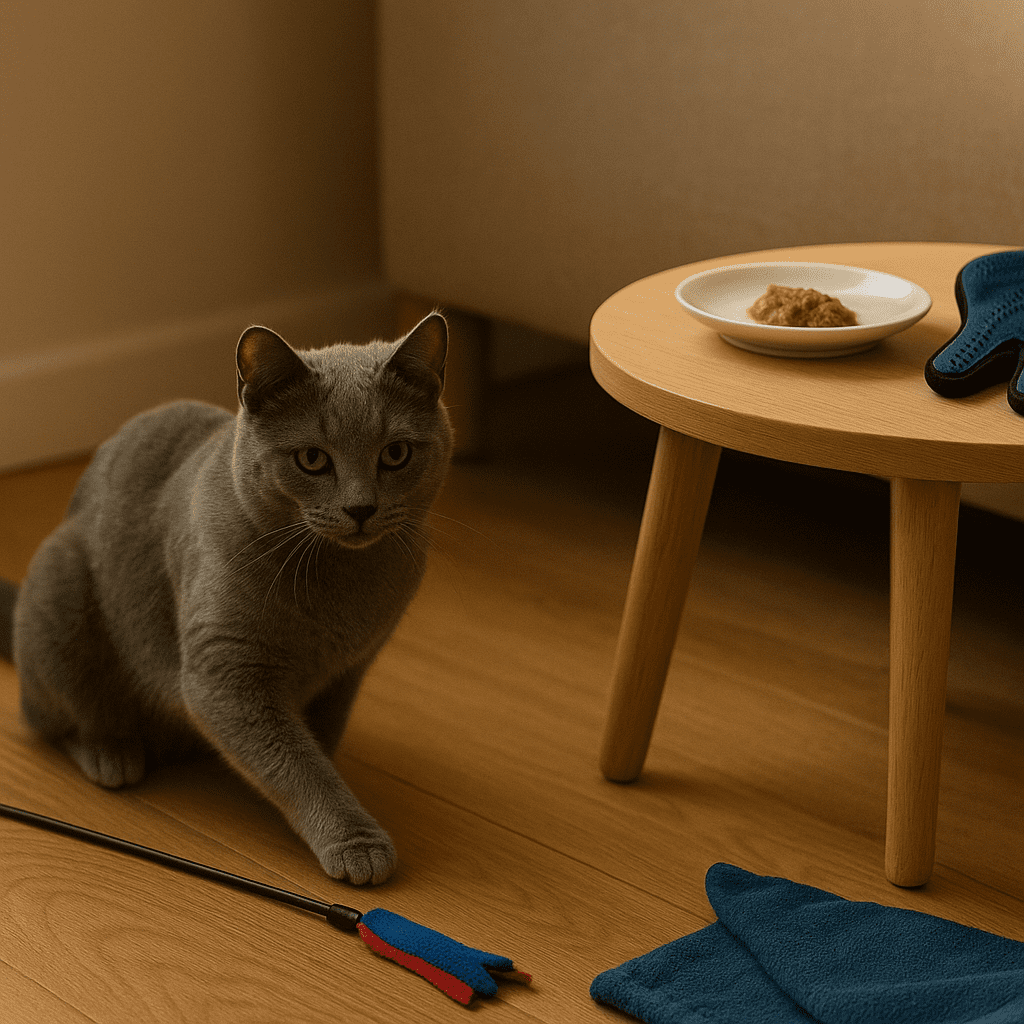
Breed Snapshot (Know Your Blue Shadow)
- Origin: France (natural breed)
- Size: Medium to large; solid, muscular (“cobby”) build
- Coat: Dense, woolly double coat; all shades of blue-gray
- Personality: Quiet, observant, affectionate on their terms, playful in short spurts
- Lifestyle fit: Apartments or houses; thrives with predictable routines and soft voices
The Chartreux often bonds closely with one or two people but remains polite with guests. They’re athletic without being hyper, making Chartreux cat care ideal for families who prefer short structured play plus long, calm cuddles.
Daily Routine (Copy & Paste for Real Life)
| Time | What to Do | Why It Helps Chartreux |
|---|---|---|
| Morning (5–8 min) | Target + treat (touch nose to finger/spoon) → 2 toss-and-return toy reps → breakfast | Warms up joints/brain, prevents “zoom-breakfast” bolting, builds communication |
| Midday (2–3 min) | Forage scatter on a mat or puzzle feeder; window perch check-in | Short, low-arousal enrichment fits the breed’s calm temperament |
| Evening (8–12 min) | Play sequence: stalk → pounce → short chase (wand toy) → lickable treat cool-down → brush 60–90 sec | Respects “hunt–eat–groom–sleep” cycle; ends the day in relaxed parasympathetic mode |
Chartreux Cat Care Basics: Temperament & Bonding
Chartreux cats are observant problem-solvers. They often choose proximity over overt clinginess—sitting beside you, not on you, until the moment feels right. Craft routines that reward initiative without nagging:
- Invite, don’t insist: Pat the cushion, then look away. Let them choose contact.
- Quiet cues: A soft “Here” and a finger tap on the mat travel farther with this breed than loud calls.
- Consistency: Same play window nightly—predictability = confidence.
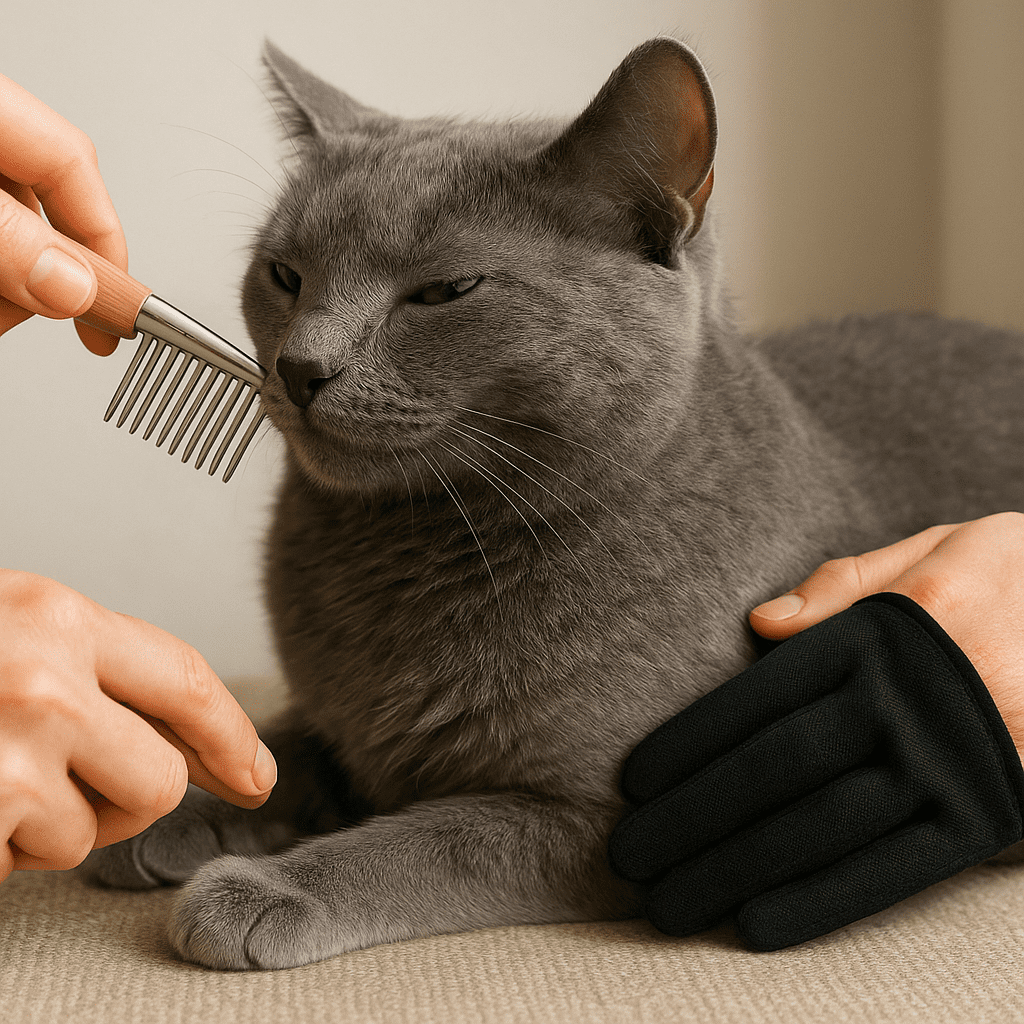
Grooming the Dense Double Coat (Low-Shed When Managed Right)
The woolly coat is springy, weather-resistant, and prone to packing if you over-brush. Smart Chartreux cat care aims for airflow between guard hairs, not “fluff at all costs.”
Weekly Coat Routine (5–7 minutes)
- Light spritz (plain water or cat-safe mist) on hands; palm-rake with fingers to lift dust and loose hair.
- Use a wide-tooth comb only on friction zones: behind ears, armpits, trousers. Three gentle passes; stop before frizz.
- Finish with a rubber grooming glove in short, downward strokes to re-lay the coat.
Seasonal Shed (Spring/Autumn)
- Increase to 2–3 quick sessions/week; add omega-3s (vet-approved) to support skin and sheen.
- Avoid high-heat blow-drying that lifts too much undercoat; towel press if needed.
Bathing?
Many Chartreux do fine with no routine baths. If you must: pH-balanced cat shampoo, thorough rinse, towel-press, then room-temp air dry. Over-bathing collapses the coat and can irritate skin.
Nails, Ears, Teeth
- Nails: Every 2–3 weeks; pair with lickable treat on a mat.
- Ears: Monthly glance; wipe only if you see light wax at the rim.
- Teeth: 3–5×/week brushing with cat paste; add dental treats or water additive per vet advice.
Nutrition: Muscle, Shine, and a Quiet Belly
Feed a complete, high-protein diet that maintains lean mass without spiking the zoomies.
- Macros: Prioritize animal protein; moderate fat; controlled carbs.
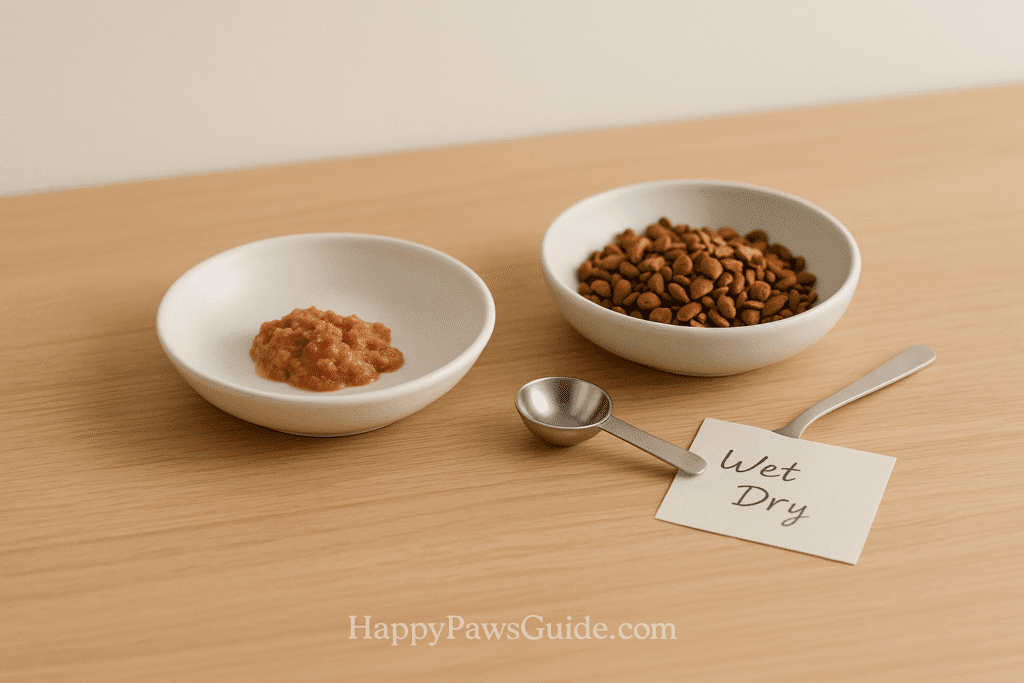
- Wet + Dry Blend: Wet for hydration and satiety; measured dry for dental texture and convenience.
- Portioning: Use body-condition score: visible waist from above, ribs easy to feel, no belly swing in adults.
- Supplements: Discuss omega-3s (EPA/DHA), joint support for seniors, and probiotics during transitions with your veterinarian.
Tip: Log treats into total calories—those evening wand victories add up fast.
Enrichment & Play: End Sessions in Sleep
Chartreux love short, tactical play. Plan 8–12 minutes, then stop while they’re still engaged to avoid escalation.
Play Ladder (Follow This Order)
- Stalk: Wand toy drifts along baseboards.
- Pounce: Two to three clean pounces; keep toy low (no high leaps for safety).
- Chase: Short burst; then let the toy “die.”
- Eat: One teaspoon of wet food or lickable treat.
- Groom: 60 seconds of glove strokes.
- Sleep: Move them to their warm spot or your cushion invitation.
Calm Enrichment Options
- Forage mats and puzzle bowls (easy difficulty, finished in 2–4 minutes).
- Window perch with bird-safe feeder outside (distance from glass for safety).
- Cardboard “tunnel” triangles you can re-arrange weekly.
Health & Vet Gameplan (Lifespan and Watch-Outs)
Chartreux are generally robust. As with many natural breeds, keep a sensible preventive schedule:
- Annual vet exam (biannual for seniors) with weight, teeth, and joint checks.
- Vaccines & preventives per local risk; indoor-only still need core protection.
- Body weight is the bellwether; sudden gain/loss warrants a check.
Potential concerns (vary by line): dental tartar, mild joint stiffness in seniors, and rare hereditary issues screened by responsible breeders. If adopting, build a baseline with your vet in the first month.
Chartreux Cat Care for Kittens, Adults, and Seniors
Kittens (0–12 months)
- Short, frequent play; protected landings (no tall jumps).
- Early handling: paws, ears, mouth with food pairings to future-proof vet care.
- Carrier = café: feed one meal daily in a tied-open carrier.
Adults (1–7 years)
- Stick to the nightly play ladder; rotate 3–4 toys to prevent boredom.
- Weight watch: weigh monthly; adjust portions by 5–10% as seasons/activity change.
Seniors (8+ years)
- Lower jumps; ramps to favorite perches.
- Warm nap spots (orthopedic mat) and gentler grooming sessions.
- Biannual vet checks; baseline bloodwork on file.
Behavior: Quiet Doesn’t Mean Shy
Chartreux cats read rooms well. They often prefer “parallel affection” (next to you) and come running for rituals: the clink of a spoon, the rustle of a puzzle mat. If they “vanish,” they’re likely napping near your scent—closet shelf, clean laundry basket, under the couch arm.
Training Micro-Skills (30–60 seconds each)
- Target: Nose touch to finger; use as recall indoors.
- Station: Go to mat/cushion; reduces table surfing and door dashing.
- Carrier cue: “In” → toss treat; close door for 2–3 seconds → reopen → treat party.
Home Setup: Calm by Design
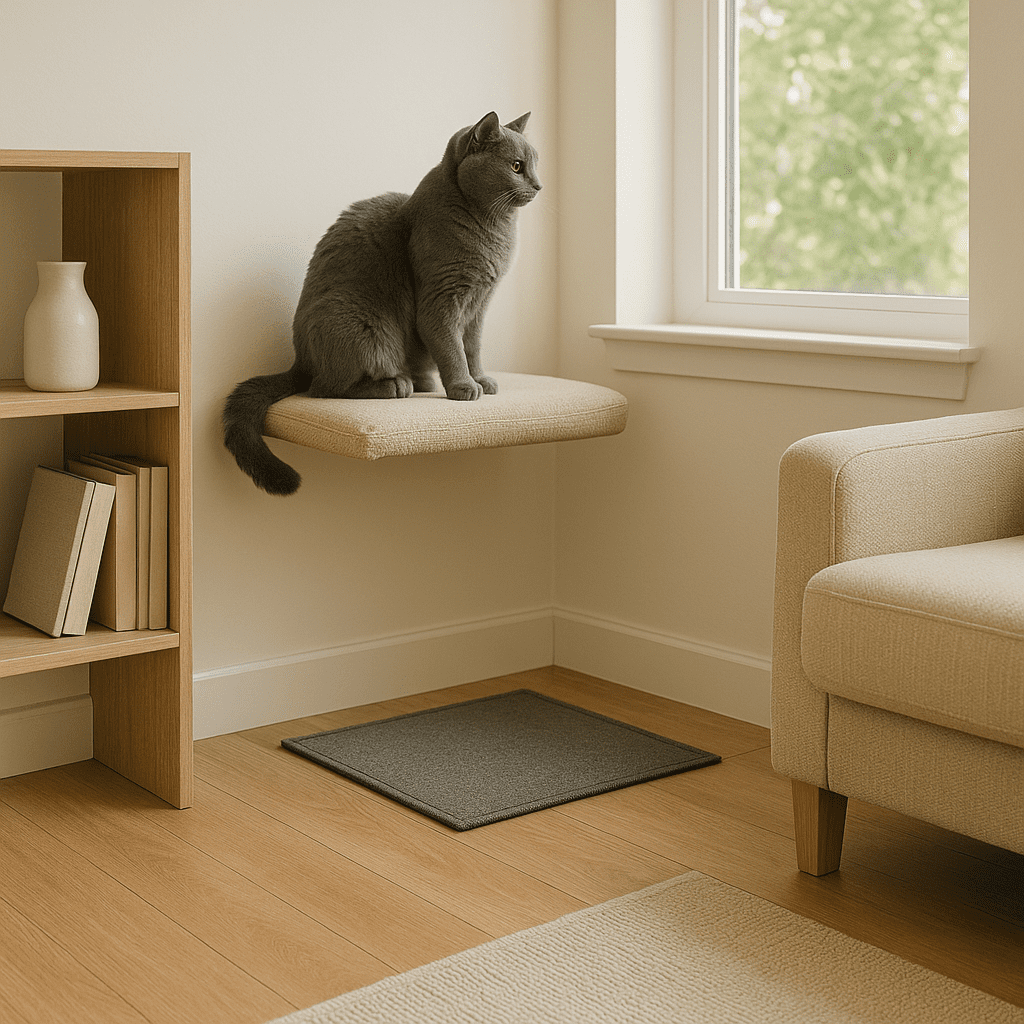
- Perch levels: One high (window), one mid (bookshelf), one low (sofa arm) to spread traffic.
- Litter: Fine, unscented; 1.5× cat length; 1 box per cat + 1 spare; quiet corner.
- Water: Wide ceramic bowl (whisker-friendly) or fountain; place away from food.
- Sleep zone: Warm, draft-free, near evening human activity for bonding.
Travel & Vet Days (Without Drama)
- Carrier out 24/7 as furniture; one meal/day inside.
- Day-before practice: close door for 3 seconds → treat → open. Repeat three times.
- Travel day: small familiar towel + your worn T-shirt; cover three sides for den-feel.
Troubleshooting (Decision Tree)
Won’t play at night
Swap toy style (wand → floor prey like kicker), shorten to 5 minutes, and add a scatter-forage after to complete the hunt cycle.
Overgrooming or dull coat
Rule out stressors; add omega-3s per vet guidance; reduce over-brushing; check humidity in winter.
Door dashing
Teach “Station” 10 feet from the door; feed rapid treats there while someone opens/closes the door. Add a baby gate buffer for guests.
Night zoomies
Move the play ladder earlier by 30 minutes; add a lickable treat cool-down and 60 seconds of glove grooming right before lights out.
Related Guides (Internal Links)
- Ragamese Cat Care: Calm Meets Curious
- Somali Cat Care: Playful Shadows & Low-Shed Grooming
- LaPerm Cat Care: Low-Mat Curls & Stress-Free Grooming
Trusted Resources (External)
FAQ: Chartreux Cat Care (Owner Quick Answers)
Are Chartreux cats hypoallergenic?
No breed is truly hypoallergenic. Many people find the Chartreux tolerable due to moderate shed when groomed properly.
How much do they shed?
Light to moderate with seasonal peaks. Manage with brief weekly grooming and nutrition support.
Do Chartreux like being held?
Many prefer gentle proximity over long holds. Offer a lap or cushion; let them choose.
How long do Chartreux cats live?
Commonly into the low-to-mid teens with good preventive care; seniors benefit from biannual vet checks.
What’s the #1 routine to keep?
The nightly “hunt–eat–groom–sleep” play ladder. It solves restlessness and deepens the bond.
Call to Action
Start tonight: run the 8-minute play ladder, serve a tablespoon of wet food, glove-groom for 60 seconds, and invite your Chartreux to their cushion. Keep a one-line log for a week—your Chartreux cat care will feel effortless by day seven.
- ALT: Chartreux cat care—blue-coated Chartreux lounging with golden eyes and a soft “smile”
- ALT: Chartreux grooming—wide-tooth comb on friction points and rubber glove finishing
- ALT: Chartreux enrichment—window perch and short wand-toy play before bedtime
- ALT: Chartreux nutrition—wet and dry food combo in whisker-friendly bowls