

This guide delivers a calm, step-by-step dog paw pad burn treatment plan—how to cool and protect pads, dress minor burns, manage pain with your vet, and prevent re-injury using the hot-pavement test. Clear timelines and real-life walking tips speed safe recovery.
Summer sidewalks, deck boards, and sand can scorch your dog’s paws in minutes. With the right dog paw pad burn treatment, most mild injuries heal quickly—if you cool the pads correctly, protect the wound, and manage activity. This owner-tested plan explains first aid, home care, walking rules, and prevention, plus red flags that mean it’s time to see your veterinarian.
Spotting a Paw Pad Burn (Before It Worsens)
- Early signs: Licking or lifting a paw, quick steps on hot surfaces, reluctance to walk, whining.
- Visual clues: Darkened or reddened pad, smooth/glossy areas, blisters, peeled or missing pad layers, bleeding.
- Pain behaviors: Paw guarding, irritability, sudden “sit-downs” on pavement.
Rule of thumb: If the pad is visibly raw, bleeding, blistered, or your dog won’t bear weight, skip home fixes and contact your vet first.
7-Step Dog Paw Pad Burn Treatment (At-Home First Aid)
For minor, superficial burns only. When in doubt, call your veterinarian for guidance before starting any dog paw pad burn treatment.
Step 1 — Move Off the Heat
Carry or walk your dog to cool shade or indoors. Avoid letting them keep standing on heat sources (pavement, deck, sand).
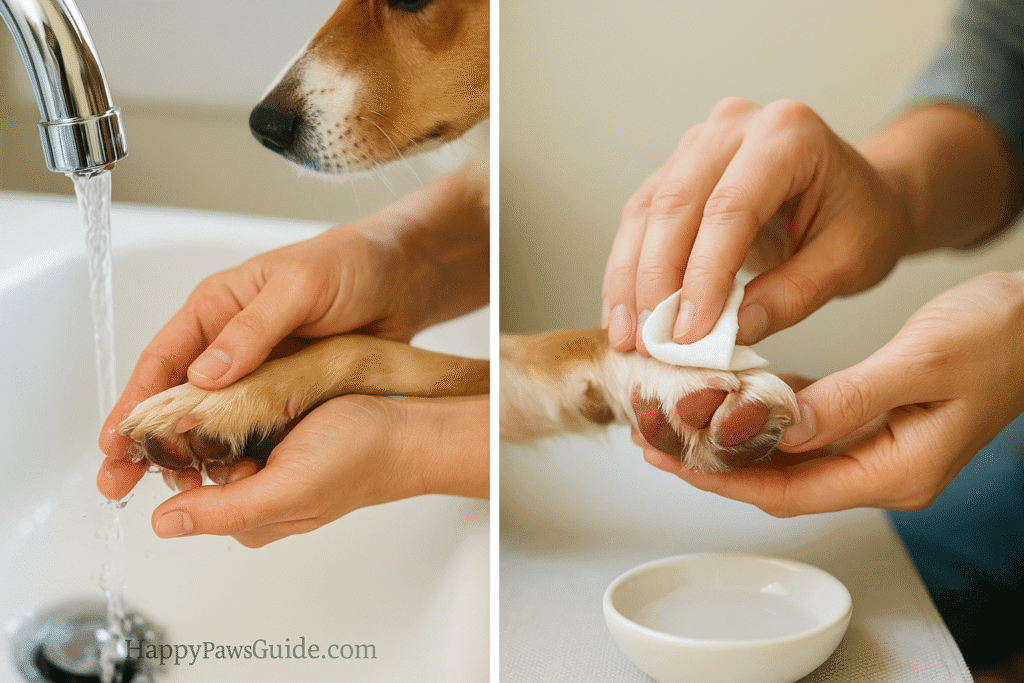
Step 2 — Cool, Don’t Ice
Rinse pads with cool (not cold) water for 5–10 minutes. A sink sprayer or bowl soak works. Avoid ice—extreme cold can damage tissue further.
Step 3 — Gentle Clean
If intact skin only: briefly cleanse with saline or clean water. Do not use hydrogen peroxide or harsh antiseptics on exposed pad tissue unless your vet instructs it.
Step 4 — Dry & Protect
Pat (don’t rub) dry with sterile gauze or a clean towel. For mild abrasion, apply a thin vet-approved paw balm or hydrogel to maintain moisture balance. If the skin is open, ask your vet about a topical.
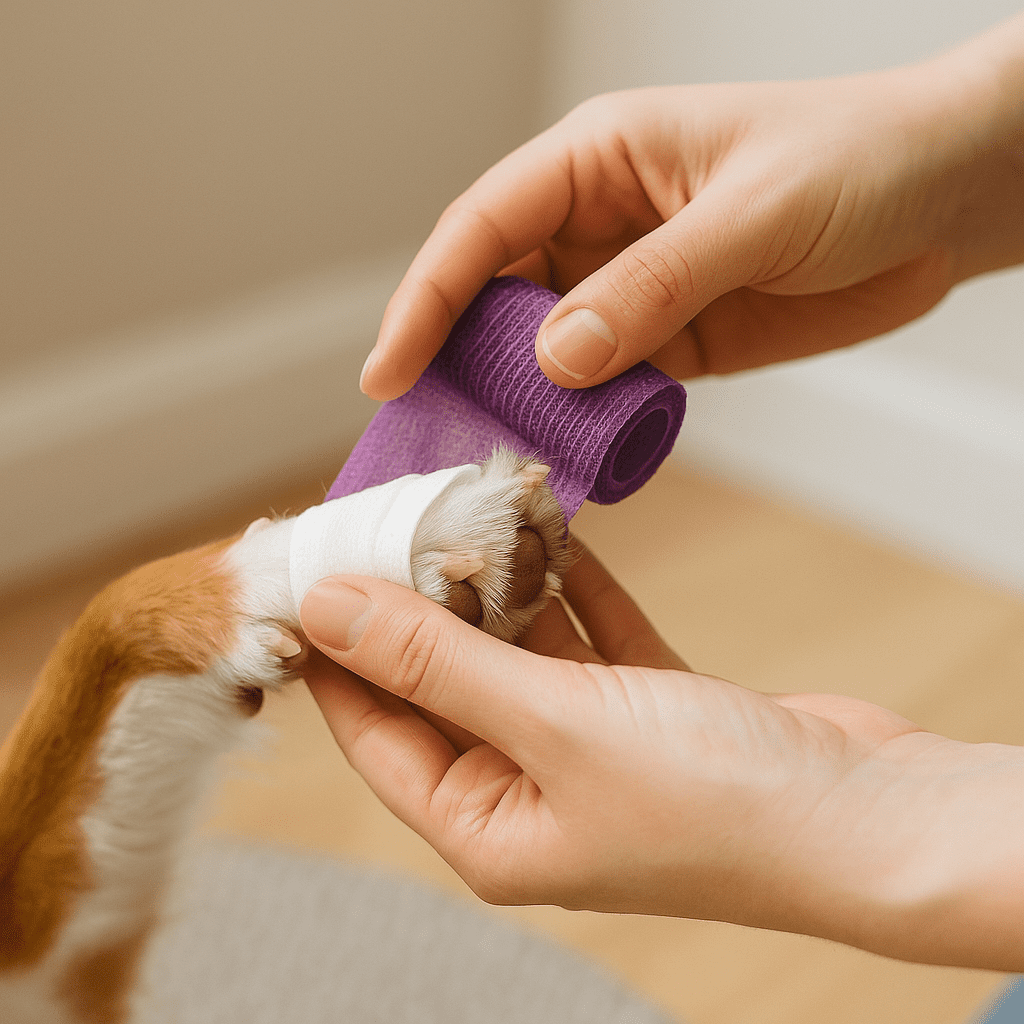
Step 5 — Light Dressing
Place a non-stick sterile pad over the area, then wrap with soft gauze and self-adhesive bandage. Wrap snugly but not tight—check toes for warmth and normal color. Change daily or sooner if wet/dirty.
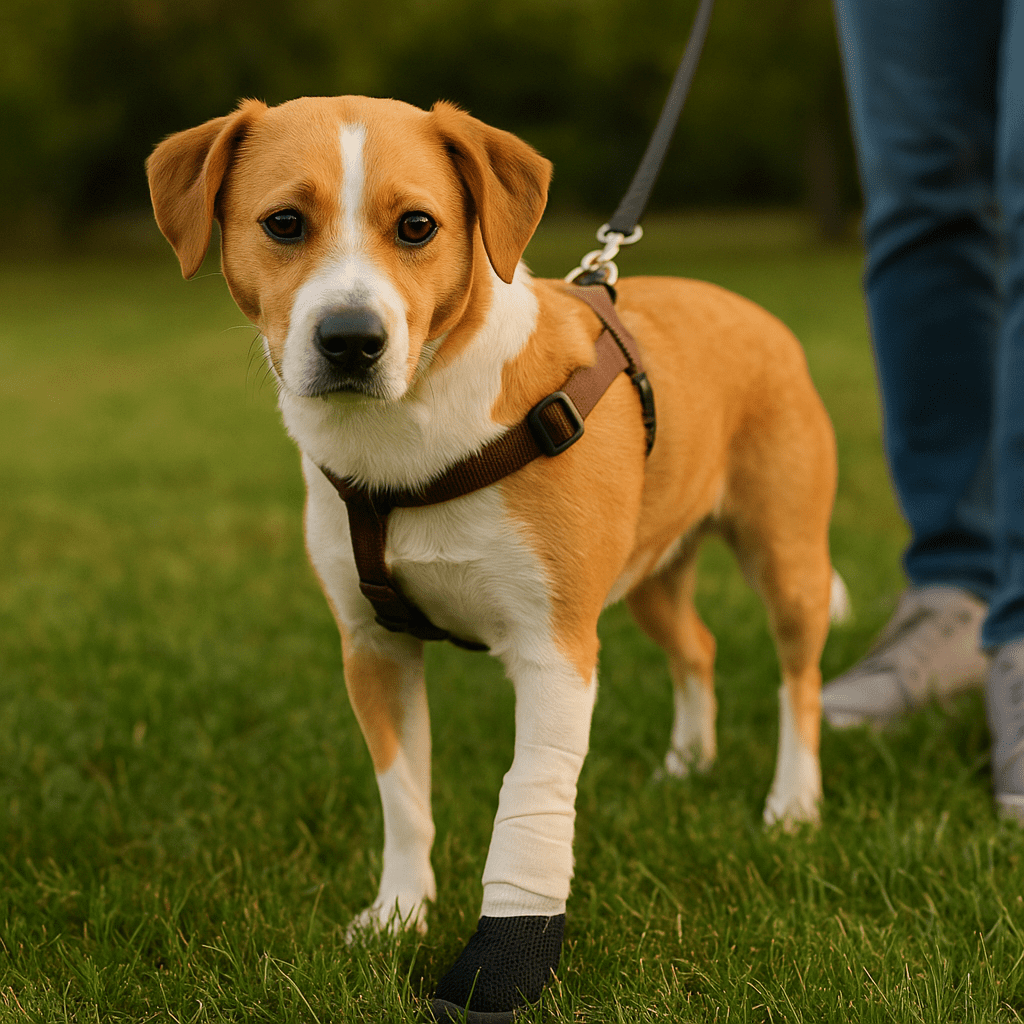
Step 6 — Bootie & Floor Rules
Use a breathable dog bootie over the dressing for outside trips. Indoors, restrict zooming on rough rugs or slippery floors. Create potty-only breaks for 48–72 hours.
Step 7 — Pain & Infection Watch
Only give pain meds prescribed by your vet for your dog’s weight and health. Watch for swelling, pus, foul odor, fever, or worsening limp—these are vet-visit triggers.
Dog Paw Pad Burn Treatment Timeline (What Heals When)
| Day | What You Do | What You Should See |
|---|---|---|
| 0–1 | Cool rinse, dress, restrict walks; bootie for potty trips. | Pain begins to settle once cool and protected. |
| 2–3 | Daily bandage changes; gentle clean; short potty breaks only. | Less licking; pad looks less glossy/angry if superficial. |
| 4–7 | Recheck with vet if open tissue; continue protection. | Granulation/early layer repair; comfort improves. |
| 7–14+ | Gradual walk increase on soft/cool surfaces; protect if scabbed. | Regrowth of pad layers; still vulnerable to friction/heat. |
Note: Deep burns or large avulsions (pad layers peeled off) need veterinary care and can take weeks. Don’t “test” the pad on hot surfaces during healing.
When to See the Vet (Don’t Wait on These)
- Open, bleeding, or blistered pads; nail bed involvement.
- Won’t bear weight; severe or persistent limping.
- Red streaking, swelling, pus, foul odor, fever/lethargy.
- Multiple pads affected or your dog has medical conditions (e.g., diabetes).
- Home care hasn’t improved things within 48 hours.
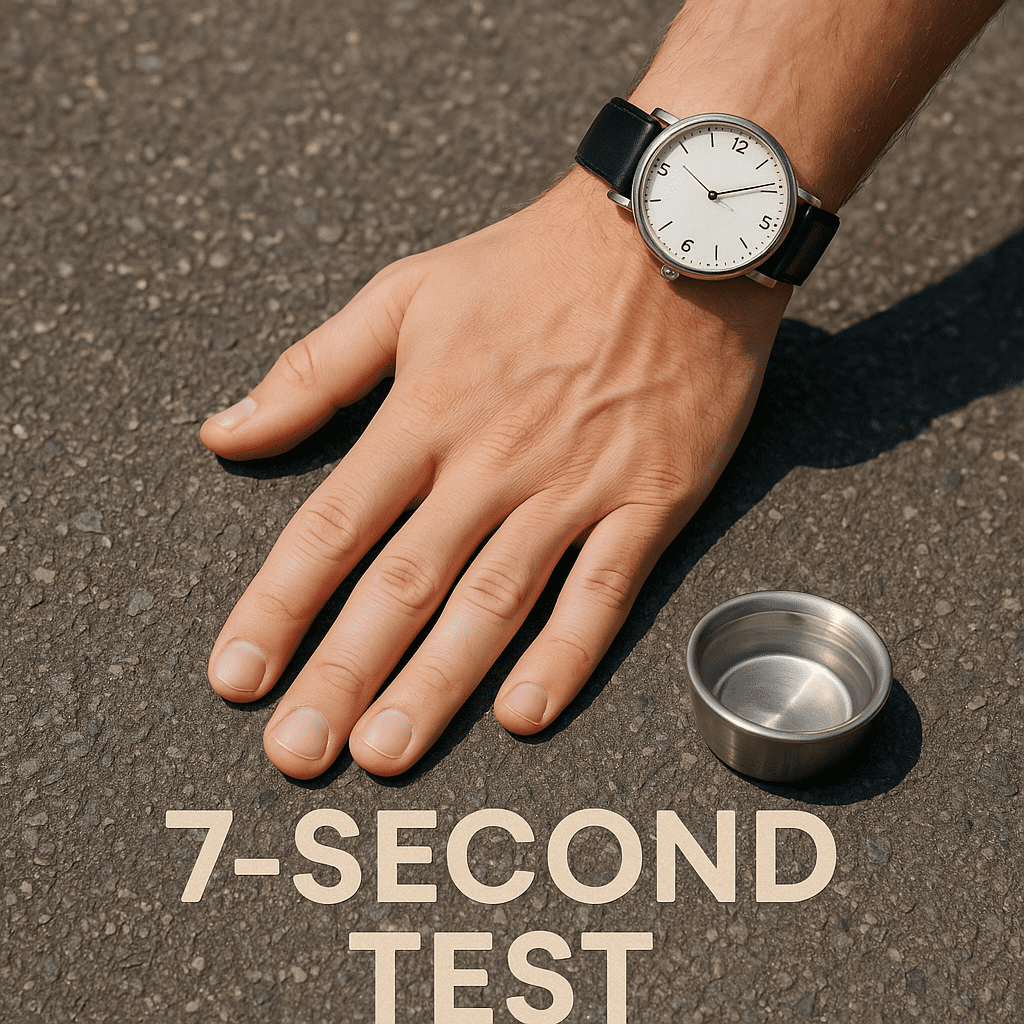
Hot Pavement Test: Can We Walk Now?
Use the “7-second back-of-hand test”: Press the back of your hand on the surface for 7 seconds. If it’s too hot for your hand, it’s too hot for paws. Check asphalt, concrete, decks, sand, and even artificial turf. Pavement can exceed air temperature by 20–30°C (36–54°F) in direct sun.
Safer Walking Rules (All Summer)
- Walk at dawn and dusk or choose shaded routes.
- Favor grass/dirt paths and cool indoor floors.
- Carry a collapsible bowl; hydrate often.
- Use booties for necessary pavement time; introduce them gradually with treats.
Dog Paw Pad Burn Treatment FAQs (Owner Confidence Boost)
Can I use antibiotic ointment?
Only if your veterinarian okays a specific product for your dog and wound depth. Some ointments cause irritation or are unsafe if licked.
Is coconut oil or balm enough?
For superficial dryness only. For real burns, moisture balance matters, but infection control and protection matter more. Ask your vet for a suitable hydrogel or topical.
Bandage or let it “air out”?
Protected dressings prevent contamination and pain from friction. Air exposure is risky outdoors and on carpets. Follow your vet’s dressing schedule.
How soon can we resume normal walks?
Often 5–7 days for minor burns—on cool, soft surfaces and short distances. Deep injuries need veterinary timelines.
Should I pop blisters?
No. Popping increases infection risk. Blistered or missing pad layers require a veterinary visit.
Prevention Plan: Make Burns Unlikely
1) Route & Schedule
- Pick grass-heavy loops; avoid dark asphalt at midday.
- Shift big exercise to dawn/dusk; do sniff-walks (brainy, low impact) at high-heat hours indoors.
2) Gear & Surfaces
- Booties: breathable, non-slip; size correctly; reward heavily at first.
- Portable shade for beach/park; test sand with your hand.
- Consider a cooling mat for deck time.
3) Conditioning
- Build walk distance gradually each spring; pads toughen with moderate mileage on safe surfaces.
- Keep nails short; long nails change stride and increase pad stress.
4) Heat-Smart Alternatives
- Indoor scent games, food puzzles, hallway recalls.
- Short car trip to shaded trails instead of neighborhood asphalt.
Need low-heat, high-focus activities? Try our impulse-control staples: Teach “Leave It” in 3 Days and Emergency Stop (7 Minutes a Day).
Dog Paw Pad Burn Treatment: Supplies Checklist
- Saline or clean water for cooling/cleaning
- Non-stick sterile pads, soft gauze, self-adhesive wrap
- Dog booties (breathable) in the right size
- Vet-approved hydrogel or topical (if prescribed)
- Elizabethan collar or soft cone to prevent chewing
- Collapsible bowl, extra water for walks
Real-World Walking After a Burn (Re-Entry Protocol)
- Days 1–3: Potty breaks only, bootie + dressing; cool routes.
- Days 4–5: 5–10 minutes on grass only; reassess after each outing.
- Days 6–7: 10–15 minutes; still avoid heat and rough ground.
- After Day 7: Increase by 5 minutes every 2–3 days if no limping/licking. Pavement only after a cool-touch test passes.
Trusted Resources (External)
Related Guides (Internal Links)
- Dog Hot Spots Relief: Vet-Approved Treatments & Prevention
- How to Train a Dog to Walk on a Leash Without Pulling
- Teach Dog Emergency Stop in 7 Minutes a Day
FAQ: Dog Paw Pad Burn Treatment (Owner Quick Answers)
What’s the fastest way to help a minor burn?
Cool water rinse 5–10 minutes, gentle dry, non-stick dressing, and a bootie for short potty trips. Keep off hot/rough ground.
Do I need antibiotics?
Only if your veterinarian prescribes them. Many minor pad burns heal with protection and hygiene alone.
Are human burn creams safe?
Not without veterinary guidance. Some contain ingredients unsafe if licked or inappropriate for canine pads.
Can I walk on pavement with booties?
Booties protect from abrasion and dirt, not extreme heat. Pass the hot-pavement hand test first.
How do I stop constant licking?
Use a cone or recovery collar and keep bandages clean/dry. Licking delays healing and invites infection.
Call to Action
Start now: run the 7-second hot-pavement test, pack booties and water, and save our recovery plan. For low-heat training days, use 3-Day Leave It and 7-Minute Emergency Stop to keep walks calm and safe.
- ALT: Dog paw pad burn treatment—owner rinsing pads with cool water at a sink
- ALT: Non-stick dressing on a dog’s paw pad with breathable bootie for outdoor potty breaks
- ALT: Hot pavement 7-second back-of-hand test to prevent dog paw pad burns
- ALT: Dog resting on a cooling mat indoors after a short, safe potty walk