

Worried about dog reverse sneezing at night? Here’s what it is, why it shows up after bedtime, vet-backed ways to calm an episode, and the exact warning signs that need a clinic visit. Clear steps now, plus prevention you can start tonight.
Dog reverse sneezing at night can sound scary—rapid inward snorts, a stiff stance, the neck extended like your dog is trying to pull air through a straw. The good news: most episodes are brief and harmless. This guide explains the reflex, why nights make it more noticeable, simple relief you can try safely, and the red flags that mean it’s time to book a vet exam.
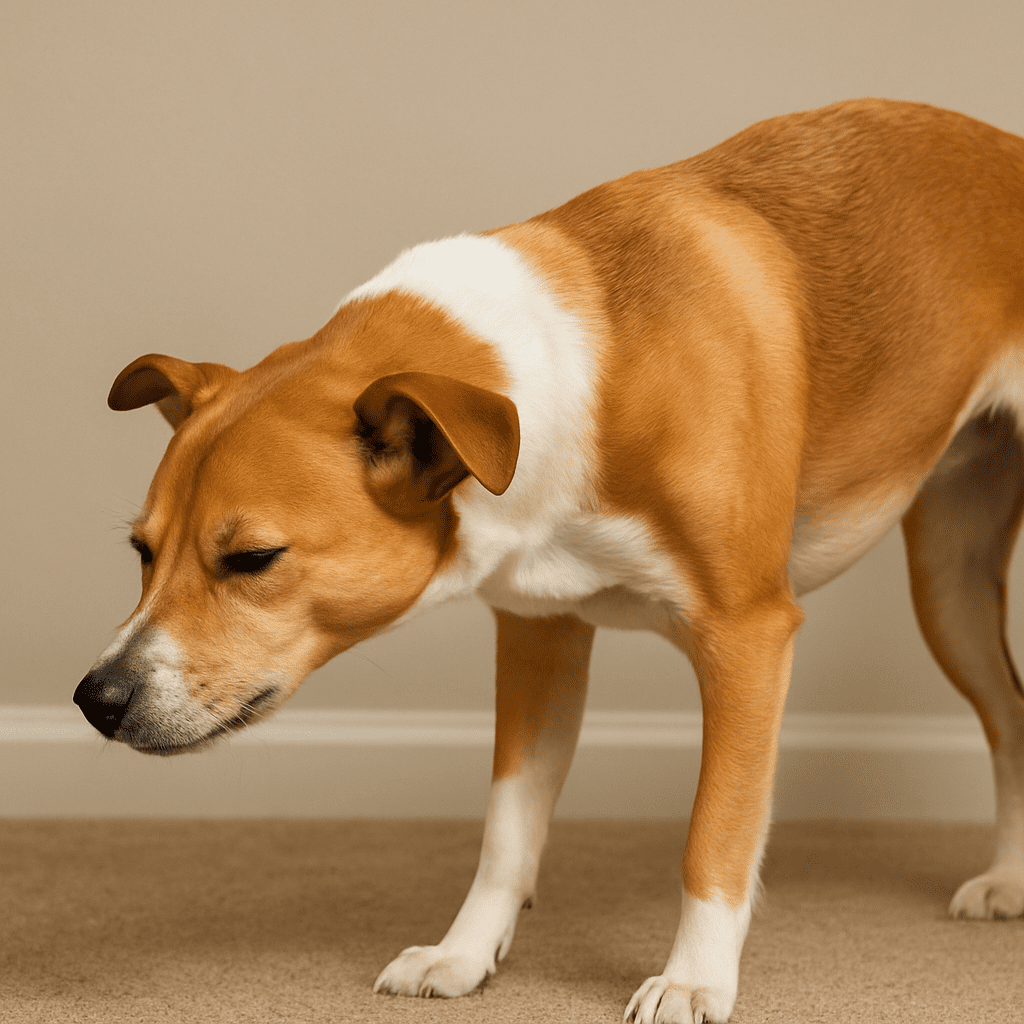
What Is Reverse Sneezing (and What It Isn’t)?
Reverse sneezing (also called paroxysmal or inspiratory respiration) is a reflex triggered by irritation in the back of the nasal passages/soft palate. Unlike a normal sneeze (air out), your dog pulls air in, often standing still with the head and neck extended and making loud snorting sounds. Episodes usually last seconds to a minute and resolve on their own.
- Common triggers: dust or pollen, household sprays/perfume, leash pressure on a collar, excitement, eating/drinking, temperature or humidity shifts.
- What it’s not: a cough, choking, or a sign of heart disease by itself—though frequent or difficult episodes deserve a vet check.
Why Does It Happen at Night?
Owners often notice reverse sneezing after lights out. Night-time episodes can be primed by:
- Airway dryness or bedroom irritants: dry heated/AC air, dust, laundry fragrances, candles, air fresheners.
- Position changes: shifting from curled to stretched can briefly tickle the soft palate.
- Collar contact: tag or collar pressure when the dog settles down.
- Post-meal micro-reflux or crumbs: mild irritation after a late snack or gulped water.
- Seasonal allergens: pollen and outdoor particles tracked into bedding.
Bottom line: night doesn’t cause the reflex; it removes daytime noise so you hear/notice it, while dry rooms and fragrances can make it more likely.
What to Do During an Episode (Calm, Quick, Safe)
- Stay calm and keep your dog still in a comfortable standing or sitting position.
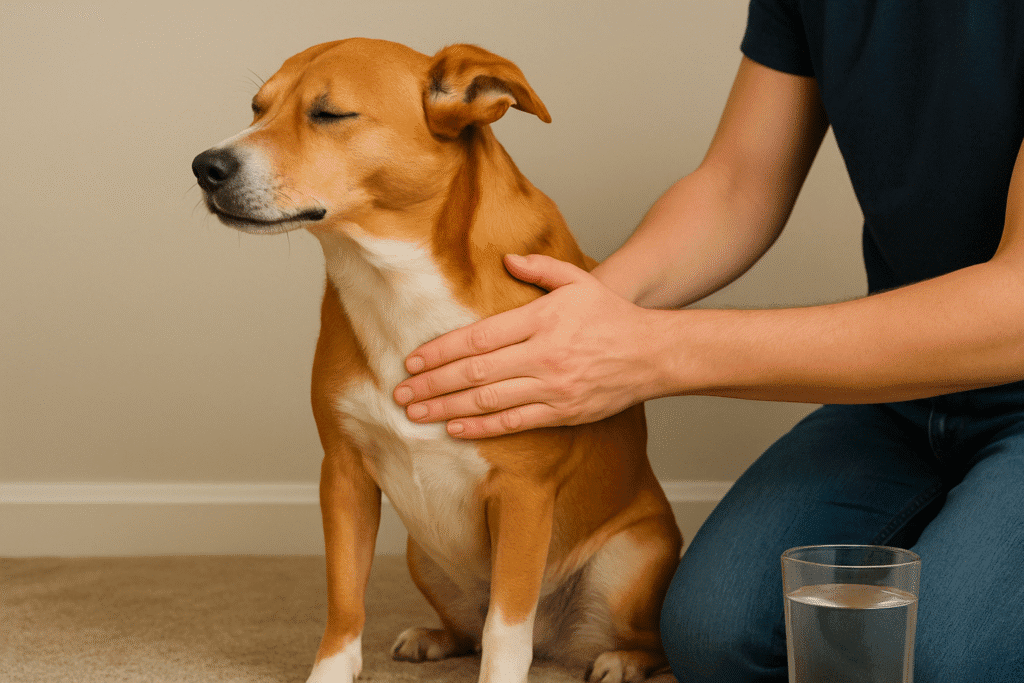
- Soft throat strokes: gently rub downward along the throat/upper chest. Many dogs swallow and the reflex stops.
- Encourage a swallow: offer a quick lick of water or briefly blow on the nose; some clinicians also suggest briefly covering the nostrils for 1–2 seconds to trigger a swallow—only if your dog tolerates handling and never if breathing looks labored.
- Fresh air: open a window or step to a cooler, unscented room.
If episodes are new, frequent, prolonged (≈>1 minute), or your dog seems distressed, schedule a veterinary exam to rule out primary problems (see red flags below).
Red Flags: When to See a Vet
Book a vet visit if you notice any of the following with night-time reverse sneezing:
- New or escalating frequency over days to weeks.
- Breathing effort between episodes: open-mouth breathing, blue/pale gums, fatigue.
- Nasal discharge (especially bloody or from one side), facial pain, pawing at the face, or foul odor.
- Coughing “honks,” collapse spells, or exercise intolerance (consider tracheal or cardiac disease).
- Foreign body risk: yard seeds/foxtails, grass awns, chewed toys.
- Very young puppies, brachycephalic breeds, or seniors with new episodes.
At-Home Prevention You Can Start Tonight
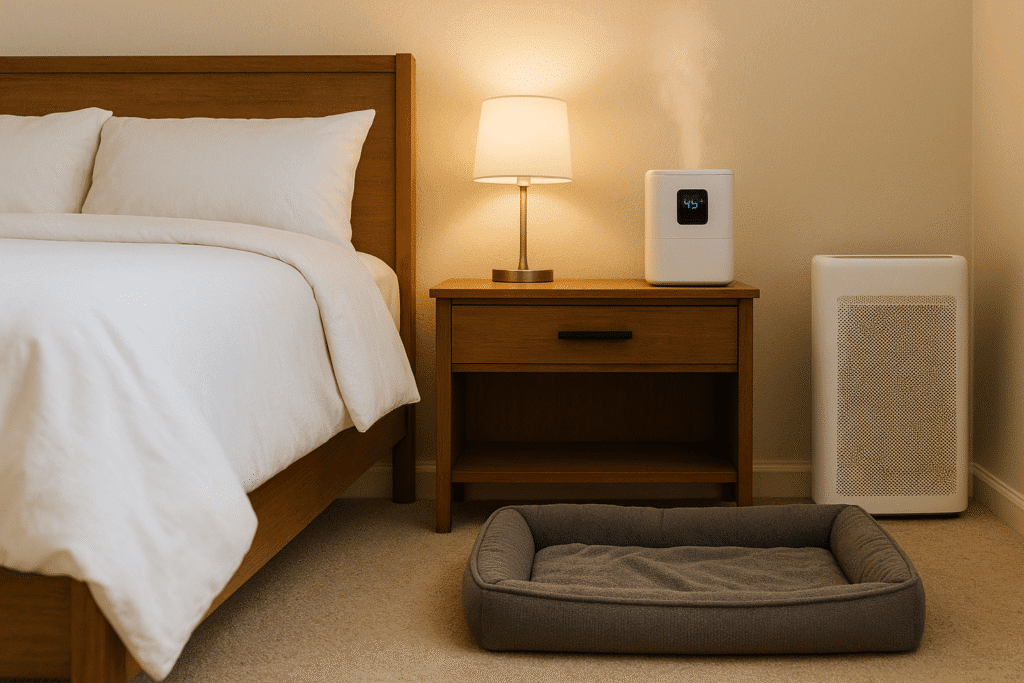
- Bedroom air: add a humidifier (40–50% RH), vacuum/HEPA weekly, wash bedding hot, and avoid candles, incense, diffusers, aerosols, and fabric softener scents in sleep areas.
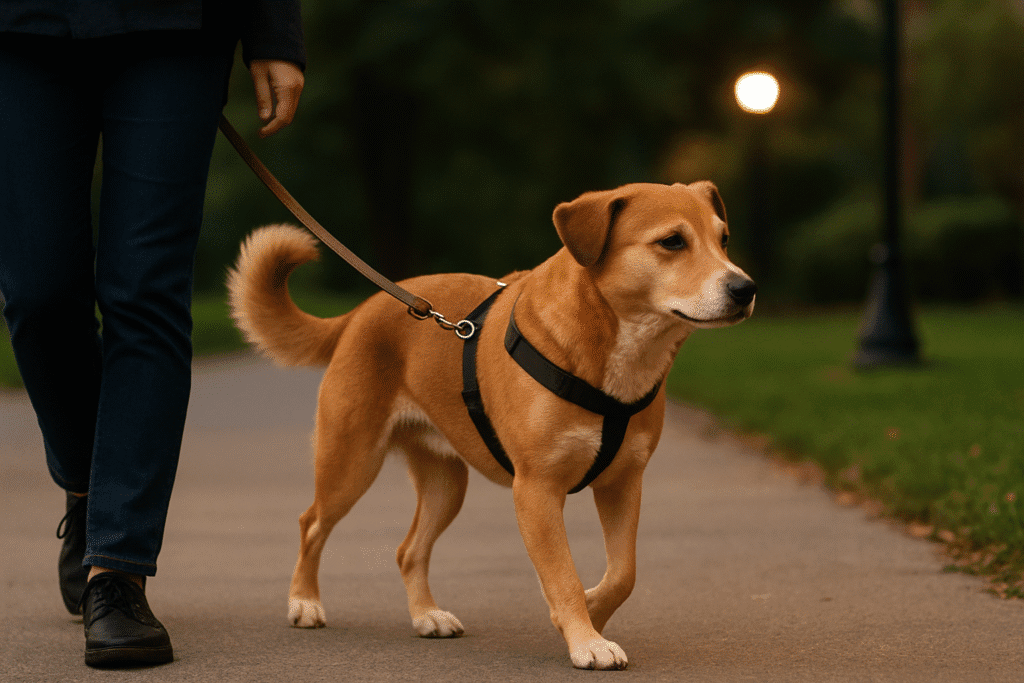
- Collar & tags: use a harness for walks; keep night collars loose, quiet tags with a silicone silencer or on a separate hook near the bed.
- Water & feeding: last meal 3–4 hours before bed; slow-feed bowls for gulpers; fresh water available.
- After walks: quick face wipe to remove pollen/dust; shake out the bed/blanket.
- Training buffer: keep excitement games earlier; end the evening with calm foraging or a lick mat to reduce arousal-linked triggers.
What Your Vet May Check (and Treat)
A focused exam rules out problems that can mimic or worsen reverse sneezing:
- Nasal/throat irritation: rhinitis, mild infections, nasal mites; may trial anti-inflammatories or parasite therapy if indicated.
- Anatomy: elongated soft palate in short-nosed breeds; dental or oral issues.
- Foreign body or mass: may require rhinoscopy or imaging if signs persist or include unilateral discharge/bleeding.
- Concurrent airway disease: tracheal disease, collapsing trachea, or cough disorders that need different treatment.
Most dogs don’t need medications; the plan is usually trigger management, reassurance, and monitoring—plus specific therapy if an underlying issue is found.
Night Routine: A 7-Day Reset Plan
| Day | Room & Air | Evening Routine | Notes |
|---|---|---|---|
| Mon | Humidifier 45% • fresh bedding | Slow-feed dinner • lick mat wind-down | Collar off for sleep |
| Tue | Vacuum/vet-safe dusting | Face wipe after walk • quiet chew | Log any episodes (time/length) |
| Wed | No fragrance policy | Short training → settle on mat | Swap diffuser/candle for nothing |
| Thu | HEPA on low overnight | Early play (before 7pm) | Water bowl cleaned, refilled |
| Fri | Wash bed/blanket hot | Light stretch/sniff walk only | Trim loud tag or remove |
| Sat | Air out bedroom 10 min | Lick mat + calm petting | Check collar fit |
| Sun | Review triggers diary | Repeat best-response combo | Plan upcoming week |
What It Sounds/Looks Like vs. Other Issues
- Reverse sneeze: rapid inward snorts, head/neck extended, still body, resolves in seconds to a minute, dog normal afterward.
- Cough/honk: windpipe sounds (think “goose honk”), can follow excitement/pulling—needs vet guidance.
- Choking: pawing at mouth, distress, can’t inhale—emergency.
- Allergy upper-airway tickle: seasonal pattern, may include sneezing, watery eyes, or itch.
Owner Checklist (Print-Friendly)
- ✔ Keep a brief episode log (date/time, length, what helped).
- ✔ Switch to a harness for walks; loosen/remove collar at night.
- ✔ No fragrances in the bedroom; add humidity 40–50%.
- ✔ Offer a lick mat or calm chew before bed; avoid late rough play.
- ✔ Book a vet visit for new/frequent/prolonged episodes or any red flags.
Related Guides (Internal Links)
- How to Train a Dog to Walk on a Leash Without Pulling
- Separation Anxiety in Dogs: Effective Training & Calming Tips
- Dog Hot Spots Relief Fast: Vet-Approved Treatments & Prevention
Trusted External Resources
- PetMD: Reverse Sneezing in Dogs — Causes & What to Do
- VCA Hospitals: Reverse Sneeze in Dogs — What It Is
- AKC: What Happens When a Dog Reverse Sneezes?
- Cornell Vet (Riney Center): Reverse Sneezing Overview
FAQ: Dog Reverse Sneezing at Night
How long does a reverse sneeze last?
Most last seconds to about a minute and end on their own. If they’re frequent, prolonged, or your dog seems distressed, book a vet check.
Is reverse sneezing dangerous?
Usually no—episodes look dramatic but aren’t harmful in most healthy dogs. The exceptions are when signs suggest another problem (discharge, breathing effort, collapse, “honking” cough).
What helps stop an episode?
Gentle throat strokes and encouraging a swallow often help; fresh air and removing irritants can reduce triggers. If your dog dislikes face handling, don’t force it.
Why more at night?
Dry air, fragrances, and quiet rooms make episodes more noticeable. Bedtime position changes can tickle the soft palate briefly.
Could it be allergies?
Allergies can contribute by irritating the upper airway. Track seasons, clean bedding, wipe faces after walks, and ask your vet about broader allergy management if other signs (itch, watery eyes) appear.
Call to Action
Start your night reset: humidify the bedroom, remove fragrances, switch to a harness tomorrow, and log any episodes. If frequency climbs or red flags appear, call your vet. Your calm, steady plan makes a big difference.
- ALT: Dog standing still with neck extended during a brief reverse sneeze episode
- ALT: Owner gently stroking a dog’s throat to encourage a swallow during reverse sneezing
- ALT: Bedroom setup with humidifier and dog bed for night-time airway comfort
- ALT: Dog walking on a harness during an evening calm-down routine