

Worried about your pup’s upset stomach? Discover proven dog vomiting remedies that bring fast relief. From gentle fasting and bland diets to hydration and vet-approved natural aids, this guide shows how to comfort your dog and prevent future tummy troubles.
Introduction: Understanding Why Dogs Vomit
Every pet parent has faced it — that anxious moment when your dog suddenly vomits. Occasional vomiting isn’t unusual, but frequent or severe episodes may signal underlying health issues. Knowing effective dog vomiting remedies and when to seek veterinary care is key to keeping your furry friend healthy.
Common Causes of Dog Vomiting
Before applying any remedy, identify the cause. Common triggers include:
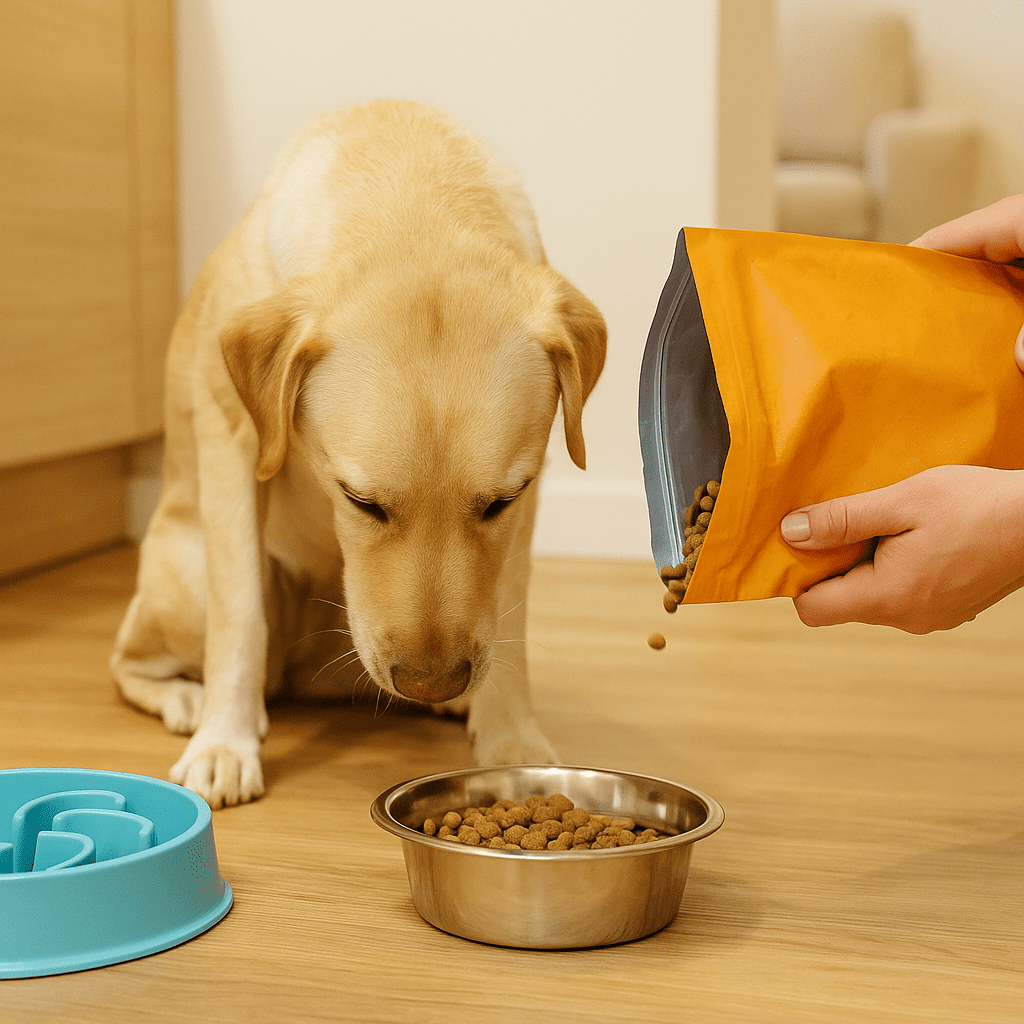
- Eating too quickly or overeating
- Sudden diet change
- Ingesting spoiled food or grass
- Food allergies or intolerance
- Parasites or infections
- Pancreatitis, liver disease, or kidney issues
- Toxins such as chocolate, xylitol, or certain plants
Occasional vomiting can often be managed at home, but repeated episodes warrant a vet visit.
Step-by-Step Dog Vomiting Remedies
1. Fasting for 8–12 Hours
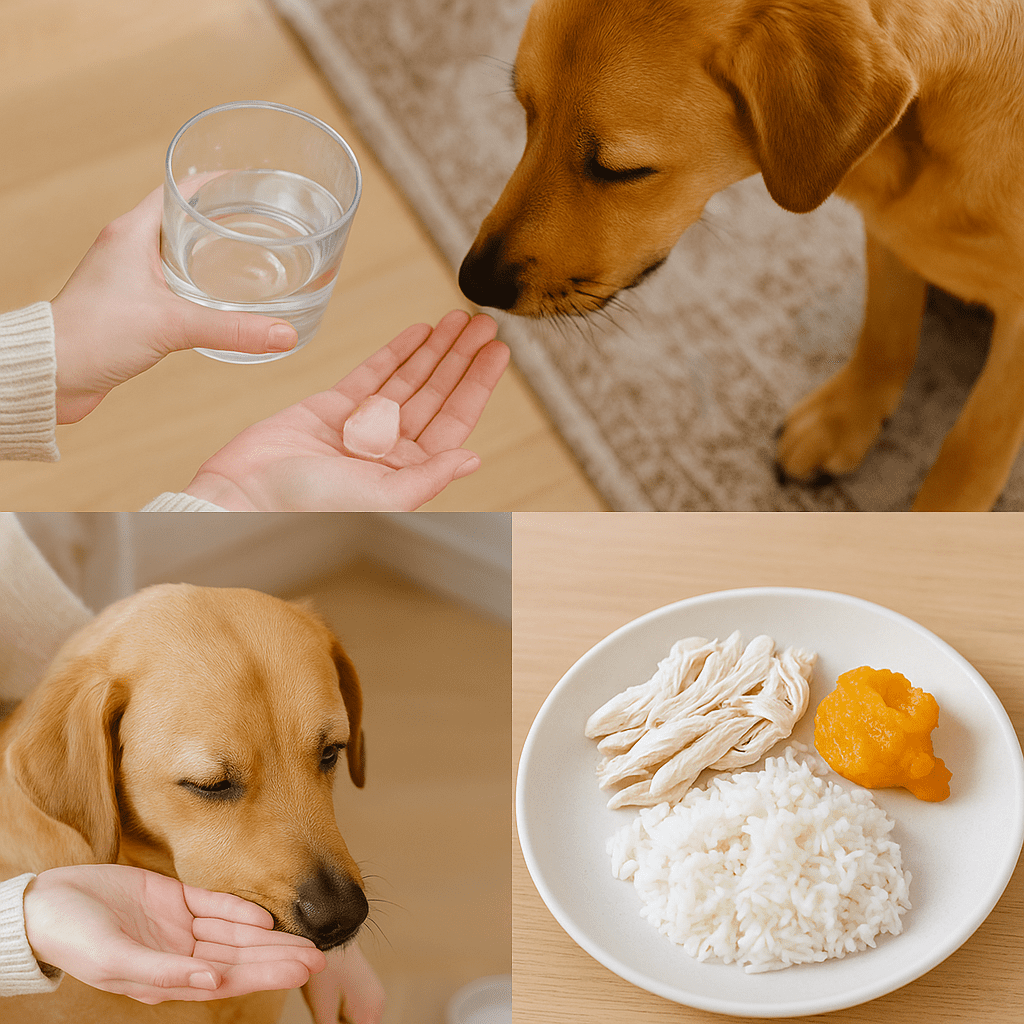
When your dog vomits, give their digestive system time to rest. Remove food for about 8–12 hours (but never withhold water). This pause helps calm the stomach and prevents additional irritation.
2. Hydration Is Crucial
Vomiting causes fluid loss that can lead to dehydration. Offer small sips of water every 30 minutes or ice chips if your dog refuses to drink. For mild dehydration, you can give an electrolyte solution like Pedialyte (ask your vet for dosage).
3. Bland Diet for Recovery
After fasting, reintroduce food slowly with a bland diet: boiled chicken and white rice or lean ground turkey and pumpkin. Feed small portions every 3–4 hours. Continue for 1–2 days, then transition back to regular food gradually.
4. Probiotics for Gut Health
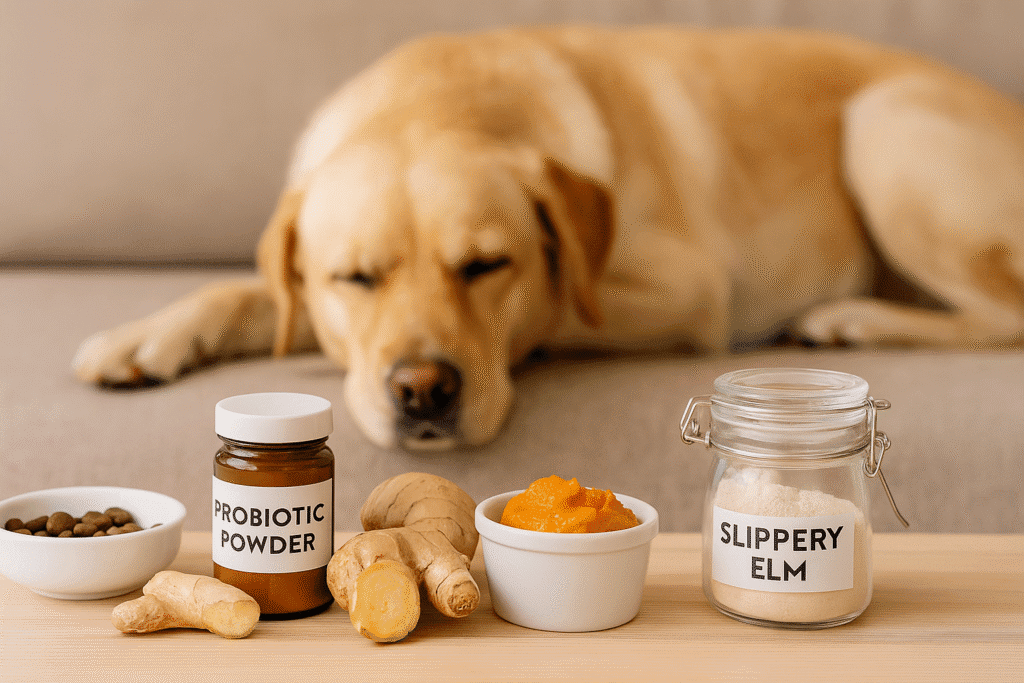
Adding canine probiotics supports digestion and restores healthy gut bacteria. Probiotics are one of the safest long-term dog vomiting remedies for sensitive stomachs. Choose vet-recommended brands formulated specifically for dogs.
5. Natural Remedies That Help
Natural ingredients can soothe the digestive system:
- Ginger: Eases nausea and motion sickness.
- Slippery elm: Coats the stomach lining and reduces inflammation.
- Pumpkin purée: Provides fiber and calms irritated intestines.
Always introduce these slowly and confirm safety with your veterinarian before regular use.
When to Call the Vet Immediately
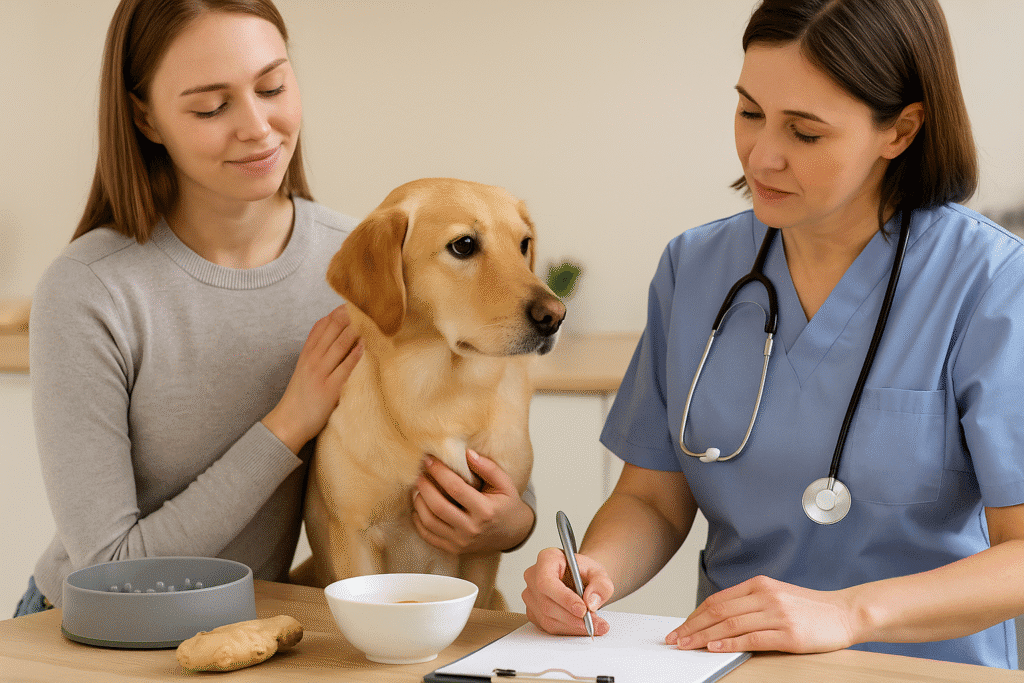
Seek veterinary care if your dog shows any of the following:
- Vomiting more than 2–3 times in 24 hours
- Presence of blood or coffee-ground material
- Lethargy, fever, or pale gums
- Signs of abdominal pain or bloating
- Refusal to eat or drink for more than a day
Preventing Future Upset Stomachs
Prevention is better than cure. To minimize vomiting:
- Feed smaller, frequent meals
- Keep garbage and toxic foods out of reach
- Transition diets gradually
- Use slow-feed bowls for fast eaters
- Schedule routine vet checkups and deworming
Vet-Approved Medications for Chronic Vomiting
For dogs with recurring vomiting or sensitive stomachs, vets may prescribe medications such as:
- Maropitant (Cerenia): An anti-nausea medication that works quickly.
- Famotidine: Reduces stomach acid and helps prevent ulcers.
- Metronidazole: Treats intestinal infections or inflammation.
Never give human medications without veterinary approval.
FAQs: People Also Ask
- Can I give my dog Pepto-Bismol? Only under a vet’s direction — some formulations contain salicylates that can be toxic.
- How long should I wait after my dog vomits? Wait at least 8 hours before reintroducing bland food if vomiting has stopped.
- Can stress cause vomiting? Yes, anxiety and stress can upset digestion, especially in sensitive dogs.
- What if my dog vomits bile in the morning? It may be empty-stomach reflux — try feeding a small bedtime snack.
Call to Action
Want to help your dog’s tummy stay strong? Explore our full guide on Dog Probiotics for Gut Health and learn natural ways to support digestion.
External Reference: Read more from VCA Hospitals — Vomiting in Dogs.