

This is a real feral kitten socialization story—30 days from hissing under the stove to purring on the couch. You’ll see the exact micro-steps, daily timelines, and quiet handling tricks that rebuilt trust without flooding, plus what to do when progress stalls.
I didn’t plan on becoming a case study in feral kitten socialization. But one July evening a 10-week tabby streaked across the alley, vanished under my car, and hissed like a tea kettle. I’d fostered friendly strays before—this was different. He was feral: round pupils, hard swallows, and a body that moved like static electricity.
This is the true, day-by-day account of how a terrified street kitten became a sleepy couch buddy in four weeks. I’ll share the exact room setup, scripts I spoke out loud (yes, it matters), when I advanced—and when I backed off. If you’re starting your own feral kitten socialization journey, you can copy this quiet plan tonight.
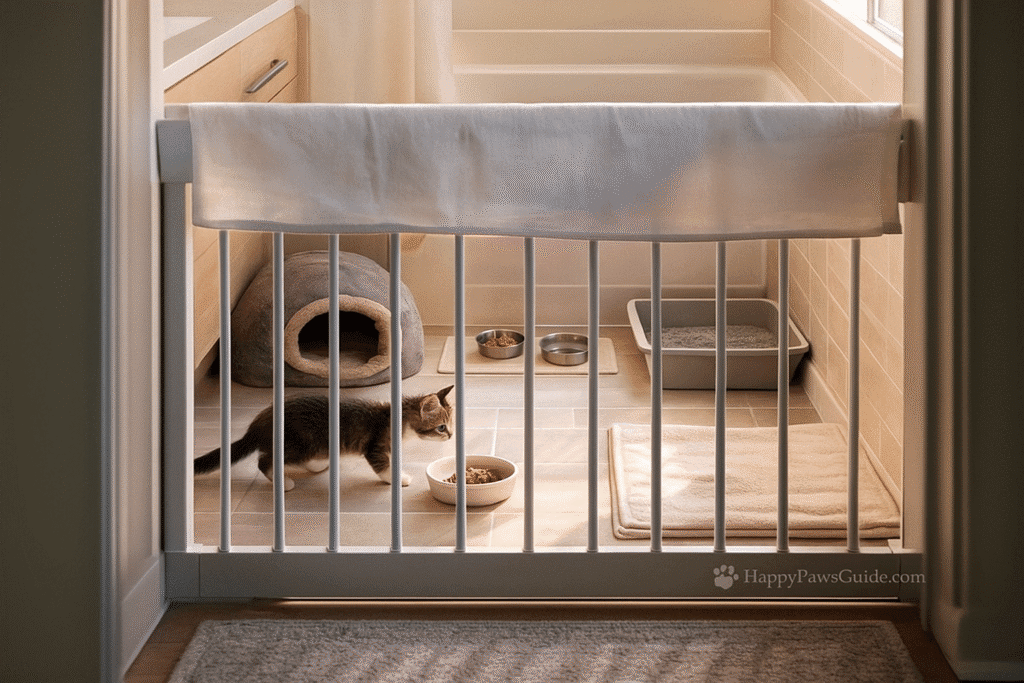
Baseline Setup: Safety, Predictability, and Silence
- Room: Small bathroom with a baby gate and a sheet over half the gate for visual safety.
- Zones: Hide (cardboard box with side door), eat (dish by the gate), toilet (box far from food), sleep (low bed).
- Lighting & sound: Soft lamp, no overhead glare; white-noise app at low volume.
- Scent: One worn cotton T-shirt by the food dish so my smell = meals.
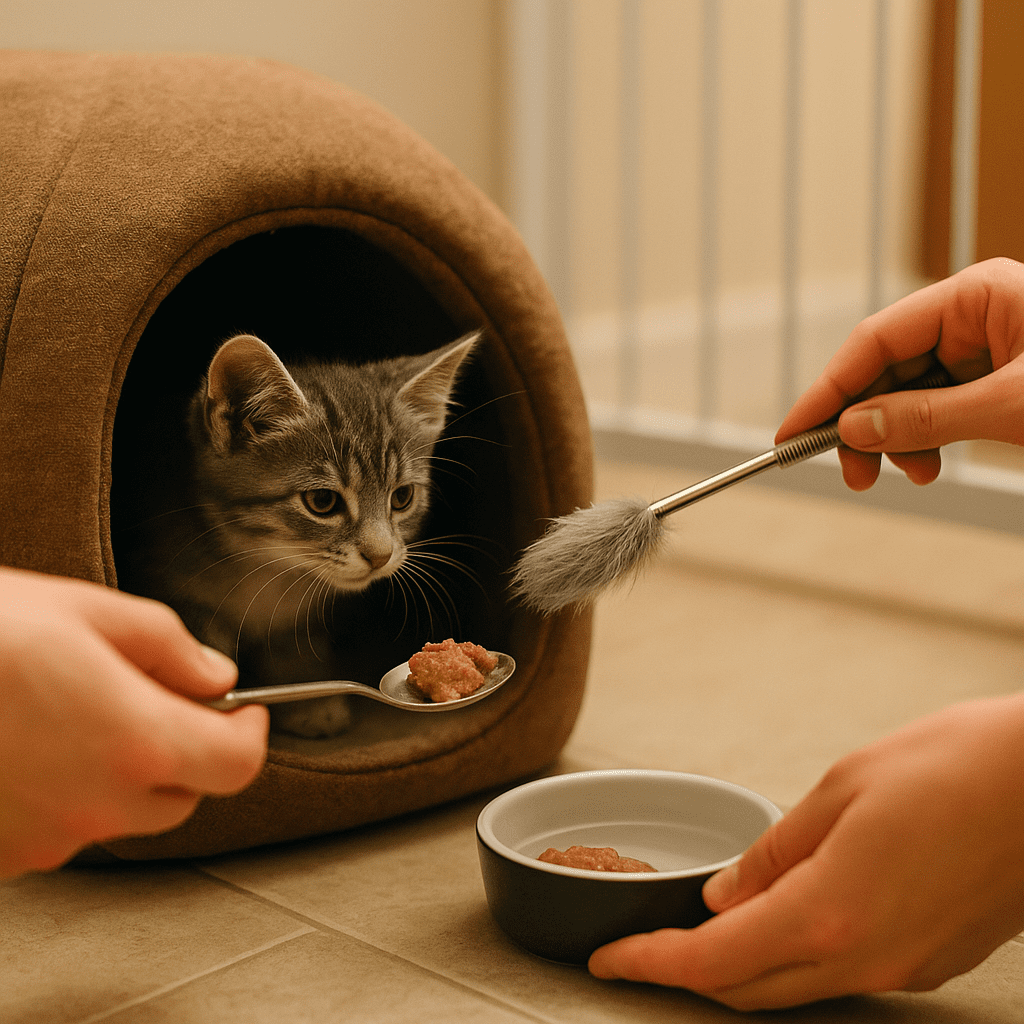
- Touch tools: Target stick and a soft back-scratcher for first contact from a distance.
Rule #1 for feral kitten socialization: your job is to make the world boring and predictable. Same voice, same schedule, same motions.
Week 1 (Days 1–7): Eat Near Me, Not For Me
Day 1—No heroics
I set the carrier down and let him exit on his own. I sat on the floor sideways to him (never squared up), read emails out loud for five minutes, then left. Food appeared when the room was empty. Camera confirmed he ate at 2 a.m.
Day 2—Sound becomes a cue
Before placing food, I tapped the bowl lightly three times and said, “Dinner.” That sound-phrase pair became our first routine. I moved the dish one tile closer to the gate.
Day 3—First glance
He froze in the hide and stared while I sat, angled away, breathing slow. I placed a spoon of wet food on a long spatula, slid it halfway to him, then retracted it. He blinked—big win. I left a lick mat and exited.
Day 4—Target, then treat
I introduced a target stick (pencil with tape on the end). If he looked at it, the bowl moved an inch closer to me next time. If he curled tighter, I reset distance. Progress measured in inches is still progress.
Day 5—First play
Prey-sequence play at a distance: feather wand dragging slowly—no overhead swoops. Two 30-second sniffs, one gentle pounce, the toy hid. End on calm.
Day 6—Desensitization to movement
I shifted my knee, then fed. Lifted an elbow, then fed. Turned my head, then fed. We weren’t training tricks; we were teaching, “Human motion makes food appear.”
Day 7—Touch by proxy
I scratched the cardboard hide with a back-scratcher, then moved the scratcher along the box until it barely brushed his shoulder through the doorway. He didn’t bolt. I fed and finished.
Week 2 (Days 8–14): From Distance to First Contact
Day 8—Eat with me in the room
Dish stayed two tiles from my knee. I read softly (same book). He ate—fast, head up between bites. I averted my eyes and praised in a low whisper.
Day 9—Hand = food bowl
I switched to a spoon, then to a flat palm with soft pate. If he sniffed, I paid by placing a better bite on the floor. He learned that approaching me sends food to safety—counterintuitive, but it built confidence.
Day 10—First deliberate touch (with tool)
While he ate, I used the back-scratcher once across the withers. He flinched, paused, then resumed eating. One stroke only. Stop while it’s still good.
Day 11—First purr (accidental)
He bunted the back-scratcher. I froze. He purred for two seconds, startled at himself, then scuttled under the shelf. I placed a jackpot (warm chicken shred) and left.
Day 12—From tool to fingertip
Back-scratcher, then the handle, then two knuckles. Never from above—always from the side of the cheek, one inch at a time. I used a quiet marker word: “Good.”
Day 13—Carrier = café
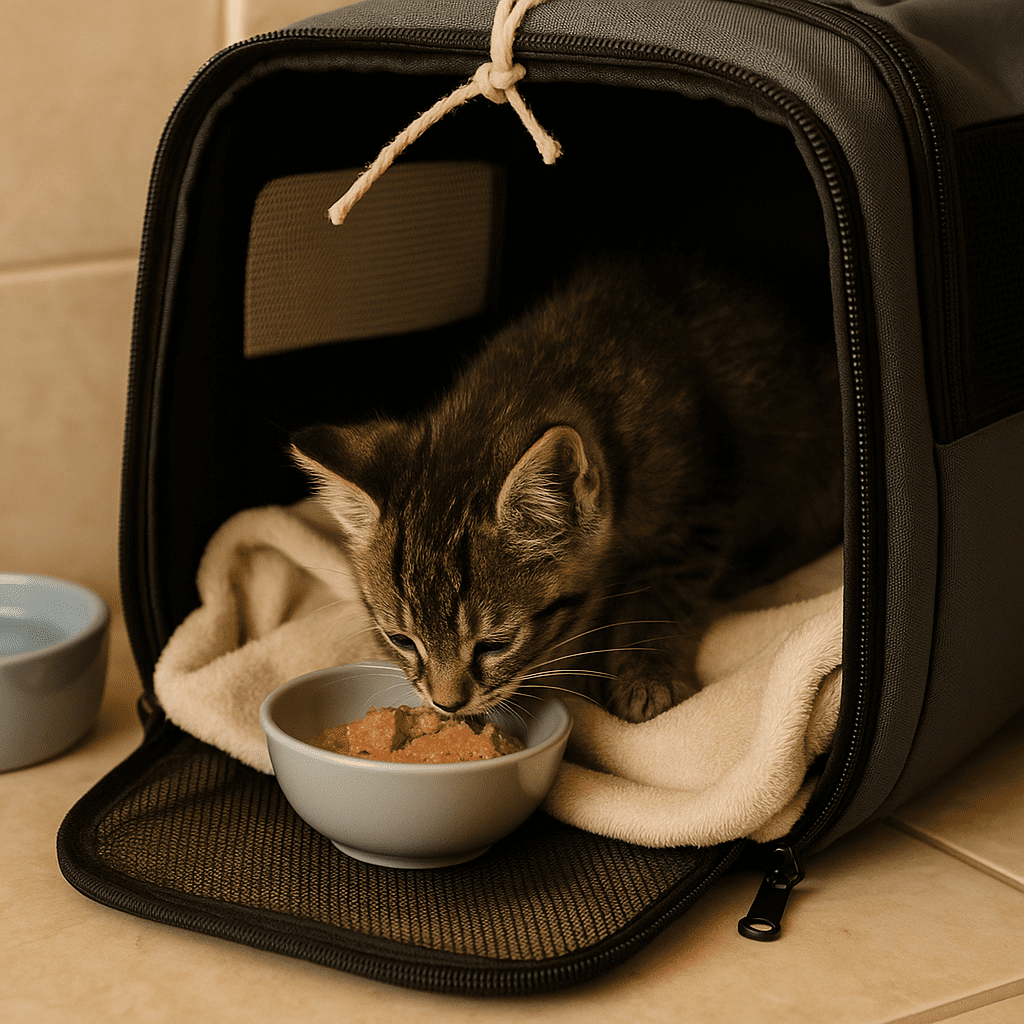
Meals moved to a soft-blanket carrier with the door tied open. He stepped in, ate, backed out. I did not close it. Ten reps of in-out make Day 20 easy.
Day 14—Play, then cuddle towel
Short wand game → lick mat → a fleece towel over my legs while I sat. He sniffed the towel edge, then dozed near my ankle for ninety seconds.
Week 3 (Days 15–21): Graduating to the Living Room
Day 15—Doorway time
Baby gate sheet lifted halfway. He watched my older cat pass by (neutral), then returned to eat. I rewarded any glance followed by a relaxed blink.
Day 16—Two-room world
We blocked the couch with low boxes so there was no under-sofa panic cavern. He explored the hall for ninety seconds, then retreated. I called it—you don’t win points by extending a good session until it breaks.
Day 17—Carrier rides inside home
Door gently closed for three seconds while he ate, then opened. By the third rep, he ignored the click. We took a 30-second house tour (quiet), then returned to the bathroom and fed again.
Day 18—The first nap on my lap
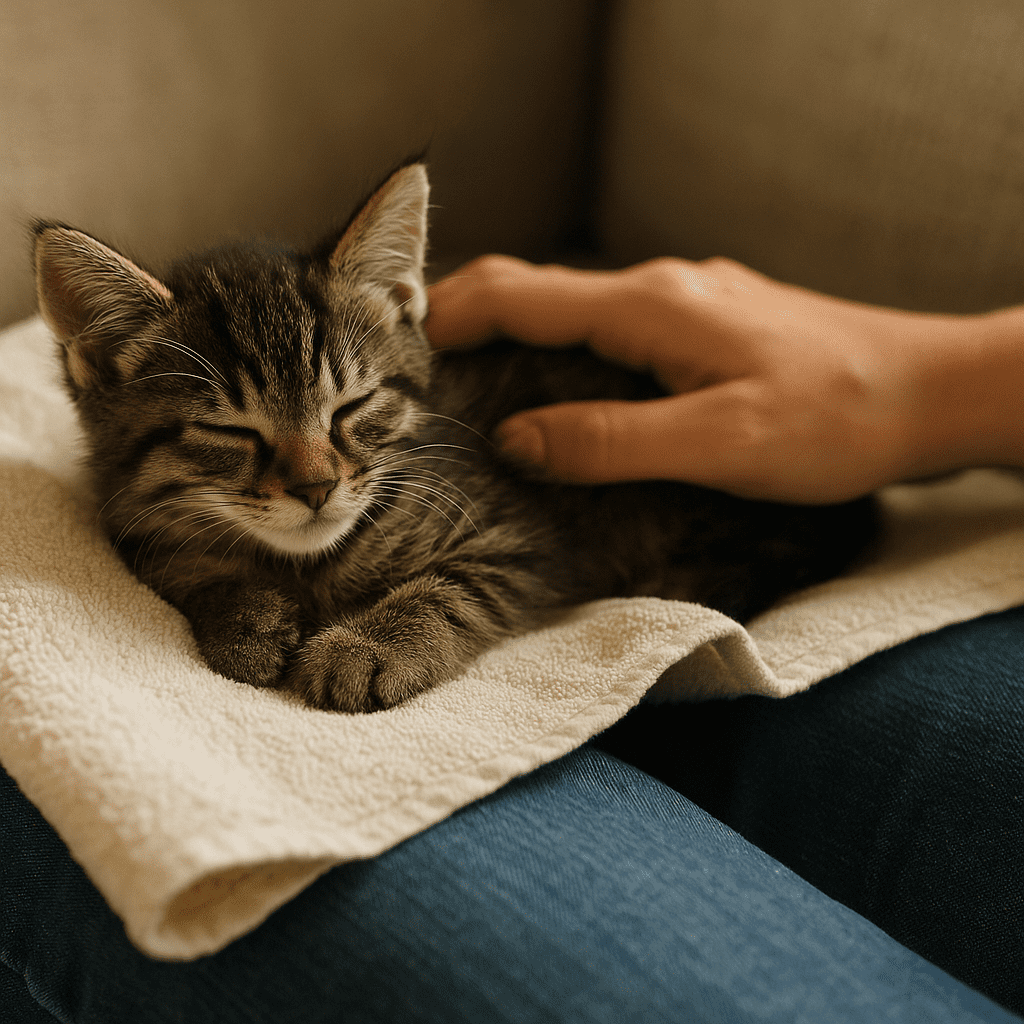
He climbed onto the towel over my thighs and kneaded. Five minutes of tiny purrs. I resisted every urge to move. When he lifted his head, I whispered “All done,” and let him step off.
Day 19—Handling practice
Micro-touches while he ate: one ear touch → treat; one paw touch → treat. If the tail tucked, I skipped the next rep and switched to cheek rubs only.
Day 20—Doorbell rehearsal
I played a soft doorbell sound (phone app) at 10% volume, then fed. The world makes noises; we pair those with food at small volumes and win.
Day 21—Meet the couch
Gate open, sheet off. He walked to the living room, sniffed the couch, then launched back to his room. I left the gate open and did not follow. Autonomy builds courage.
Week 4 (Days 22–30): Couch Buddy Status (With Boundaries)
Day 22—Couch snack, then back to base
Wet food on a small dish at the far armrest. He climbed carefully, ate, then trotted home. I didn’t trap him on the couch; I just kept repeating safe arrivals.
Day 24—TV test
Soft nature show. He flattened at the first hawk call, then realized the hawk lives inside a rectangle. I lowered volume and fed five tiny bites in a row.
Day 26—Brush comes out
Wide-tooth comb, three strokes only, while kneading on the towel. If the back flattened, I switched to finger scritches and stopped after eight seconds. Curls or no curls, less is more.
Day 28—Guest rehearsal
My friend sat on the floor sideways, didn’t reach, read a paragraph out loud. Kitten watched from the couch, then napped behind a cushion. I paid calm with a lickable treat on a spoon.
Day 30—Couch buddy (official)
He stepped onto my lap without food, circled twice, and fell asleep for eighteen minutes—the longest yet. When he woke, I whispered “Good nap,” and he touched his nose to my wrist.
What Actually Worked (And What I’d Change)
- Micro-criteria: I advanced inches, not feet. Trust is granular.
- End on rise: I stopped sessions while he was still curious—not when he was done.
- Predictable scripts: “Dinner,” “All done,” “Good.” The same three phrases, always the same tone.
- Carrier café: Turning the carrier into a restaurant prevented the “trap” feeling later.
What I’d change: I would have introduced the towel-on-lap sooner. It gave him a “portable territory” that traveled from bathroom to couch.
Troubleshooting the Stalls (Decision Tree)
If the kitten hides more than yesterday
Reduce session length by half; move food one tile back. Add one extra “read-aloud” visit with no food, just presence.
If the kitten swats at the toy or hand
Lower arousal: slower toy, shorter distance, reward sniffing rather than chasing. Hands never move fast; they are furniture, not prey.
If the kitten stops eating near you
Return to spoon or flat palm, then pay on the floor. Food should flow away from your body until confidence returns.
If litter box accidents happen
Box too close to traffic or food. Add a second box and increase privacy (half-cover the gate again).
Feral Kitten Socialization—Quiet Gear List
- Small room + baby gate + half-cover sheet
- Cardboard hide with side door; soft blanket
- Shallow dishes, lick mat, spoon/long spatula
- Worn cotton T-shirt (scent association)
- Back-scratcher or soft wand for proxy touch
- Target stick (pencil + tape works)
- Wide-tooth comb; nail clippers (for later)
- Carrier with tied-open door (carrier café)
Related Guides (Internal Links)
- LaPerm Cat Care: Low-Mat Curls & Stress-Free Grooming
- Ragamese Cat Care: Calm Meets Curious
- Somali Cat Care: Playful Shadows & Low-Shed Grooming
Trusted Resources (External)
FAQ: Feral Kitten Socialization (Owner Quick Answers)
How long does feral kitten socialization really take?
Many 8–12-week kittens make big gains in 2–4 weeks with daily micro-sessions. Older or truly feral teens can take months—go slower, celebrate inches.
Should I hold a feral kitten to “tame” it?
No. Forced holding often backfires. Start with presence, feeding near you, then proxy touch. Let the cat choose contact first.
What about vaccines and vet visits during socialization?
Work with your vet on timing. Carrier café practice lets you close the door briefly by Week 3 for calm transport.
Can I socialize two littermates at once?
Yes, but schedule 1:1 micro-sessions so each kitten learns to trust humans, not just each other.
What if progress plateaus?
Drop criteria, shorten sessions, and add one new predictable cue (sound or phrase). Consistency is the lever, not intensity.
Call to Action
Ready to start your own feral kitten socialization story? Set up a quiet room, pick three phrases you’ll use every day, and begin with “dinner” two tiles closer to you. Tomorrow, try a single proxy touch while eating—and end while curiosity is rising.
- ALT: Feral kitten socialization—kitten eating calmly two tiles from a seated person
- ALT: Feral kitten socialization—back-scratcher proxy touch while the kitten eats
- ALT: Carrier café—kitten entering a tied-open carrier for a meal
- ALT: Couch buddy—formerly feral kitten sleeping on a towel-covered lap