

Quick Guide: This Newfoundland dog care handbook gives you calm, practical routines for a giant with a velvet heart—grooming that controls shedding and odor, low-impact exercise plans, nutrition for joints and heart, training patterns that protect manners, and red-flag health signs you shouldn’t miss.
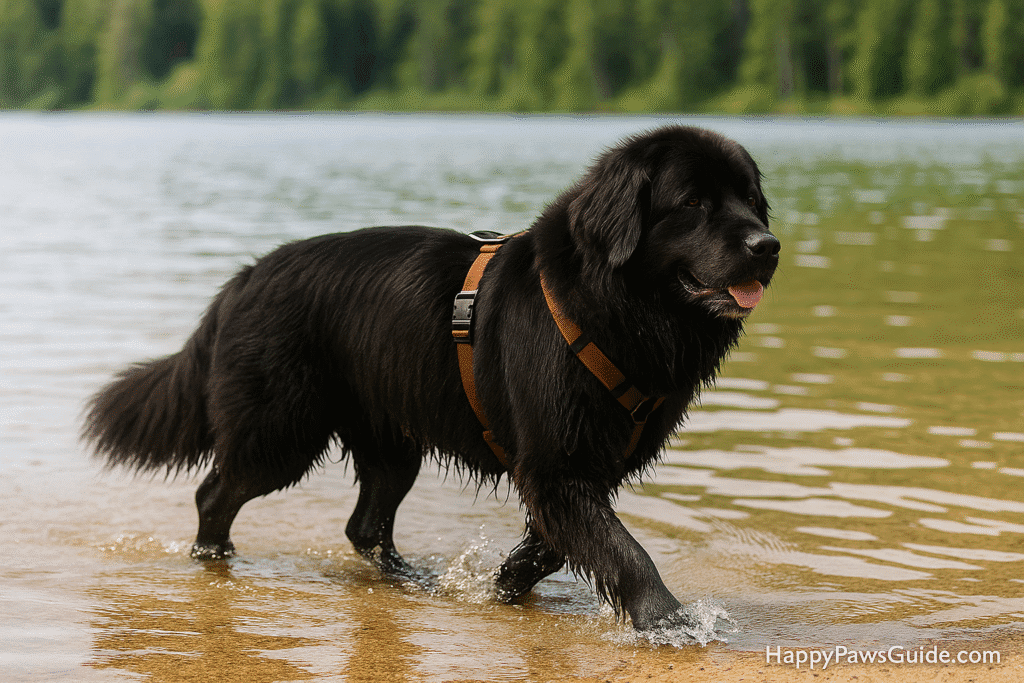
Newfoundland dog care starts with understanding the breed’s sweet, steady nature in a very large body. These water-loving “gentle giants” were built to work beside people—pulling nets, guarding shorelines, and rescuing in cold surf—so the best home blends soft structure (predictable routines) with soft surfaces (joint-friendly living). Below is a vet-aligned, owner-tested plan to raise a calm, glossy, healthy Newf from puppy to dignified senior.
Breed Snapshot (Know Your Giant)
- Origin: Newfoundland, Canada • Group: Working
- Size: 45–68 kg (100–150 lb) • 66–71 cm (26–28 in)
- Lifespan: 8–10 years (keep weight lean to support longevity)
- Coat: Dense, water-resistant double coat; seasonal “blow”
- Temperament: Affectionate, patient, biddable, people-oriented
Good to know: Newfs mature slowly; adolescence can run 18–24 months. Temperament is famously gentle, but size means manners and management matter from day one.
Temperament & Family Fit
Most Newfoundlands are calm, affectionate housemates who adore kids and tolerate chaos with saintly patience. They’re watchdogs by presence more than bark—but will place themselves between “their” people and commotion. Expect a shadow dog who prefers being in the same room, ideally sprawled across cool tile with a fan humming.
- With children: Model gentle handling, teach “four paws on the floor,” and create cozy off-duty zones so your Newf can nap undisturbed.
- With pets: Generally solid citizens. Early, positive intros and management around resources (toys/food) keep harmony.
- Apartment? Possible if elevators/entrances are wide, there’s daily outdoor time, and you’re diligent about coat/drool management.
Daily Routine That Works (Puppy → Adult → Senior)
Puppy (2–12 months)
- Exercise: 5 minutes per month of age, 2–3×/day (soft surfaces). Avoid repetitive jumping and stairs.
- Training: Name response, hand target, loose-leash, “with me,” and a calm mat settle. Reward early for being still around excitement.
- Socialization: Surfaces, sounds, friendly strangers, calm dogs, short car rides. Keep sessions short/easy.
Adult (1–6 years)
- Exercise: 45–60 min total daily—split into two low-impact blocks. Favorites: shaded walks, swimming, light retrieve in water.
- Mental work: Scent games, food puzzles, “find it” in the yard, basic chores (carry soft canvas bag for 30–60 seconds).
Senior (7+ years)
- Exercise: Keep moving daily but trim duration; add warm-up/cool-down and massage/heat packs for tight hips/shoulders.
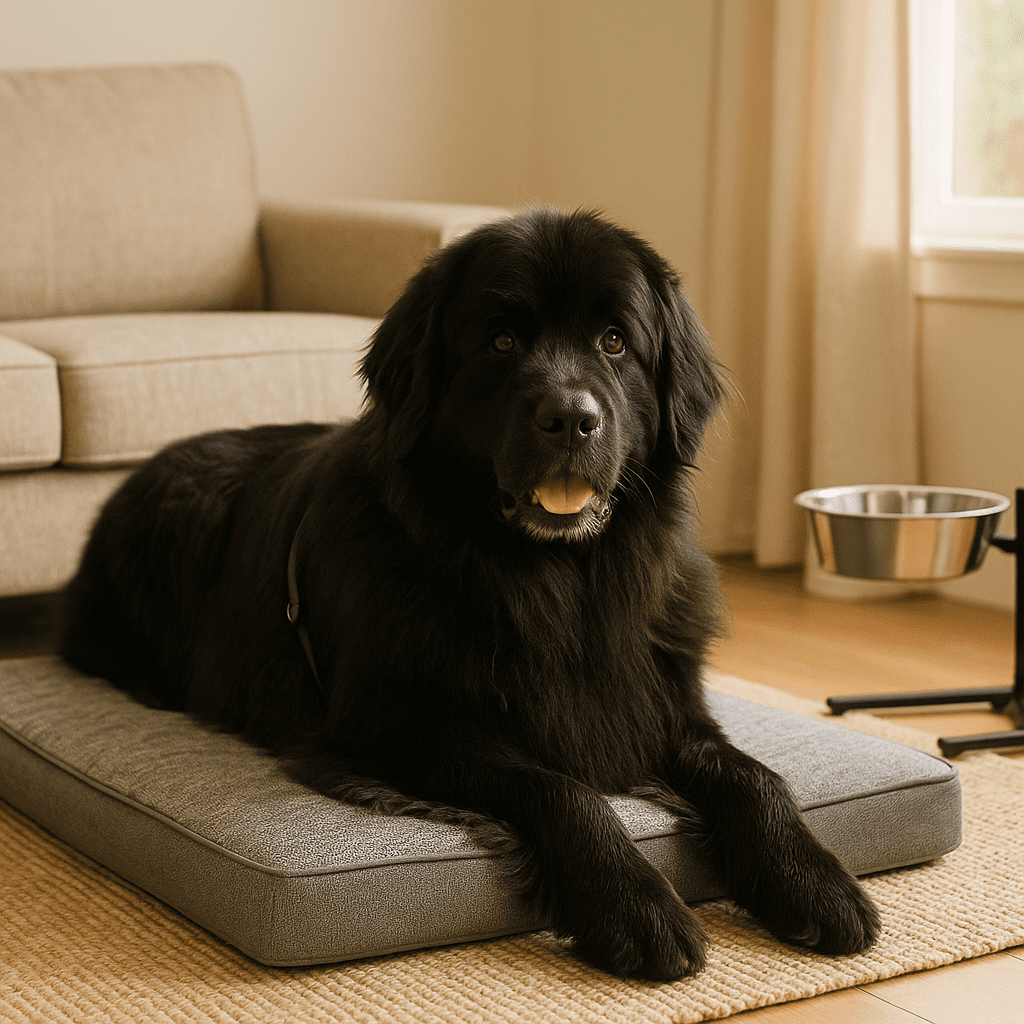
- Home mods: Non-slip rugs, raised bowls, ramp for SUV, orthopedic bed with washable cover.
Grooming & Coat Care (Step-by-Step)
The Newf’s double coat sheds year-round and “blows” seasonally. A routine keeps skin healthy, odor low, and cleanup sane.
Weekly Plan (40 minutes total)
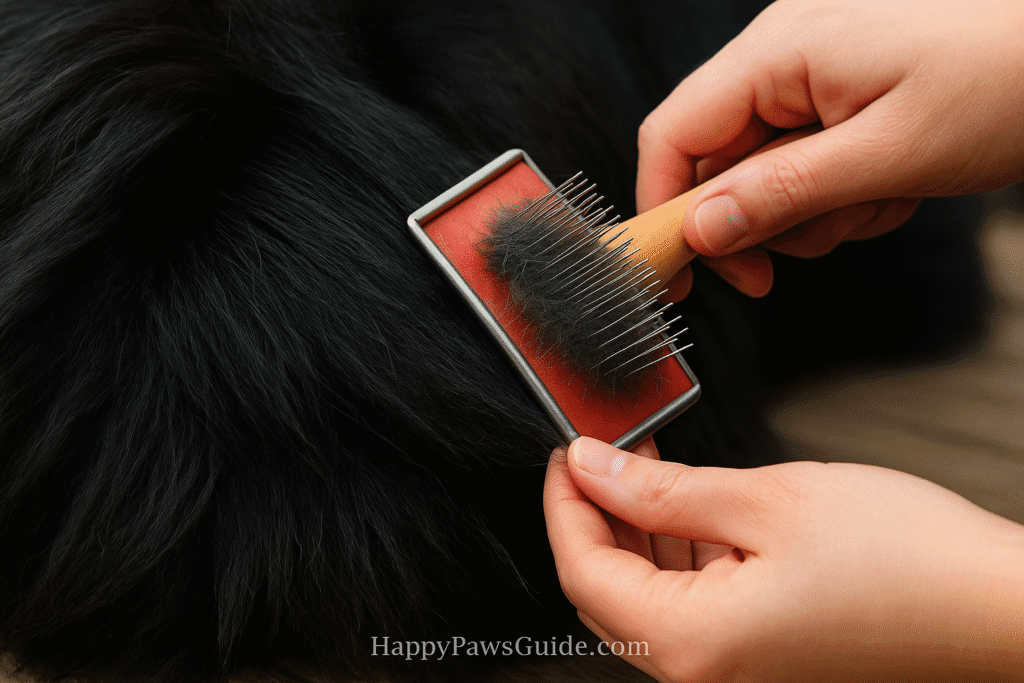
- Line brush 10–15 minutes: slicker/long-pin brush, part the coat and brush from skin out.
- Undercoat rake 10 minutes during shed weeks (spring/fall).
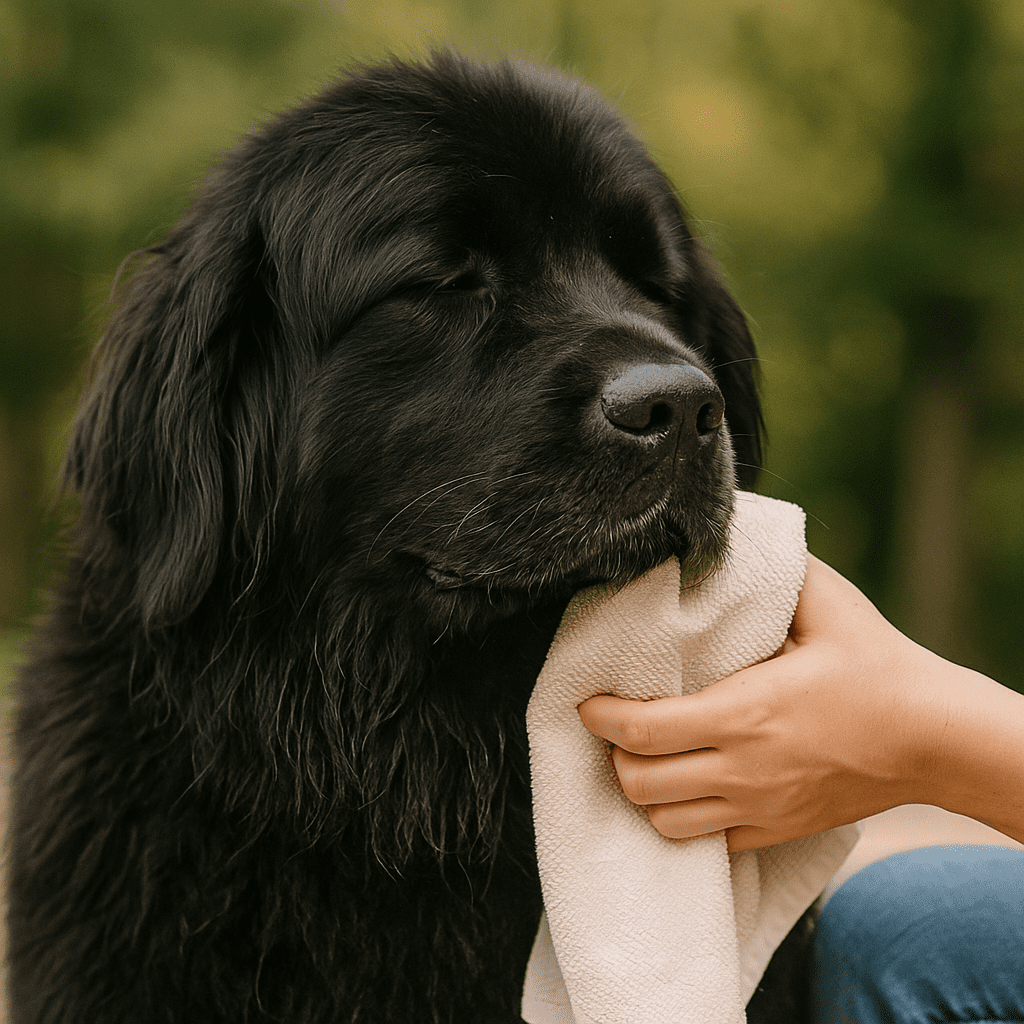
- Drying & airflow: After swims, rinse with fresh water; towel thoroughly; use a pet dryer on low to prevent hot spots.
- Ears & moisture: Wipe after baths/swims; keep canals dry to prevent infections.
- Feet & feathers: Trim pastern hair to reduce slipping and mud mats.
- Nails: Every 2–3 weeks; big dogs hide long nails—listen for taps.
Drool note: Keep drool cloths near water bowls and doors; wipe lips/neck folds after meals/water to prevent skin irritation.
Exercise & Enrichment (Joint-Friendly)
- Sweet spot: 30–45 min low-impact work daily + brain games.
- Top choices: Swimming, shaded walks, “find it” scent games, slow-paced hikes on cool days.
- Avoid: High-heat, sprint fetch on hard surfaces, repetitive jumping, long stair climbs—especially for pups/seniors.
Safety cues: Teach a distance brake. Our step-by-step is here: Teach Dog Emergency Stop in 7 Minutes. Pair with impulse control around temptations: Teach “Leave It” in 3 Days.
Nutrition for a Giant (Joint, Heart, Weight)
- Life stage formulas: Use large-breed puppy for controlled growth; switch to adult on your vet’s timeline.
- Macros & extras: Moderate fat; omega-3s (EPA/DHA) for joints/skin; consider glucosamine/chondroitin if your vet agrees.
- Feeding pattern: 2–3 smaller meals; slow feeder for gulpers; rest 60 minutes before/after meals to reduce bloat risk.
- Body condition: Ribs easy to feel, slight waist from above, abdominal tuck from side.
Learn more: See **AKC** nutrition overviews and food safety resources from **PetMD** (links below).
Training: Calm, Clear, Reward-Based
Newfs are biddable but sensitive; harsh methods shut them down. Keep sessions 3–5 minutes, 2–4×/day.
- Core cues: With-me (loose leash), Leave It, Emergency Stop, Settle on Mat, Come.
- Public manners: Practice short café sits in shade; reinforce stillness and relaxed eye contact.
- Water work: Intro to water with snug harness, calm entries, and short retrieves; rinse/dry thoroughly afterward.
Health: Common Issues & Red Flags
Work with your vet on screening and prevention. Newfs are predisposed to a few conditions:
- Orthopedic: Hip/elbow dysplasia, cruciate injuries—manage weight, use ramps, keep nails short.
- Cardiac: Subaortic stenosis (SAS) occurs in the breed; ask about auscultation/echo in breeding lines and new puppies.
- Dermatologic: Hot spots under damp coat; dry thoroughly after swims/baths.
- GI: Bloat (GDV) risk exists in giants—know emergency signs: unproductive retching, distended abdomen, restlessness.
- ENT: Reverse sneezing/humidifier help; see our guide: Dog Reverse Sneezing at Night.
Annual plan: Wellness exam, weight/body-condition check, dental assessment, parasite preventives, and activity review. Discuss baseline labs by mid-adulthood to monitor kidneys/liver/thyroid.
Living With a Newf: Home Setup & Costs
- Floors: Non-slip runners on tile/wood; block slick stairs.
- Climate: Prioritize shade/fans/AC in summer; walk at dawn/dusk.
- Cleaning: Robot vac + weekly undercoat rake; lip/neck wipes after water.
- Budget: Food (large-breed quality), grooming tools/dryer, orthopedic bed, ramp, vet fund for giant-breed imaging/orthopedics.
Puppy Buyer/Adopter Checklist
- Meet parents/relatives if possible; ask about hips/elbows/heart screening (OFA/echo where applicable).
- Contracts, socialization plan, starter diet, and grooming demos from breeder/rescue.
- Insurance quote in week 1; big dogs = big bills—plan early.
Print-Friendly Care Checklist
- ✔ Brush 2–3×/week; dry thoroughly after swims.
- ✔ Omega-3s + weight control; split meals; rest pre/post feeding.
- ✔ Low-impact daily exercise + scent games.
- ✔ Teach Leave It & Emergency Stop; short, kind sessions.
- ✔ Non-slip flooring, ramp, orthopedic bed.
- ✔ Vet exam yearly; watch for SAS, dysplasia, hot spots, bloat signs.
Trusted Resources (External)
- AKC: Newfoundland Breed Overview
- PetMD: Newfoundland Health & Care
- OFA: Canine Health Testing (hips/elbows/heart)
Related Guides (Internal Links)
FAQ: Newfoundland Dog Care
How much exercise does a Newfoundland really need?
Most adults thrive on 45–60 minutes of low-impact movement daily, ideally split into two sessions, plus scent games. In heat, shorten and add water time.
How do I prevent hot spots?
Rinse/dry thoroughly after swims, brush line-by-line weekly, keep weight lean, and treat any itch promptly. See your vet if lesions spread or smell.
Are Newfoundlands good for first-time owners?
Yes—if you commit to daily grooming, consistent manners training, and giant-breed budgeting. Their temperament is beginner-friendly; their size is not.
What should a Newf puppy eat?
A vet-recommended large-breed puppy formula to control growth, with measured meals and regular weight checks.
What are emergency red flags?
Unproductive retching/bloat signs, collapse, blue gums, heat distress, rapidly spreading skin infection—seek veterinary care immediately.
Call to Action
Your Newf will trade a thousand quiet moments for one kind routine. Start tonight: a soft brush-through, a shaded stroll, and a simple Leave It game. Tomorrow, add two minutes of scent work and update your home with one non-slip runner. Small, steady steps make a giant difference.
- ALT: Newfoundland dog care checklist—owner brushing dense double coat during weekly line-brushing
- ALT: Newfoundland swimming calmly on a shaded lake with life vest for low-impact exercise
- ALT: Senior Newfoundland resting on an orthopedic bed with non-slip rugs in the living room
- ALT: Owner practicing emergency stop hand signal with Newfoundland on a long line in a park