

Quick Start: This Ragamese cat care guide shows exactly how to raise a calm-but-chatty Ragdoll × Siamese mix. Learn weekly grooming that prevents mats, smart feeding for a silky coat and healthy weight, play routines that curb boredom, and red-flag signs to discuss with your vet.

Ragamese cat care begins with understanding the blend: the Ragdoll’s cuddle-calm paired with the Siamese’s bright, vocal curiosity. That mix creates a social, people-focused cat who thrives on routine, gentle handling, and daily conversation. Below is a practical plan—no fluff, just owner-tested habits—to keep your Ragamese glossy, confident, and healthy.
What Is a Ragamese? (Temperament Snapshot)
- Temperament: Affectionate, people-oriented, chatty in soft “conversational” meows
- Energy: Moderate; prefers interactive play to solo zoomies
- Social: Bonds tightly; dislikes long isolation—pair homes or rich enrichment recommended
- Appearance: Semi-long, silky coat; often point colors (seal/chocolate/blue/lilac); blue or blue-green eyes
Think lap-ready with an opinion. They follow you from room to room, “help” with laptops, and settle fast after play.
Daily Routine That Works (Morning → Night)
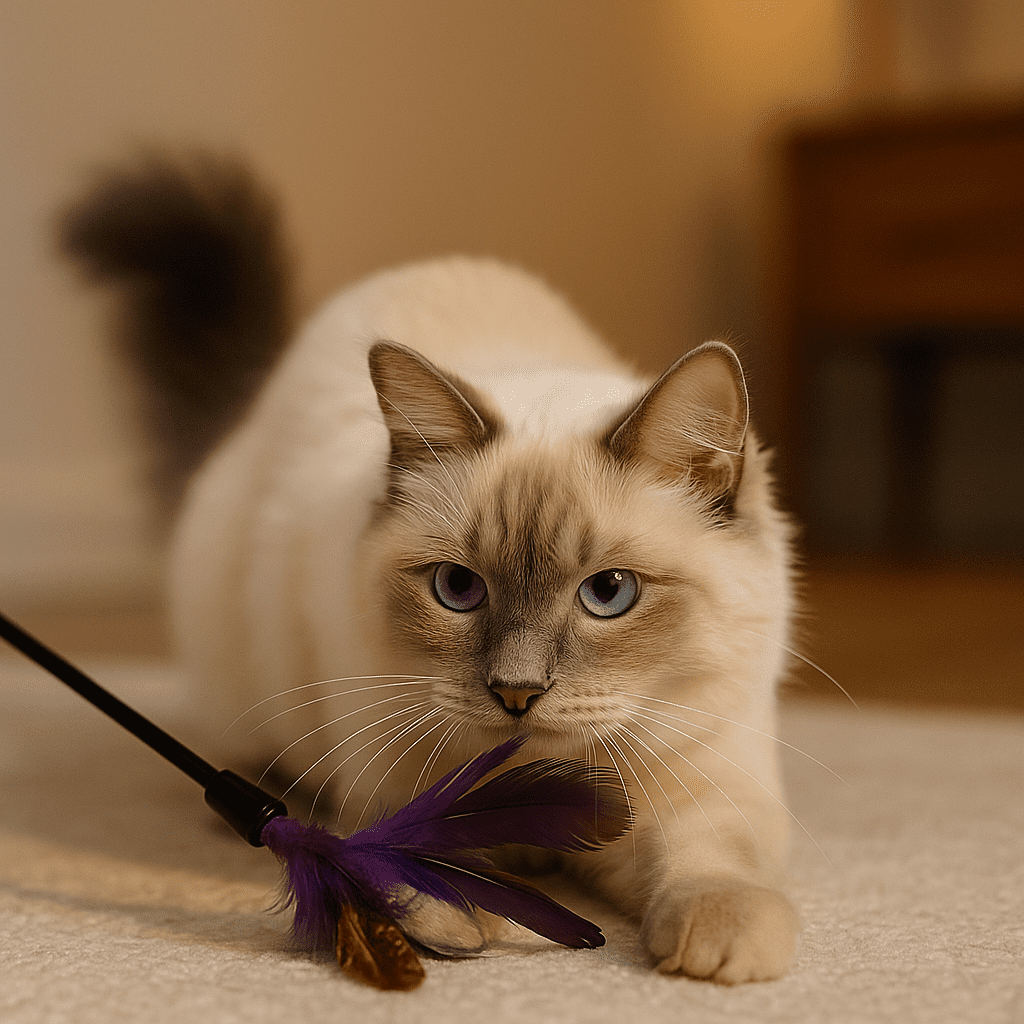
- Morning (10–15 min): Short wand-toy session + feed measured breakfast + water refresh.
- Midday (5 min): Puzzle feeder reload or scatter-feed kibble for foraging.
- Evening (15–20 min): Interactive play (wand → chase → catch → food reward) then brush-through.
- Lights-out: Small bedtime snack to reduce dawn wake-ups in vocal types.
Grooming & Coat Care (Low-Stress, High Result)
Ragamese coats are silky and manageable if you keep a light—but consistent—routine.
Weekly Plan (20 minutes total)
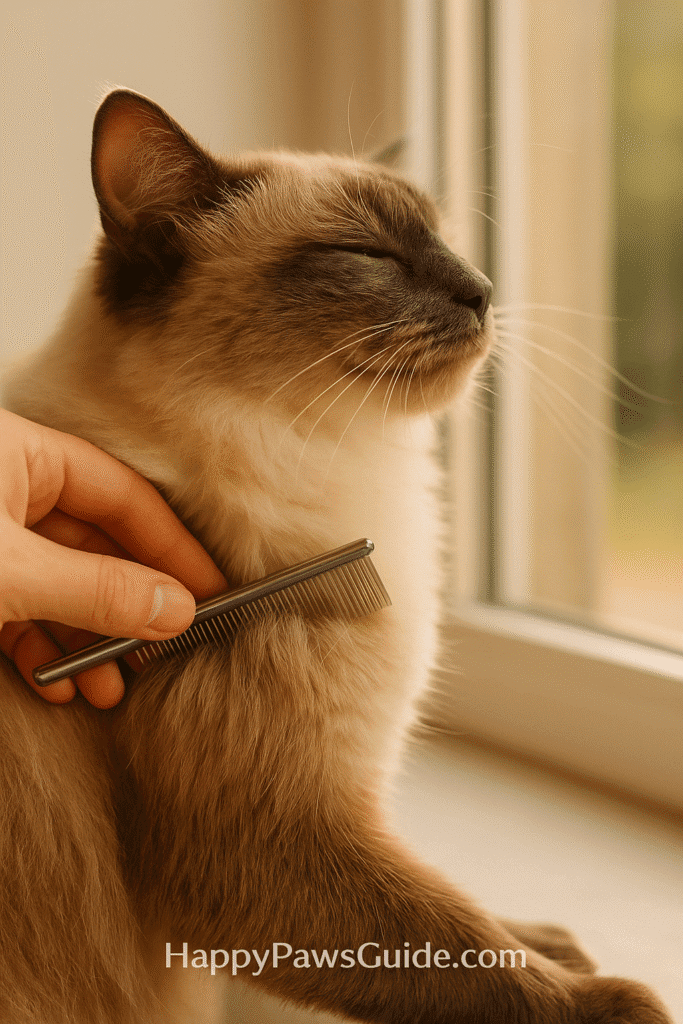
- 3–5 minute brush-through with a long-pin slicker, parting the coat (line-brushing) to lift loose undercoat.
- Metal comb check behind ears, armpits, pantaloons, and tail base—mats start here.
- Eye/Lip wipe with damp cotton; dry thoroughly to prevent irritation.
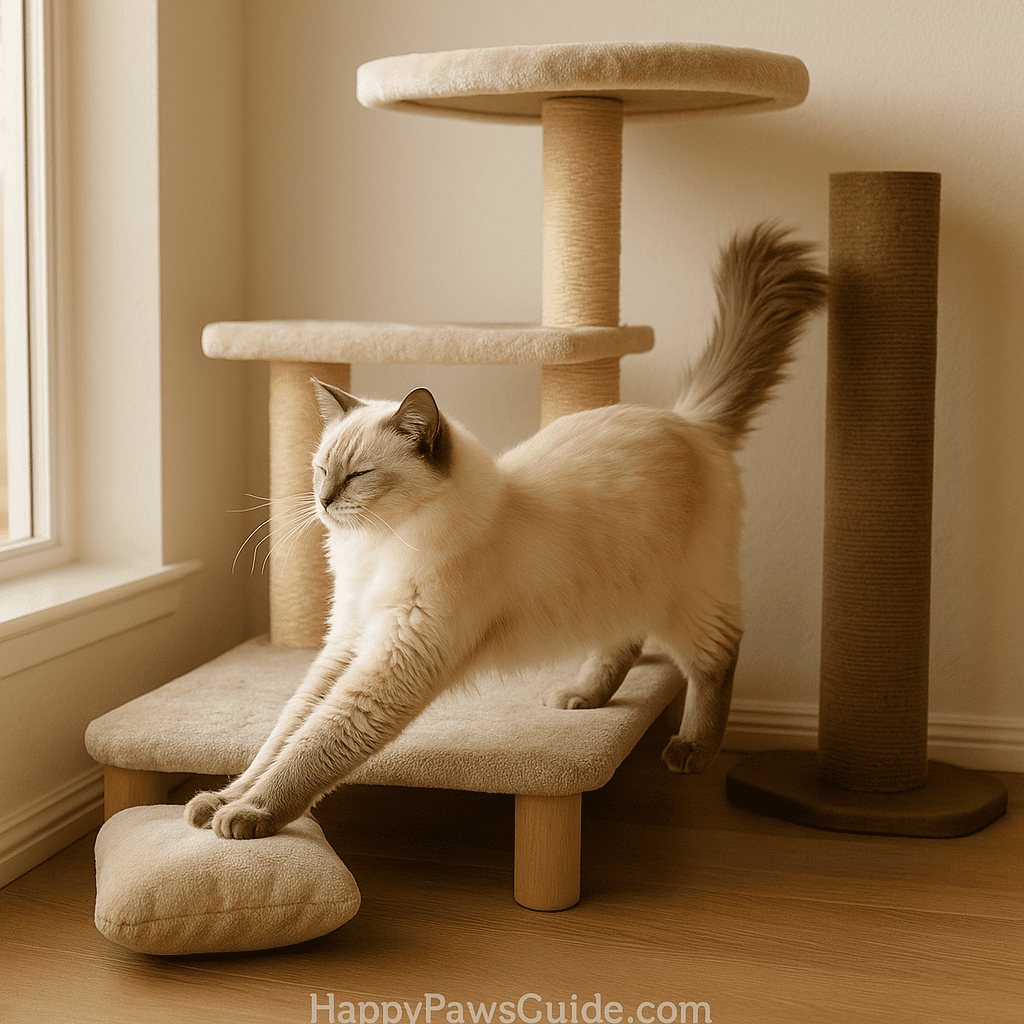
- Nails every 3–4 weeks; offer a sturdy vertical scratcher + cardboard lounger.
Baths? Optional every few months for oily coats; use cat-safe shampoo and rinse fully. Blow-dry on low, combing with airflow to avoid tangles.
Nutrition: Glossy Coat, Lean Body
- Base: Complete & balanced diet with animal protein first; many Ragamese do well on mixed feeding (wet + dry).
- Hairball support: Omega-3s, fiber, and regular brushing reduce vomiting episodes.
- Hydration: Water fountain + multiple bowls; wet food aids intake.
- Portions: Measure meals; reassess monthly. Aim for a visible waist and easy-to-feel ribs.
Ask your vet about calorie targets by weight/BCS. Sudden appetite drops warrant a same-week check.
Enrichment & Training (Brain Before Bed)
- Play recipe: Stalk → chase → catch → chew → eat → groom → sleep. End sessions with a snack to satisfy the prey sequence.
- Vertical space: One tall tree per cat + window perches; rotate toys weekly.
- Clicker basics: Target-touch, sit, go-to-mat—Siamese smarts love clear, reward-based tasks.
See our related guide for low-shed grooming insights: Somali Cat Care, and general calm-routine ideas from canine impulse work that adapts nicely to cats (settle on mat patterns in Leave It in 3 Days).
Health: What to Watch (Hybrid = Watch Both Lines)
Mixes can inherit conditions from either side. Partner with your vet on prevention and early detection.
- HCM (Hypertrophic Cardiomyopathy): Seen in Ragdoll lines—ask breeders about screening; report fainting, rapid breathing, or lethargy.
- Respiratory sensitivity: Some Siamese-line cats are scent-sensitive—avoid strong cleaners, candles, aerosols.
- Dental crowding/tartar: Narrow jaws need regular tooth care.
- GI hairballs: Grooming + fiber + hydration; escalate if frequency rises.
Learn more: **PetMD** overview on feline HCM and **ASPCA** general cat care.
Home Setup & Alone-Time Plan
- Zones: Litter far from food/water; add a second box for multi-cat homes (n + 1 rule).
- Climate: Keep sleeping spots away from vents; provide warm and cool options.
- Alone time: For 8-hour workdays, automate mid-day puzzle feeders and stage window bird TV; consider adopting a compatible second cat.
Buyer/Adopter Notes
- Meet parents if possible; review any cardiac screening in Ragdoll relatives.
- Request health records, deworming/vaccines, and diet handover sheet.
- Early insurance quote—dental and cardiac riders can be helpful.
Print-Friendly Ragamese Care Checklist
- ✔ Brush 3–5 min most days; comb hot-spot areas weekly.
- ✔ Mixed feeding (wet + dry); measure meals; encourage water.
- ✔ 15–20 min interactive play daily + puzzle feeder.
- ✔ Toothbrushing 3×/week; nails q3–4 weeks; two scratchers.
- ✔ Annual vet exam; watch for HCM signs and respiratory triggers.
Related Guides (Internal Links)
FAQ: Ragamese Cat Care
Are Ragamese cats hypoallergenic?
No breed is truly hypoallergenic. Regular brushing, HEPA filters, and bedroom-free sleeping zones help many allergy sufferers.
How often should I groom a Ragamese?
Light brush most days; thorough comb-check weekly. Increase frequency during seasonal sheds.
Do Ragamese cats get along with dogs?
Often yes—choose calm, cat-savvy dogs. Use gates and slow, scent-first introductions.
What should I feed my Ragamese?
Complete, protein-forward diet; many thrive on wet + dry combo. Keep weight lean to protect joints and heart.
What red flags mean “see a vet”?
Open-mouth breathing, rapid respiratory rate at rest, fainting episodes, sudden lethargy, repeated vomiting, or dramatic appetite changes.
Call to Action
Start tonight: a 10-minute wand-toy session, two minutes of gentle brushing, and a fresh water swap. Tomorrow, add a puzzle feeder and a new perch—your Ragamese cat care routine will feel effortless within a week.
- ALT: Ragamese cat care—blue-eyed semi-longhair lounging on a window perch with sunlight on the coat
- ALT: Owner line-brushing Ragamese behind the ears to prevent mats and hairballs
- ALT: Ragamese playing with a feather wand during an evening enrichment session
- ALT: Close-up of healthy Ragamese meal—wet and dry combo in ceramic bowls beside a water fountain