

This senior Beagle adoption story follows a timid, gray-muzzled hound who arrived scared of doors, stairs, and leashes—and left summer as my steady trail buddy. You’ll see the exact routines, health tweaks, and tiny training games that rebuilt trust, step by gentle step.
Senior Beagle adoption story beginnings are rarely cinematic. Mine started with the softest brown eyes behind kennel bars and a note: “Ten years old. Stray hold expired. Likes quiet.” He didn’t rush to greet me. He pressed his body into the corner like he was bracing for a wave I couldn’t see. When I opened the latch, he watched my hands the way old dogs do—calm, serious, and a little skeptical.
He came home with the name “Moose,” which didn’t match his size or his whisper-footed walk. The car ride was silent. On the first night, he paced a small oval between the water bowl and the laundry room, nose working, tail low, but never tucked. I slept on the couch with one hand dangling and woke to a cool nose touching my fingers like a question mark.
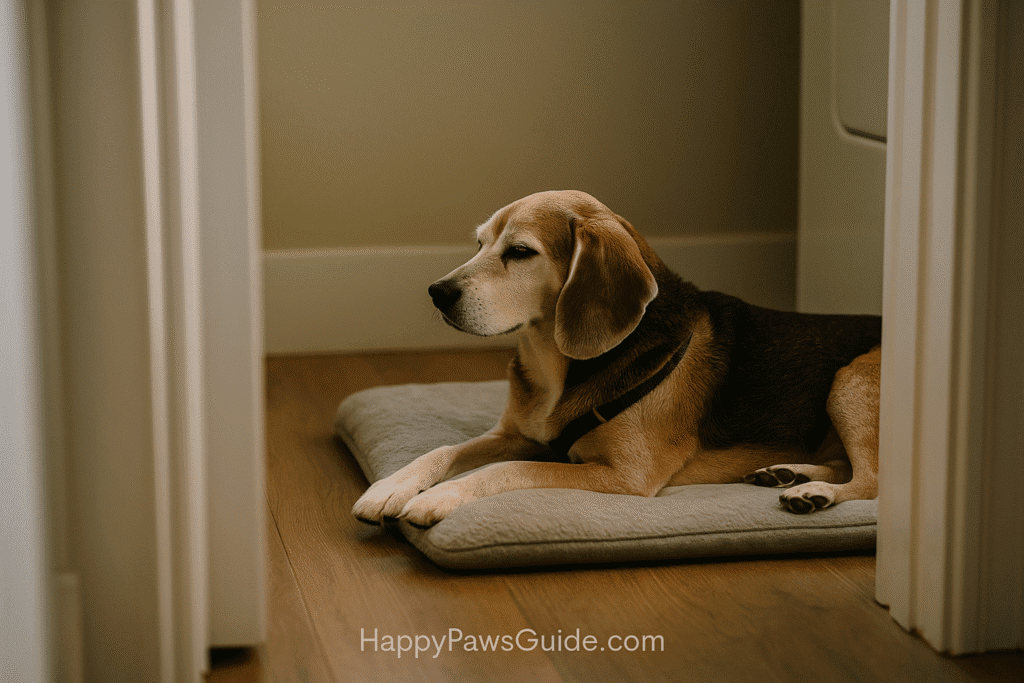
Week 1 — The Quiet House Plan
Old hounds skate on routines. I made ours simple and predictable, repeating it like the chorus of a song. Morning: potty loop, breakfast soupy with warm water, a short yard sniff. Midday: nap, soft grooming, two treats for coming when called in the hallway. Evening: slow block walk, dinner, lick mat, lights low by ten.
- Safe room: I left the laundry door propped open so it never boomed shut. His bed lived in the doorway where he could see the kitchen and the yard at once.
- Noise diet: No TV for three days. Shoes went on in a different room. I switched to a quieter harness so buckles wouldn’t clink.
- Soft invitations: Sitting on the floor, I read out loud—recipes, emails, anything—so my voice filled the house without aiming at him.
By midweek he learned our rhythm. He followed me with a respectful two-step distance. In the yard he lifted his face to wind like he was remembering a smell from a past life. He breathed it in, eyes half closed, and the tail flicked once. That tiny flag felt like a sunrise.
Vet Day — Easing the Body So the Mind Can Learn
Before adventures, we met our veterinarian. Moose’s paperwork said “ten,” but his gait said “maybe older.” The exam found tartar, a mild heart murmur common in aging Beagles, and stiffness in both hips. We set a plan: dental in two weeks, a joint supplement, omega-3s, and a slow return to movement. The vet smiled at Moose’s steady stare and said, “He reads the room. Give him jobs.”
At home, I added a shallow water bowl in every room he liked. Meals stayed small and regular to keep energy even. On hot days we walked pre-sunrise. Beagles are noses on four legs; for seniors, sniffing is both exercise and joy. We turned our block into a pastry of smells, each corner a layer to sample.
For owners starting their own senior Beagle adoption story, here are two guides that helped me build calm structure:
- Teach “Leave It” in 3 Days — invaluable around street crumbs and picnic leftovers.
- How to Train a Dog to Walk on a Leash Without Pulling — protects old joints and softens every outing.
For general adoption support, I also bookmarked ASPCA: Adoption Tips for reminders on decompression and first-week expectations.
Week 2 — Doors, Stairs, and the Courage of Small Distances
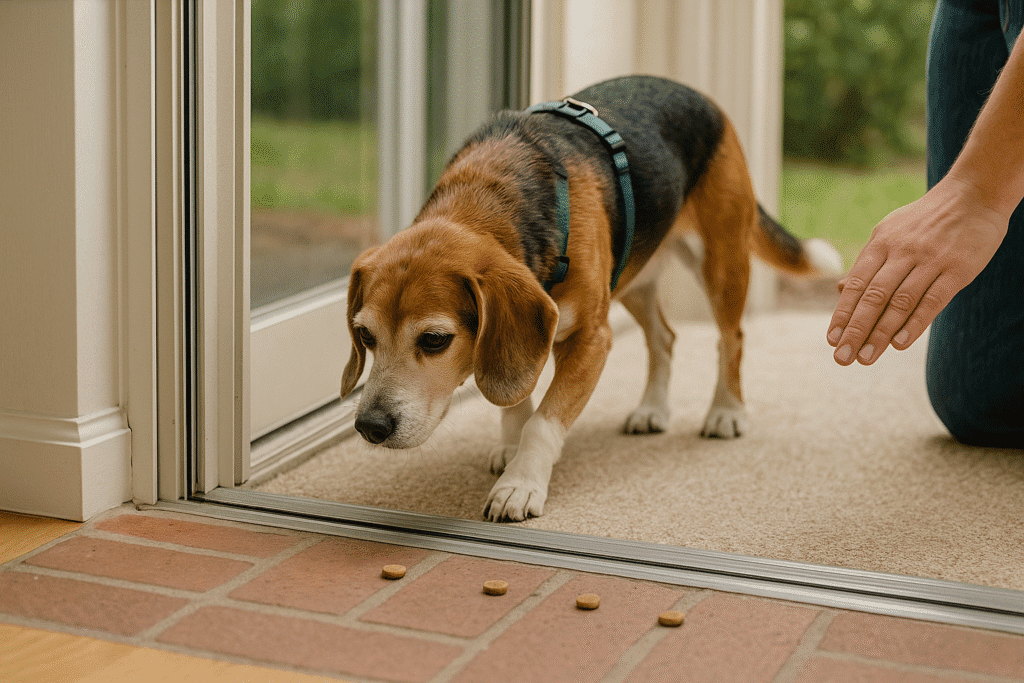
Moose feared thresholds. Not drama—just a planted stance and a look that said, “I’m thinking.” We played a game: I scattered three crumbs one pace before the door, then three at the threshold, then three beyond. We moved the scatter like hopscotch. The first day he stretched his neck for the treat just beyond the line and froze there, paws anchored. I didn’t coax. I waited. A minute later he flicked a look at me, stepped, ate, and sighed like the house got bigger by an inch.
Stairs took longer. We climbed two steps, treated on the landing, then backed down slowly like reversing a small boat. The first time he reached the top, he turned and leaned his whole chest into my knees. Beagles aren’t heavy, but the gratitude was.
Week 3 — The First Trail
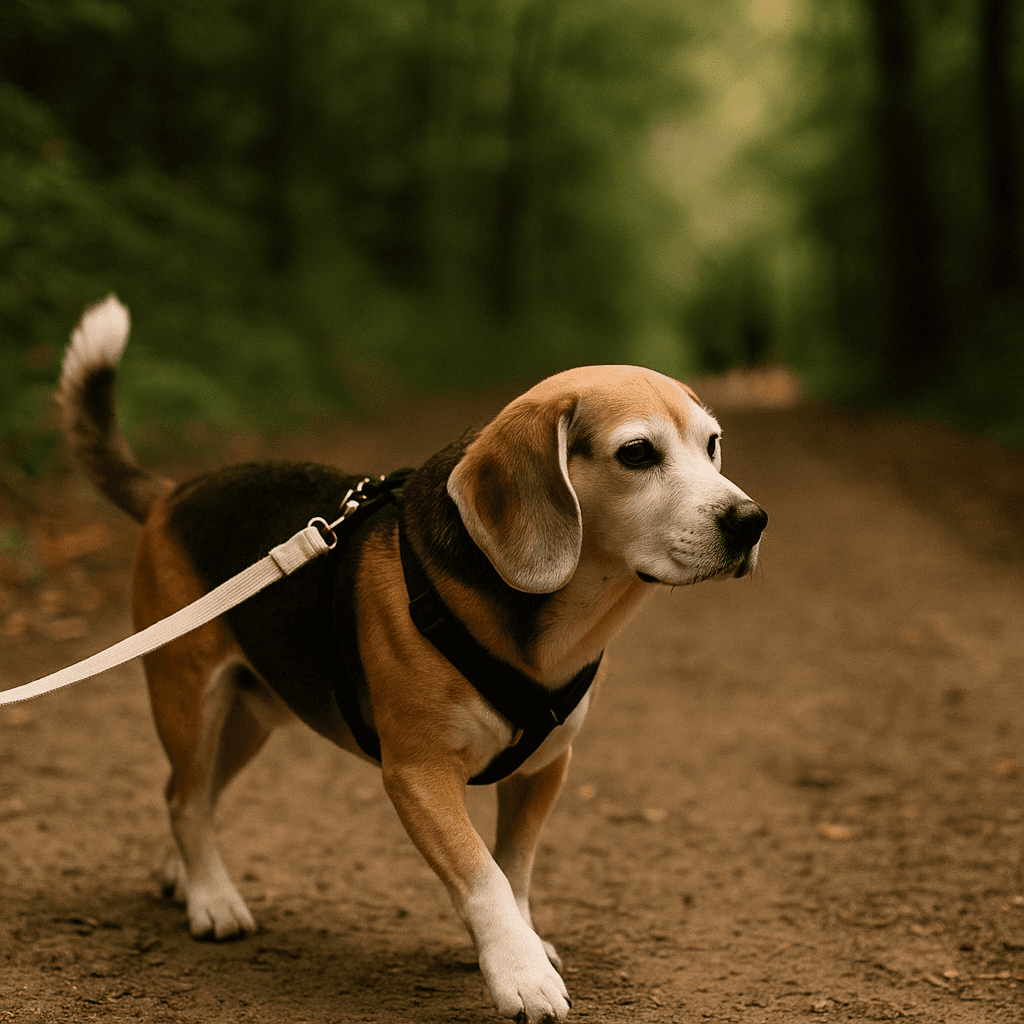
I picked a flat loop with birdsong and early sun. Moose trotted at my left like a quiet metronome. We paused where the path met pine shade and dust. He put his nose down, took a long breath, and his tail formed a small letter C. For twenty minutes we did the slowest hike in county history. Every stick was a telegram. Every tuft of grass was an old friend. We stepped aside for a runner and Moose watched him pass, ears forward, body loose, as if to say, “Not my business—my news is on the ground.”
At the halfway bench, he rested his chin on my shoe. A breeze lifted his ears. In the distance a woodpecker rat-a-tat’d. Moose thumped his tail once, a drumbeat on weathered wood. This was the sound of a senior Beagle adoption story stretching its legs.
Routines That Turned the Summer
1) The Three-Stop Walk
We didn’t chase miles. We chased quality: three designated sniff zones, each 60–90 seconds, where Moose could read the day’s newspaper. Between zones we practiced loose-leash “with me” for a dozen steps, then back to nose work. The alternation built patience and made “with me” feel like a calm bridge, not a chore.
2) The Porch Session
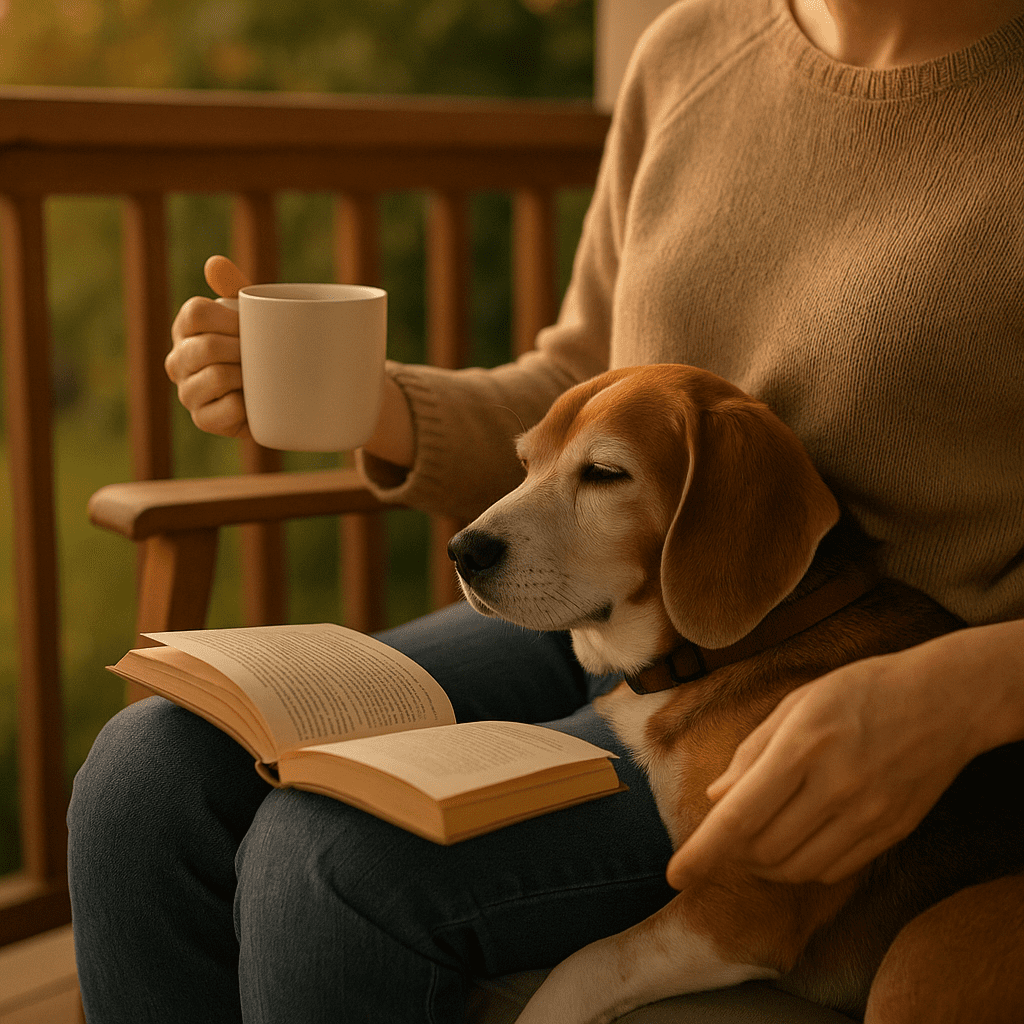
At dusk we sat on the porch for seven minutes—no training beyond existing. People passed, the world hummed, and Moose learned that nothing was required of him. The porch was the first place he fell asleep with his side pressed against mine, snoring in gentle Morse code.
3) Small-Game Training
- Find It: I tossed one treat behind a plant pot. He found it, looked up, and I tossed another. It became our quiet game, perfect on days when joints felt stiff.
- Leave It: At home first, then street crumbs. Quiet, single cue. Payment from my hand, not the ground—less confusion, more trust.
- Emergency Stop: A hand signal and one whistle toot meant freeze, then a treat tossed behind him. We practiced twice a day, ten seconds total, because safety never retires.
Health Notes You Might Recognize
One evening Moose did a series of rapid, inward snorts—head out, stance stiff—then relaxed. It was reverse sneezing, dramatic but usually harmless. We added a humidifier and swapped scented detergent for plain. For owners who hear night-time “honks,” our deep dive on the topic is here: Dog Reverse Sneezing at Night. Later that month, a hot spot flared under his collar; trimming the area, gentle cleaning, and a vet-approved spray calmed it. If you need a step-by-step, see Hot Spots: Vet-Approved Relief & Prevention.
We kept weight lean—ribs easy to feel, waist visible from above—and the joint supplement did its quiet work. Twice a week I warmed a damp towel and pressed it lightly along his hips before walks. He would close his eyes, exhale through the nose, then lean into the towel like it was a memory of sun.
When Trust Showed Up
Trust didn’t arrive as a parade. It arrived in small housekeeping gestures: Moose walking into a room before me; Moose eating while I moved around the kitchen; Moose choosing the bed in the living room rather than the laundry doorway because the house no longer needed guarding. The biggest moment was silly and perfect. A neighbor’s wind chimes startled him and he looked up at me—not away, not for the exit, but to me. I said, “You’re okay,” and he believed me before I proved it. That’s the alchemy of adoption.
Trail Buddy, Proper
By August we did two miles of easy switchbacks at a park where the creek plays songs with rocks. Moose trotted, paused, read headlines, trotted again. He never pulled. When we reached a sun-dappled clearing he did something I hadn’t seen: a playful, prancing hop for four steps—puppy choreography wearing a gray muzzle. I laughed out loud, and he flashed me a grin Beagles keep just for people who know how to listen.
What I’d Tell Anyone Starting a Senior Beagle Adoption Story
- Work the environment first. Quiet house, safe bed, no hurry. Slow is fast.
- Say yes to sniffing. It’s the senior sport that warms joints and cools minds.
- Make food gentle. Small, frequent meals with warm water; keep treats soft.
- Cut the noise, keep the pattern. Predictability builds courage.
- Celebrate low-drama wins. A step over a threshold can be Everest.
FAQ: Senior Beagle Adoption Story — Quick Answers
How long did decompression take?
The first real exhale came around day five. Thresholds improved by week two. Each dog’s timeline is unique; measure progress in inches, not miles.
What routine helped most?
The three-stop walk: sniff zones broken up by short, calm “with me” segments. It balanced his nose with his need for structure.
How did you handle health concerns?
Start with a thorough vet exam, keep weight lean, add joint support, and adapt routes to cooler hours. Humidify bedrooms if night “honks” show up.
Any training cues you’d prioritize?
Leave It for scavenging, an Emergency Stop for safety, and a soft mat settle for the off-switch. Keep sessions tiny and kind.
How do you know trust is building?
Eating while you move, choosing to nap in the busy room, and looking to you when startled. Trust is quiet; it sounds like a dog sighing in your lap.
Call to Action
If you’re starting your own senior Beagle adoption story, borrow our first steps tonight: a quiet room, a warm-water dinner, and a slow porch sit where nothing is required. For practical help, explore these guides:
- ALT: Senior Beagle with gray muzzle sleeping on a doorway bed during decompression
- ALT: Owner and senior Beagle practicing threshold treats at a patio door
- ALT: Gentle porch session—senior Beagle dozing beside owner at dusk
- ALT: Senior Beagle trotting on a forest trail with a loose leash, tail softly wagging