

Summary: Want to Stop Puppy Biting fast? This 3-day training plan teaches you why puppies bite, how to redirect their energy, and simple positive methods to end nipping behavior — all while keeping playtime gentle, fun, and stress-free.
Why Puppies Bite
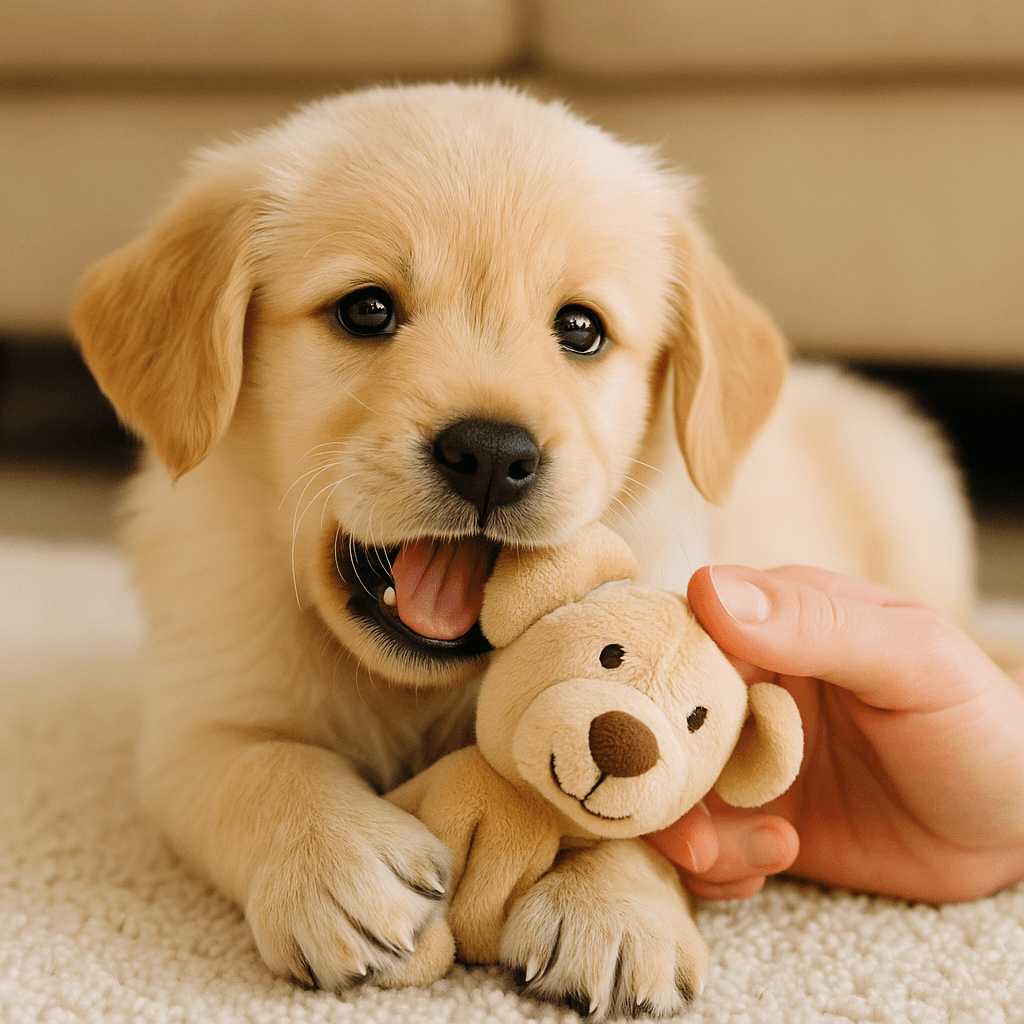
Before you can Stop Puppy Biting, it’s important to understand why it happens. Biting is completely normal for puppies — it’s how they explore the world, play, and learn bite inhibition. Puppies don’t yet know that human skin is sensitive, so they nip out of curiosity, excitement, or teething discomfort.
Common Reasons for Puppy Biting
- Teething: Around 3–6 months, teething pain makes puppies chew anything within reach.
- Play Behavior: Puppies bite during play, mimicking their littermates.
- Attention Seeking: Some pups nip when bored or wanting interaction.
- Overstimulation: Too much excitement during play can trigger rough mouthing.
Understanding Bite Inhibition
Bite inhibition is the puppy’s ability to control the force of its bite. In a litter, when a puppy bites too hard, its sibling yelps and play stops — teaching that biting ends fun. You’ll use this same principle at home to teach gentle play.
The 3-Day Plan to Stop Puppy Biting
This proven 3-day method combines structure, redirection, and reward-based training. Stay consistent, and your puppy will learn quickly.
🗓️ Day 1: Redirect the Energy
- Every time your puppy bites your hand or clothes, say a firm “No” or let out a quick “Ouch!” — mimicking littermate feedback.
- Immediately stop play for 10–20 seconds. Turn away and ignore them.
- When they calm down, redirect with a chew toy or teething ring.
- Reward with praise when they chew the right item.
This teaches that biting stops play, but calm behavior earns attention.
🗓️ Day 2: Reinforce Calm Behavior
- Practice short play sessions (5–10 minutes) with breaks in between.
- Use soft toys for tug-of-war but stop if your puppy’s teeth touch your skin.
- Reward calm behavior often — with treats, gentle pets, or verbal praise.
- Keep a few toys in different rooms to redirect biting quickly.
🗓️ Day 3: Strengthen the Habit
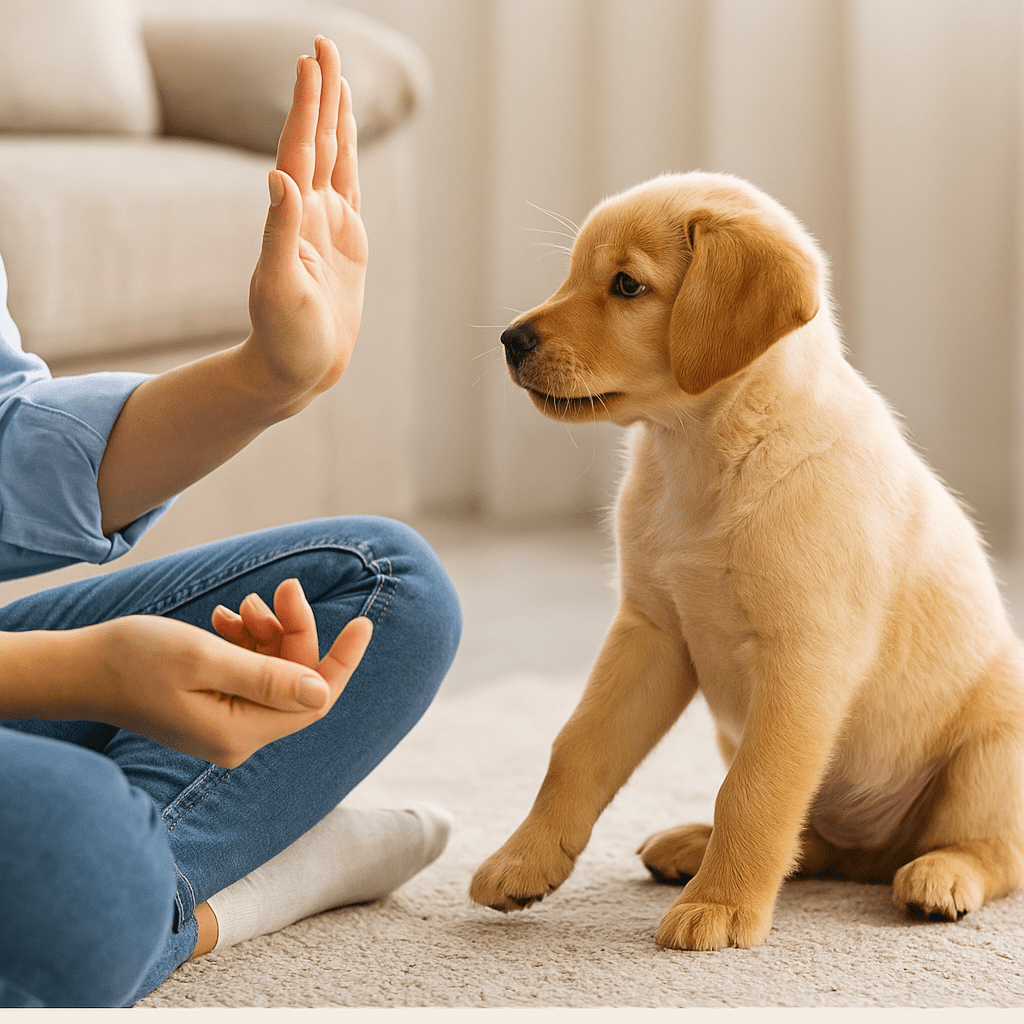
- Introduce light training commands such as “Sit” or “Leave it.”
- Reward focus and self-control to build good manners.
- Use a consistent tone — calm, confident, and clear.
- Start socializing with calm dogs to learn gentle play from peers.
Essential Tools for Bite Control
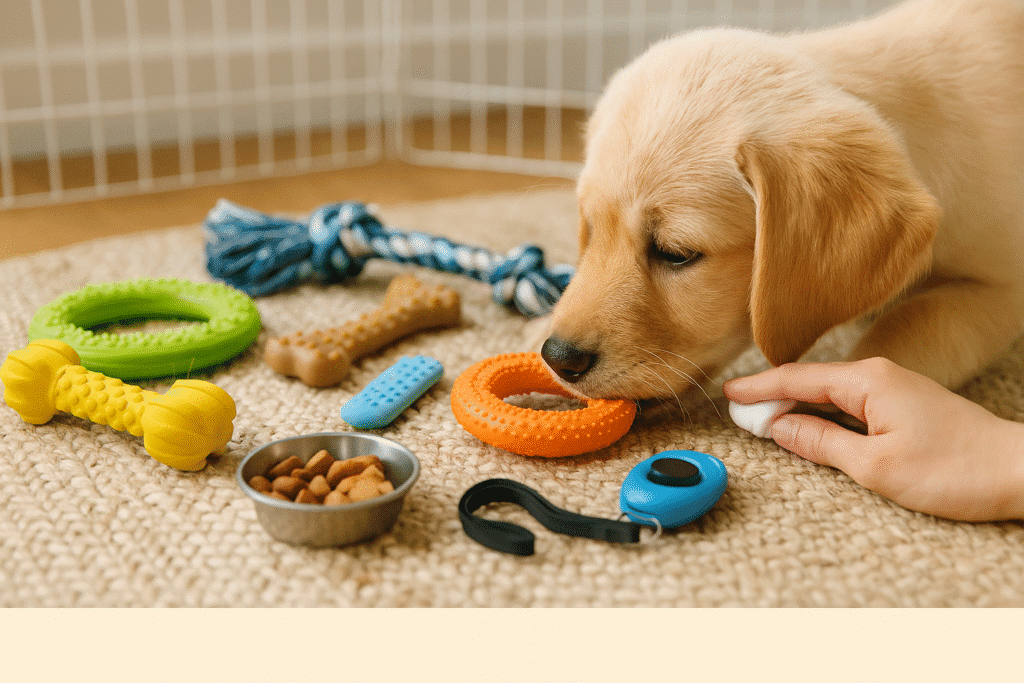
To make training easier, prepare a few essentials:
- Chew Toys: Safe, textured rubber toys help relieve teething pain.
- Puppy Teething Rings: Chill them for extra soothing relief.
- Training Treats: Use small, soft rewards for positive reinforcement.
- Playpen: Gives a safe space for cooling down after overexcitement.
What Not to Do
Avoid yelling, hitting, or physically punishing your puppy — it can cause fear or aggression. Instead, stay calm and redirect. Consistency and patience are the foundation of success when you Stop Puppy Biting.
Positive Reinforcement Techniques
Reward Timing
Always reward calm, gentle behavior immediately. The closer the timing between action and reward, the faster your puppy learns.
Clicker Training
If you’ve used a clicker before, pair it with gentle behavior. Every time your puppy chooses to lick instead of bite, click and reward.
Redirect With Enrichment
Provide chew toys stuffed with treats or peanut butter. This keeps their mouth busy and mind engaged, reducing nipping urges.
Calming Strategies During Play
- Take frequent breaks if play gets too rough.
- Use low-energy games like fetch or scent puzzles.
- Teach your puppy to respond to the “Settle” cue for relaxation.
Consistency Is Key
Puppies thrive on routine. Everyone in the household should follow the same rules — no rough play or encouraging biting. Within three days of steady practice, most puppies show clear improvement, and by week two, the biting habit fades significantly.
Health Check: When to See a Vet
Occasionally, excessive biting can be due to pain, teething infection, or anxiety. If your puppy continues biting aggressively despite training, visit your vet to rule out medical causes.
External Resource
For professional puppy training guidance, read ASPCA — Common Dog Behavior Issues.
Related Reading
Explore our detailed guides for deeper puppy training help:
FAQ — People Also Ask
- Why does my puppy bite my hands? It’s normal exploration or teething — redirect with toys to teach bite control.
- How long does puppy biting last? Most stop by 6 months with consistent training and proper redirection.
- Is it OK to yelp when my puppy bites? Yes — a gentle “Ouch!” mimics littermate feedback and signals play should stop.
- Should I use a spray or bitter deterrent? Only as a last resort; positive reinforcement works better long-term.
- Can socialization reduce biting? Absolutely. Calm interactions with other dogs teach gentle play naturally.
Final Thoughts
Puppy biting is a temporary phase that can be quickly resolved with patience, structure, and consistent positive reinforcement. By following this 3-day plan, you’ll build trust, teach boundaries, and enjoy peaceful, gentle playtime with your growing companion.
CTA: Keep Training Fun!
Continue improving your puppy’s manners with more guides like Loose Leash Walking Guide and Stop Dog Jumping in 3 Days.