

This is the true adoption story of Rio, a three-legged rescue dog who turned a roadside tragedy into a new life. From surgery and shaky first steps to trail runs and quiet nights at home, it’s a journey of resilience, trust, and everyday joy.
On the intake card, the notes were brief: “Adult mixed breed. Car accident. Right hind amputation. Cautious with handling.” In the kennel, the dog pressed himself into the corner, eyes watchful but calm, as if measuring the room for exits. His name—at least for that moment—was just a number on a tag.
When Jina arrived for her Saturday volunteer shift, she stopped at the kennel with the yellow tape that read “Quiet Please—Recovering.” The dog’s ears tipped forward. He didn’t growl or bark. He simply held her gaze the way animals do when they’re deciding whether you’re safe. “Hey, buddy,” Jina whispered, sliding a piece of boiled chicken through the bars. “You’re okay.”
The Accident, the Surgery, and the Second Chance
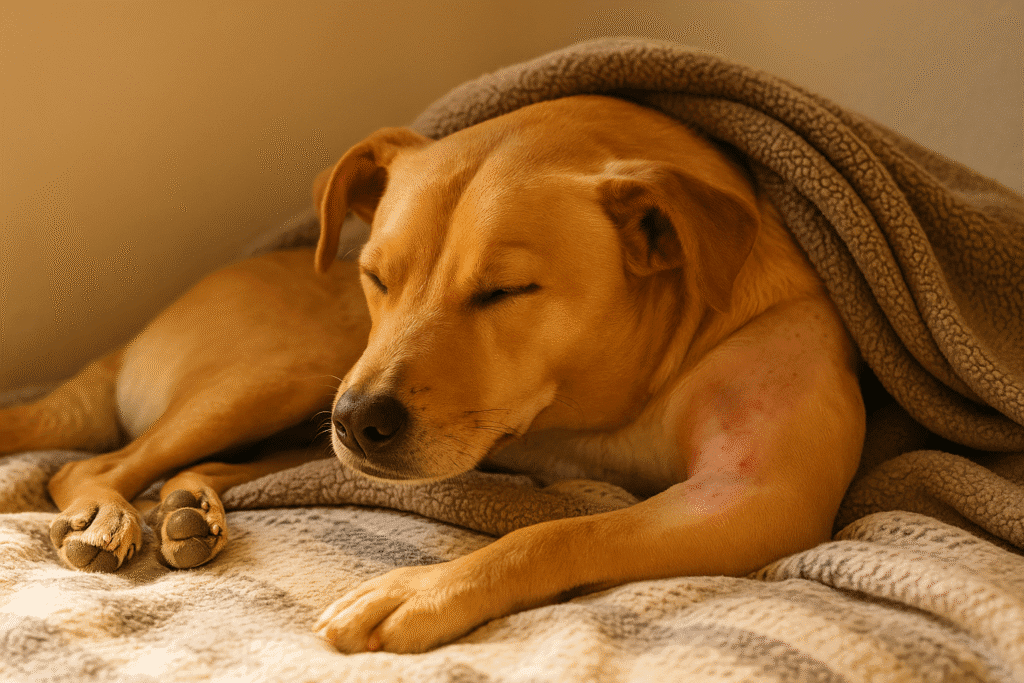
He had been found near an industrial road, lying in a drainage ditch. A delivery driver saw him lift his head, pulled over, and called the local rescue. By the time volunteers arrived, shock had set in. The veterinarian stabilized him and explained the only viable option: amputate the damaged leg. The surgery went well. He woke up alive, confused, and minus a limb—but with a chance.
In the early days of recovery, staff noticed something small and stubborn about him. He would brace, try to stand, wobble, sit, breathe, and try again. He was not the kind of dog to “give up.” But he was the kind of dog who kept his feelings guarded, as if emotion were a luxury reserved for later.
Meeting Rio
On her third visit, Jina asked the medical coordinator if she could sit inside the kennel and read aloud. “He seems to like your voice,” the coordinator said. They lifted the latch and told her to sit sideways so she wouldn’t face him directly. Jina eased down onto the concrete, opened a paperback, and read to a silent, watchful dog about a boy and a river and a raft that knew the way home.
When she closed the book, the dog crept forward and set his chin on the toe of her shoe. The motion was tentative but deliberate—like someone knocking on a door without wanting to disturb the whole house. “Hi,” Jina breathed. “I’m Jina.”
That evening, on the adoption board, someone had written a new name on the dog’s card: Rio.
Learning the Physics of Three Legs
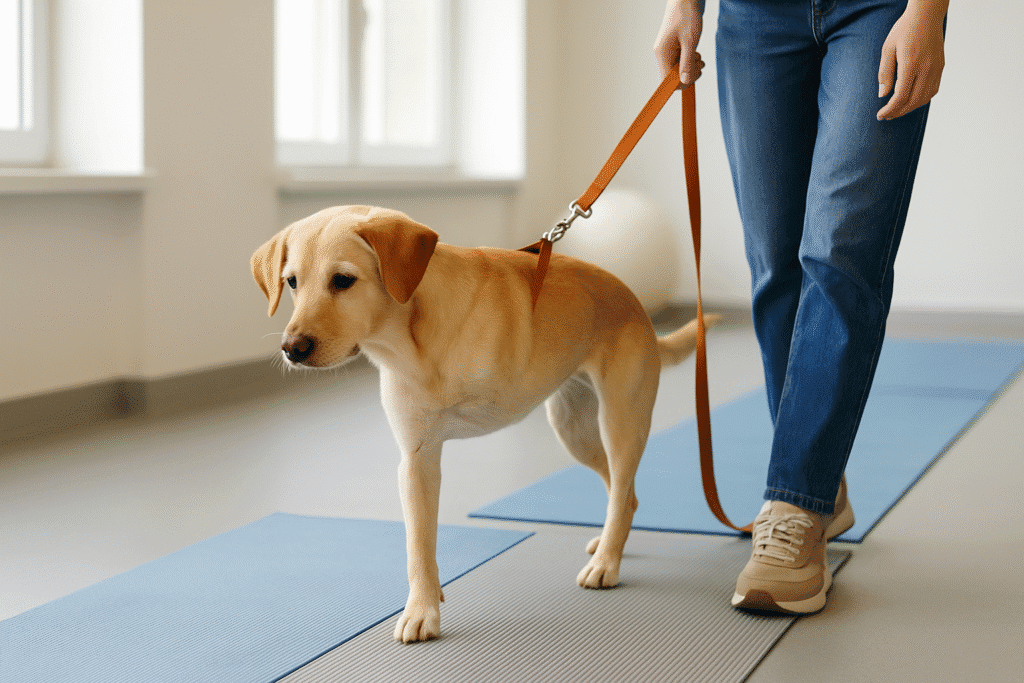
Tripod dogs don’t ask for pity. They ask for fairness: good footing, clear pathways, and a chance to move at their own speed. The physical therapy plan for Rio was simple: short leashed walks on level ground, cookie stretches to build core strength, and controlled practice on rubber mats. Jina volunteered for every session she could.
At first, Rio leaned into corners as if the building might hold him up. His steps were measured—one, two, hop; one, two, hop. He learned to shift weight through his shoulders, to place his remaining hind paw precisely, to balance on a body that had been redesigned without his consent. Progress wasn’t linear; it was human. Some days he flew. Some days he stared at the door and decided not to. Both were allowed.
The Day Rio Chose
When the medical team finally cleared him to meet potential adopters, Jina pretended to be practical. Her apartment was small; her work schedule was ordinary. “He deserves someone who can be with him all day,” she told herself. Yet there she was on the adoption floor, pocket stuffed with chicken, trying to look casual and failing absolutely.
Families stopped by. Rio accepted their pets politely, then returned his eyes to Jina. When a little girl asked, “Why is he missing a leg?” Jina knelt and said, “Because he survived. He’s very good at that.” The girl smiled, then Rio—calm, brave Rio—stepped forward and licked the child’s sleeve where a tear had fallen. Jina felt the decision settle inside her like a key finding its lock.
On a Tuesday afternoon, she signed the papers. The shelter gave her a small bag of his food, a copy of his medical records, and the red canvas leash he’d learned to trust. “See you soon,” the staff called, which is what people say when goodbye is too heavy. Rio looked up at Jina, took three steady steps, and matched his pace to hers as if he had always known the rhythm.
Home: The Geography of Trust
Jina had rearranged her furniture to make wide lanes and clear corners. She laid yoga mats over slick wood floors and moved the water bowl to a spot where turning wouldn’t be a puzzle. The first night, Rio circled the living room carefully, nose cataloging the soft geometry of a new life: couch, plant, window, bed. When he found the balcony door, he looked back at Jina for permission, and together they breathed in the cool evening air.
At 3 a.m., a soft weight pressed against the side of Jina’s bed. She reached down, palm open. Rio placed his paw in it and exhaled. Outside, a single car passed, and somewhere a bird made a small mechanical sound like the winding of a watch. Inside, a human and a dog shared a moment with no story attached, just the ordinary miracle of not being alone.
The First Run
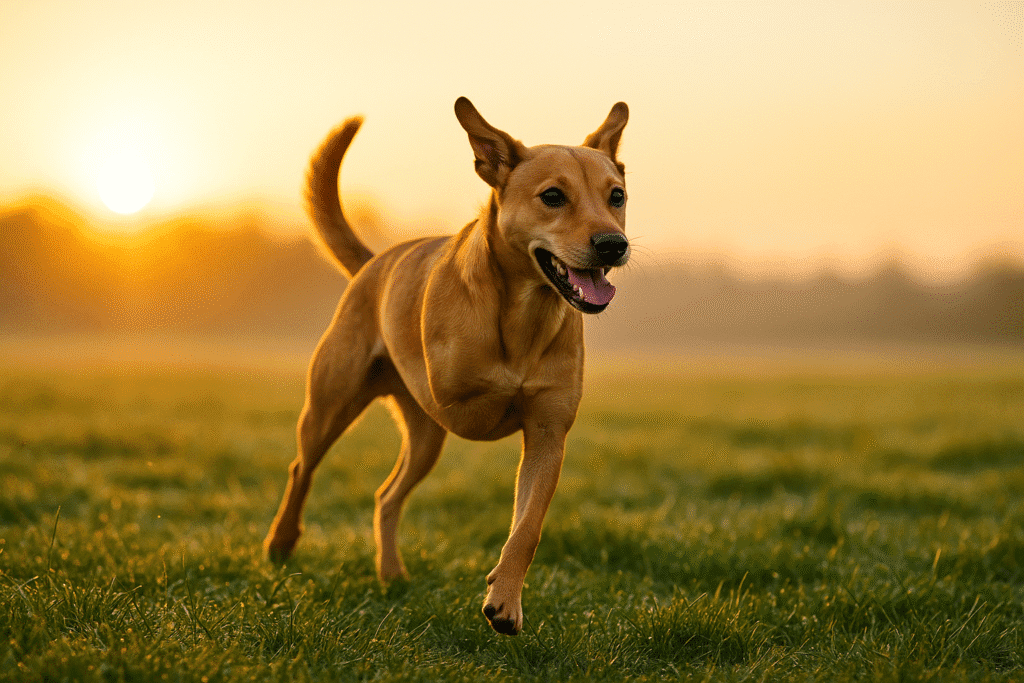
Physical freedom arrived by degrees. Week two: longer walks. Week four: gentle inclines on a dirt path. Week six: the first off-leash moment inside a secure, empty tennis court at dawn. Jina unclipped the red leash. Rio hesitated—one, two, hop. The ball rolled. He tracked it, stopped, thought about it. Jina tossed again. On the third toss, something in him let go of the calculation and remembered the equation that mattered: joy is a vector that carries you forward.
Rio ran. Not the symmetrical gait of catalog dogs, but a new, efficient language. His chest lifted; his tail became a small, conducting flag. He reached the ball, nosed it, looked back at Jina with a face like sunlight breaking through fog, and he laughed in that way dogs do—with their whole bodies.
What Three Legs Teach
Life with a tripod dog isn’t complicated; it’s intentional. Jina learned to keep Rio at a lean, athletic weight to reduce joint stress, to warm him up before harder play and cool him down after. She chose routes with natural surfaces, trimmed his nails so traction stayed reliable, and swapped jumping for ramps and low, confident steps. None of it felt like limitation. It felt like partnership.
Rio, for his part, taught the neighborhood children a better question than “What happened to him?”—he taught them to ask, “What can he do?” Their list grew: sit with perfect posture, heel along a narrow curb, balance on a wobble cushion, carry a soft toy without puncturing it, greet calmly, wait at thresholds, recall from crows and cracked-open sandwich wrappers. He excelled at the leave-it game. He learned to nap with authority.
On the Days That Are Hard
Some days, post-surgery scar tissue ached and Rio moved more carefully. On hot afternoons, the remaining hind leg tired sooner. Jina adjusted the plan: shorter loops, shaded grass, a cool, damp towel over his shoulders when they returned. She massaged the muscles along his spine and sat on the floor so he could rest his chin on her knee. The goal was not perfection. The goal was a life in which effort and ease took turns.
A Park Bench, a Boy, and a New Word for Courage
One autumn evening, a boy about eight years old watched Rio pass. He wore a small prosthesis, bright stickers dotted along the calf. “Is he okay?” the boy asked.
“He’s better than okay,” Jina said. “He’s practicing.”
The boy smiled, the kind that begins in the eyes and spreads out to the edges. “Me too.” He reached out his hand; Rio stepped forward and pressed his head into the boy’s palm, still and certain. Later, Jina learned the boy’s name was Min. His mother waved, mouthed thank you, and Jina shook her head. “No,” she said softly, “thank you.” Some encounters don’t need a story attached. They’re proof.
Everyday Freedom
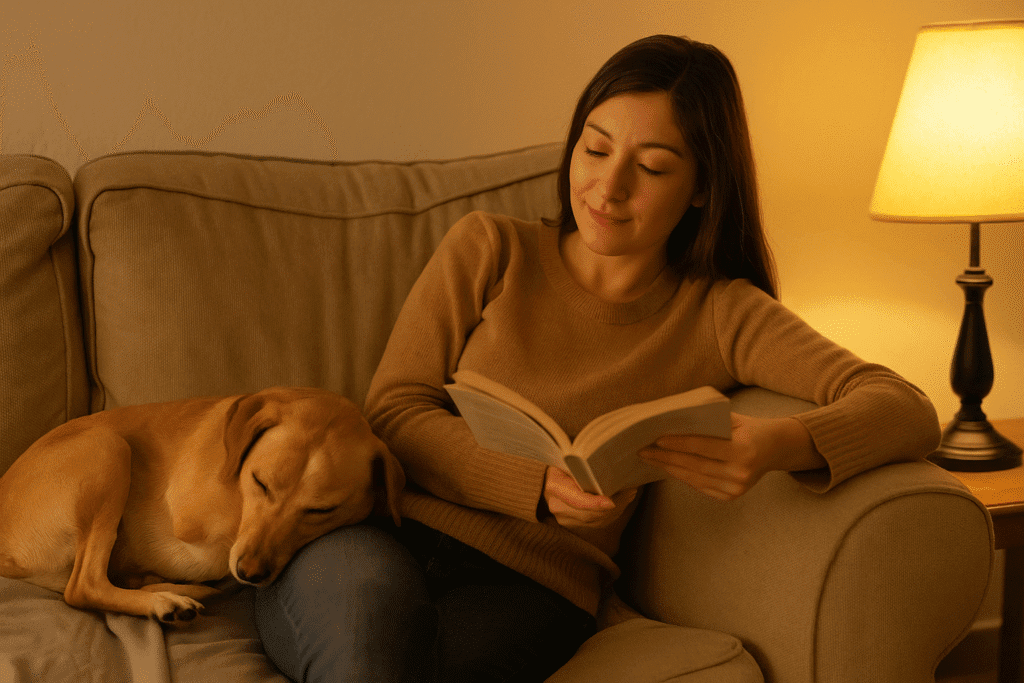
Rio loves two things with the kind of loyalty that makes schedules bend: the trail that skirts the reservoir at sunrise and the quiet hour after dinner when Jina reads. On the trail, he moves like water, taking the world in lines he has mapped with care. At home, he collapses in what Jina calls “the perfect loaf,” his front paws tucked, his breath a steady metronome. The scar along his hip has faded to a soft arc, like a semicolon—pause here, then continue.
Neighbors know his name. The barista keeps a small cup of ice chips behind the counter. The mail carrier scratches the exact spot behind his ear where the fur swirls in a cowlick. Their building super built a low wooden ramp for the two steps in the entryway, though Rio had already figured out a controlled hop that would impress a gymnastics judge. People like to help when someone has already shown them how.
What Adoption Really Means
People say, “You rescued him,” and Jina smiles but doesn’t let the sentence end there. “We rescued each other,” she says, and it’s not a cliché when it’s true. Adoption didn’t make Rio whole—he already was. Adoption gave that wholeness a place to live. It gave Jina a companion who notices which days require a long walk and which days require a shorter one and a longer nap.
On the anniversary of Rio’s adoption, they returned to the shelter with a donation of recovery cones, nonslip mats, and a note for the next tripod dog: “Your body is not an apology. It is your way forward. Take your time. We’re waiting for you at the park.”
Practical Tips for Life with a Tripod Dog
- Keep a healthy weight: Extra pounds = extra strain on joints.
- Mind the footing: Rugs, runners, or yoga mats help on slick floors.
- Train for impulse control: Cues like “Leave it” and solid recall protect against risky grabs and sudden lunges.
- Build strength: Short, frequent walks; controlled hills; cookie stretches; wobble cushions.
- Modify the environment: Ramps over jumps; low platforms instead of furniture leaps.
- Plan recovery days: Rotate easy days after harder outings to prevent overuse fatigue.
Related Guides (Internal Links)
- Teach “Leave It” in 3 Days: Calm, Safe, and Rock-Solid Control
- How to Train a Dog to Walk on a Leash Without Pulling
- Rescue Senior Dogs: Heartwarming Tales of Second Chances
Trusted Resource (External)
FAQ: Three-Legged Dogs & Adoption
Can three-legged dogs live active lives?
Yes. With smart conditioning and reasonable surfaces, most tripod dogs walk, hike, and play comfortably. The key is healthy weight and gradual strength building.
Do they need special equipment?
Often just nonslip rugs and the occasional ramp. Some enjoy padded harnesses for balance. Your vet or rehab therapist can tailor a plan.
How soon can I let a tripod dog run?
Only after your vet clears activity and you’ve rebuilt strength with controlled walks. Start on grass in a secure area and keep sessions short.
Will other dogs bully a tripod dog?
Most don’t. Supervise greetings, choose calm playmates, and advocate for your dog. Social skills matter more than leg count.
Call to Action
If Rio’s journey moved you, visit your local shelter or rescue this week. Ask about animals who’ve waited longest or need quiet homes. Your spare time, your spare room, or your open heart could be the difference between surviving and truly living.
- ALT: Three-legged rescue dog resting after surgery, wrapped in a soft blanket
- ALT: Three-legged dog taking careful therapy steps with a volunteer
- ALT: Tripod dog sprinting happily on grass at sunrise
- ALT: Owner reading on the couch while three-legged dog naps beside her